
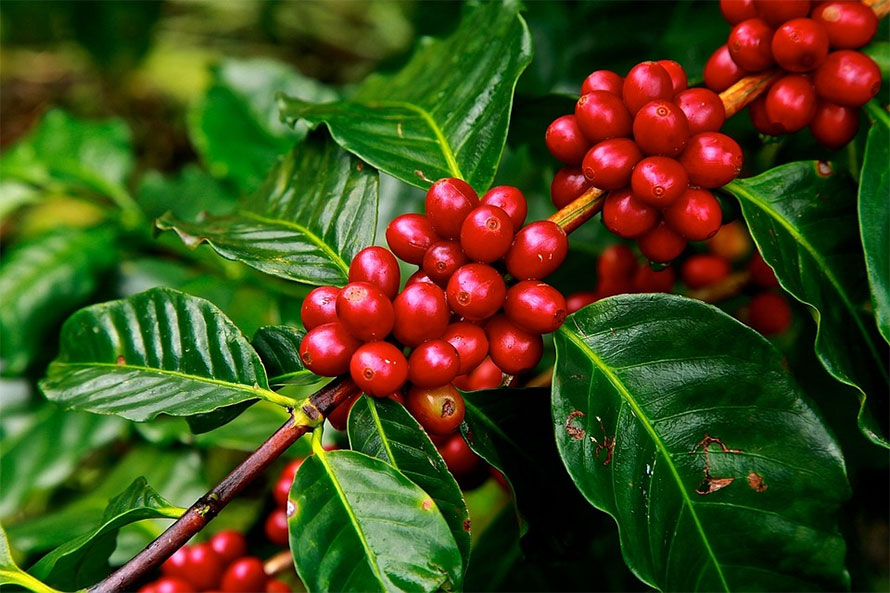
Nepal is rapidly transforming into a “coffee culture” country. Cafes springing up from the lanes of the Kathmandu Valley to major towns across the country signal a significant shift in the lifestyle of Nepal’s younger generation.
The same country whose coffee sells at premium prices in world markets under the label “Himalayan Speciality Coffee” spends billions of rupees each year importing coffee to meet its own domestic needs.
Coffee has moved beyond being a mere beverage here; it has become a marker of modern identity and an essential part of social life. The brewed coffee journey that began with the establishment of “Himalayan Java” in 1999 has now spread to major cities in all seven provinces.
As cafes have become the go-to spots for freelancers, business meetings, and youth hangouts, demand has skyrocketed, say industry players. But domestic production has been unable to keep up with that pace, leaving the market wholly dependent on imports.
Although coffee is grown in more than 40 districts of the country, output remains very low due to a lack of commercialisation. According to data, Nepal’s annual coffee demand exceeds 2,800 tonnes, while domestic production is limited to just 641 tonnes.
To fill this nearly 75 percent gap, large quantities of coffee beans and instant coffee are being imported from India, Vietnam, Colombia, Malaysia, Thailand, the UAE, and other countries.
Nepal exports its finest-grade organic coffee to Japan, the United States, Germany, Switzerland, Italy, the UAE, and others at premium prices. While this foreign exchange earnings side looks positive, cheaper, lower-quality imported coffee has taken over the domestic market.
Imports 29 times higher than exports
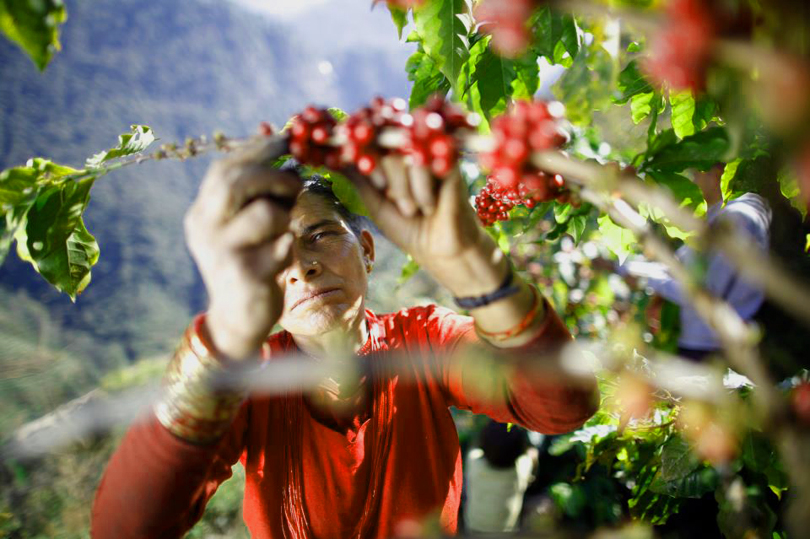
In the first nine months of the current fiscal year 2025/26, Nepal imported roughly 26 rupees’ worth of coffee and coffee products for every one rupee’s worth it exported.
According to the latest data from the Department of Customs, Nepal imported 979,130 kg of coffee and coffee-related goods during this period, at a total cost of NPR 1.847 billion.
By comparison, Nepal managed to export only 33,772 kg in the same period, earning NPR 71.8 million. In terms of volume, imports were 29 times greater than exports.
Instant coffee dominates imports

Data shows that processed or instant coffee makes up a far greater share of imports than raw coffee beans. Of the total NPR 1.847 billion in imports, instant coffee (extracts, essences, and concentrates) alone accounted for NPR 1.508 billion, amounting to 527,169 kg. Coffee mixtures accounted for another NPR 184.8 million.
In terms of raw beans, 172,996 kg of unroasted coffee worth NPR 113.1 million was imported, along with 37,228 kg of roasted coffee worth NPR 40.4 million.
Exports limited to raw coffee
A full 97 percent of Nepal’s coffee exports consist of unroasted, non-decaffeinated raw beans. Over nine months, 32,645 kg of such coffee worth NPR 69.9 million was exported. Exports of processed or roasted coffee were negligible, just 625 kg worth NPR 7.43 million.
Nepali coffee exports flow mainly to European countries and Japan. By value, Germany is the top buyer; by volume, Switzerland leads.
In nine months, the largest export by value went to Germany, 6,505 kg worth NPR 16.19 million . Switzerland led by volume, 8,338 kg, worth NPR 15.65 million. Italy received 4,000 kg worth NPR 10.35 million. Among Asian markets, Japan imported 6,827 kg worth NPR 9.808 million. The UAE received 1,759 kg worth NPR 5.697 million. Other destinations include the UK (NPR 2.757 million), the US (NPR 2.249 million), Poland (NPR 2.074 million), and Taiwan (NPR 2.028 million).
Overall, Nepal’s coffee trade deficit stands at NPR 1.775 billion.
Policy Hurdles
Om Nath Adhikari, President of the Nepal Coffee Entrepreneurs’ Federation, says that despite coffee’s enormous potential, production growth has remained sluggish.
“Consumers are growing, coffee culture is developing, but production has not kept pace,” Adhikari told Onlinekhabar. “The current output of 641 tonnes covers only a small fraction of our domestic demand, which is why the import graph keeps climbing.”
The federation has set a target to push production above 1,000 tonnes within the next three years. However, Adhikari notes that even 1,000 tonnes would fall far short of the 10,000 tonnes of demand coming from international markets alone.
The main obstacles, he says, are policy and financial barriers. Coffee farming takes at least three years to yield a harvest, but the banking system requires loan repayments to begin the very next month after the loan is taken out.
“If I go to a bank asking for a loan to grow coffee, government or private banks won’t give it easily,” he says. “And even if they do, the bank starts asking for interest and instalments before the coffee has produced anything. Without income, how do you repay? Until the state introduces a minimum three-year grace period and a low-interest policy, commercial coffee farming is not feasible.”
International competition and branding challenges
Nepali coffee is known as “speciality coffee” and commands a higher price. Currently, Nepali green beans cost NPR 1,600–1,700 per kg, while Indian-imported coffee is available for NPR 1,200–1,300 per kg.
This price gap has led to a growing problem of cheaper foreign coffee being mixed with and sold as Nepali coffee, Adhikari points out.
“The quality of Nepali coffee is high, but our costs are higher because the government doesn’t provide subsidies for fertilisers and irrigation,” he says. “India gives up to 75 percent subsidy on fertilisers and irrigation, here it is zero.”
He adds that small farmers alone can no longer be relied upon to commercialise production. The state needs to offer special incentives to those farming coffee on at least 200 to 500 ropanis collectively or commercially. Effective crop insurance policies are also needed to reduce risk. Since Nepali coffee is 100 percent organic, he called on the state to support its certification and the production of organic fertilisers.
Highway-focused planting and 50% subsidy
The National Tea and Coffee Development Board has also identified increasing production as the sector’s primary challenge.
Board Director and Spokesperson Deepak Khanal said that without a significant boost in production, exports cannot improve meaningfully. The board has drawn up a new plan to expand cultivation areas.
Two main programs are being prioritised. The first involves establishing “model coffee gardens” along the Mid-Hill Highway and other strategic roads to expand coffee farming in areas with road access. The second is a “50-Ropani Consolidated Coffee Planting” program, which encourages farmers or groups to cultivate coffee on large parcels of land.
To boost farmers’ enthusiasm, the board provides a subsidy covering 50 per cent of the total planting cost.
The board has also begun collaborating with local governments under a new model, in which the board provides policy guidance and technical advice, while local governments implement programs with their own budgets.
Dr Khanal said discussions are underway with the Agricultural Development Bank to create a special banking investment arrangement for both tea and coffee. “We are working toward a conclusion soon with the Agricultural Development Bank to provide farmers with easier and more flexible credit,” he said, “which will make the investment environment in the coffee sector more conducive.”
Five-year production and trade data
Board data shows growth in both cultivated area and production over the past five years:
| Fiscal Year | Area (hectares) | Production (tonnes) | Exports (NPR) | Imports (NPR) |
|---|---|---|---|---|
| 2020/21 | 3,052 | 314.5 | 9.6 crore | 10.67 crore |
| 2021/22 | 3,343 | 354.9 | 11.70 crore | 12.75 crore |
| 2022/23 | 3,655 | 394.4 | 13.04 crore | 32.58 crore |
| 2023/24 | 4,309 | 501.3 | 14.92 crore | 41.98 crore |
| 2024/25 | 5,501.1 | 641.9 | 11.43 crore | 14.41 crore |
Coffee cultivation area grew by approximately 80 percent over five years, and production has doubled, from 314.5 tonnes in 2020/21 to 641.9 tonnes in 2024/25.