Kathmandu, October 27
An estimated 5.18 million flower garlands of various varieties will be consumed across Nepal during this year’s Tihar festival, generating business worth around Rs 480 million from garlands alone.
According to data released by the Floriculture Association Nepal (FAN), the total turnover of the floriculture business during Tihar is projected to reach Rs 645 million when 4.3 million loose flowers and potted plants used to decorate homes, courtyards and offices are included.
Marigold garlands are expected to account for the largest share, with 4.5 million garlands projected to be sold at an average wholesale price of Rs 90 each, generating Rs 405 million.
Similarly, six million rupees’ worth of globe amaranth garlands, totalling 600,000 units at an average price of Rs 45 each, are expected to generate Rs 27 million. Another 20,000 chrysanthemum garlands, priced at an average of Rs 1,200 each, are projected to generate Rs 24 million. Mixed-flower garlands are expected to generate another Rs 24 million from 60,000 units priced at Rs 400 each.
In addition, sales of 3.5 million loose marigold flowers at Rs 30 each are expected to generate Rs 105 million, while eight million potted chrysanthemums priced at Rs 75 each are projected to generate Rs 60 million.
Commercial flower farming expands nationwide
According to FAN, commercial marigold cultivation has expanded significantly in recent years. More than 225 hectares of land across all seven provinces are now under commercial marigold farming.
Commercial production is taking place in districts including Kathmandu, Bhaktapur, Lalitpur, Dhading, Chitwan, Kavrepalanchok, Sindhupalchok, Nuwakot, Gorkha, Makwanpur, Ramechhap, Jhapa, Ilam, Dhankuta, Sunsari, Morang, Dhanusha, Sarlahi, Saptari, Siraha, Rupandehi, Kaski, Syangja, Banke, Palpa, Tanahun, Dang and Kailali.
The association said the expansion of flower production and markets has increased the income of farmers and floriculture entrepreneurs while contributing to import substitution.
Nepal self-sufficient in globe amaranth
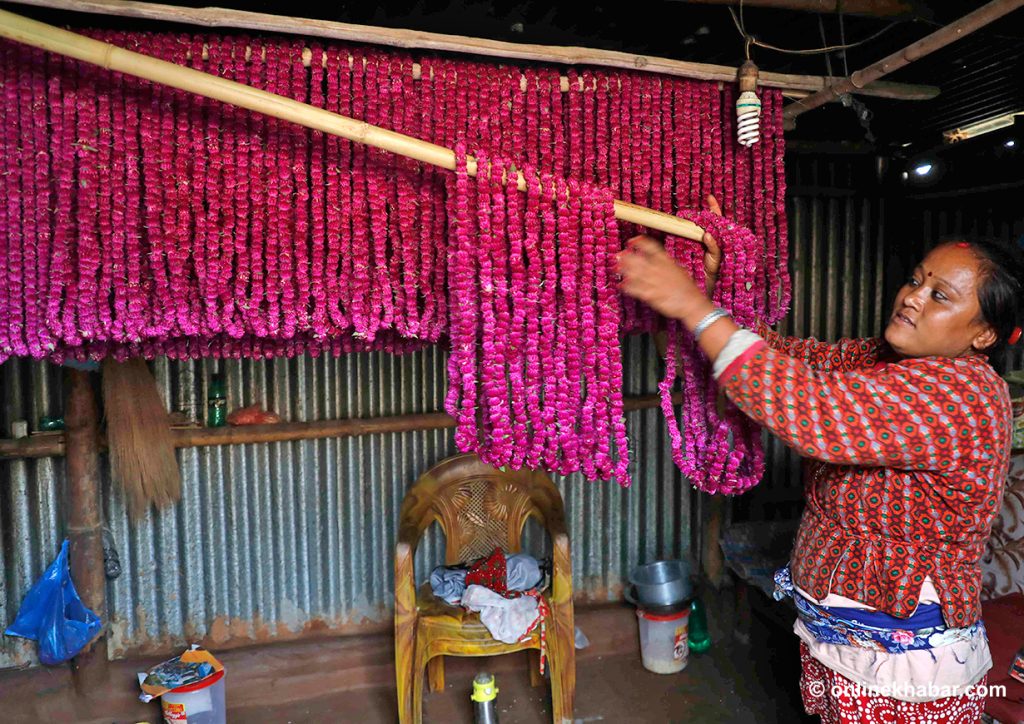
Although Nepal still needs to import some marigold garlands, the country has become fully self-sufficient in globe amaranth, according to FAN President Rajesh Bhakta Shrestha.
Of the six million globe amaranth garlands expected to be in demand this year, four million are projected to be consumed domestically, while around 200,000 will be exported abroad.
Commercial globe amaranth cultivation takes place in Ichangunarayan in Kathmandu, Gundu in Bhaktapur, Godawari-Badikhel in Lalitpur, and parts of Dhading, Palpa, Kailali and Ilam.
October floods damage marigold farms, imports expected
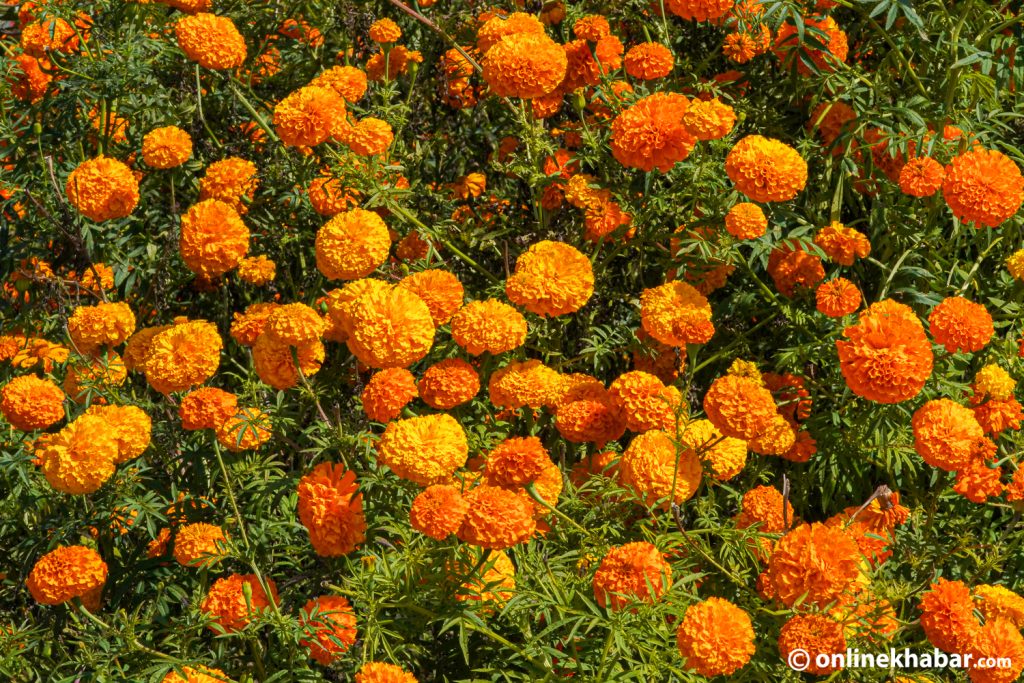
Marigold demand has increased to 4.5 million garlands this year, up from four million last year. However, continuous rainfall from October 9 to 11 damaged marigold farms, according to the association.
Despite the damage caused by floods and landslides, domestic production is expected to supply around four million garlands. The remaining 11.11 per cent of demand will have to be met through imports, FAN said.
The association has urged consumers and traders to prioritise locally produced flowers. It said it was coordinating with relevant authorities to ensure smooth transportation from production areas to markets and fair pricing.
FAN President Shrestha said using locally produced flowers would have a positive impact on the overall economy.
“Prioritising domestic flowers during Tihar directly supports Nepali farmers and floriculture entrepreneurs while promoting local production, employment and self-reliance,” Shrestha said, expressing hope for cooperation from consumers and other stakeholders.