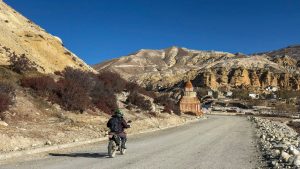

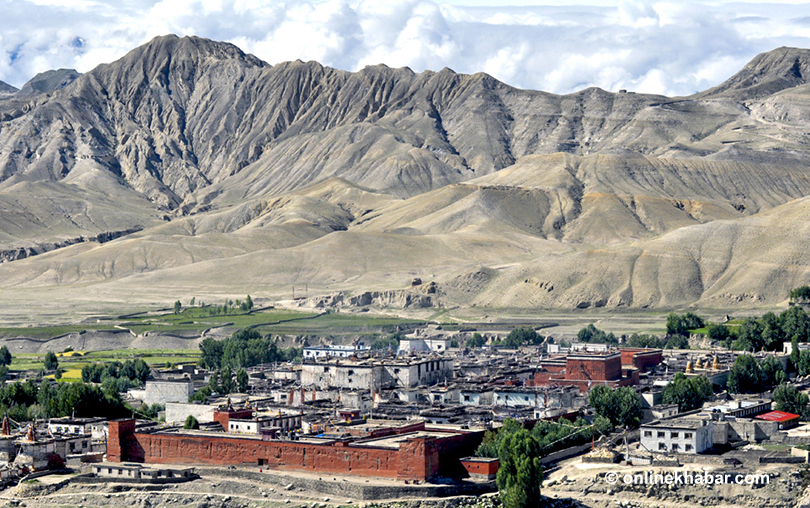
The discussions surrounding the immense potential of uranium and Rare Earth Minerals (REEs) in the upper Mustang region have recently created a significant ripple in Nepali politics and diplomacy. Studies by the various geological surveys have indicated a potential uranium reserve in a 10 km long and 3 km wide area in the Lomanthang region.
However, it is yet to be scientifically proven whether these minerals exist in commercially viable quantities. If the presence of REEs or uranium is scientifically validated, it will undoubtedly place Nepal at a critical and sensitive centre of global geopolitics. Given their essential use in everything from modern high-tech smartphones and electric vehicles to advanced weaponry, the global demand for these minerals is exceptionally high.
This issue is not just about economic gain; it is deeply linked to Nepal’s national security and strategic importance. If these precious minerals are found, transparent exploration and a clear, visionary stance from the state are imperative. While discussions about this potential have persisted for decades, the growing interest of international powers in this region has made it more mysterious and strategically sensitive.
Situated on the border with China’s Tibet, unusual foreign interest in this geographically remote area poses a serious challenge to Nepal’s historical ‘non-aligned foreign policy.’ In such a situation, the government must provide factual information to its citizens and ensure this does not become a ‘geopolitical trap,’ but rather a strong foundation for the nation’s ‘economic prosperity.’ The systematic extraction of uranium and rare earth minerals could reduce Nepal’s foreign debt and establish the country as a decisive mediator in the global balance of power.
Strategic competition of global powers and Mustang’s sensitivity
The discovery of mineral reserves in Mustang would mean an unprecedented shift in the global supply chain. Currently, China supplies about 70-80% of the world’s rare earth minerals, upon which Western countries have a heavy and compelling dependence. If commercial reserves are found in Mustang, it would present a major opportunity for Western nations, particularly the United States, to reduce their dependence on China.
Consequently, there is a serious risk that the Mustang region could become more than just a mining hub – it could become a primary site for ‘proxy’ competition between global powers. It is clear that China, due to its security sensitivities and geographical proximity to Tibet, will not easily accept Western presence or influence here. Thus, Nepal must tread very carefully and maintain a balanced approach.
There is also a significant danger that exploiting these minerals could push Nepal toward a ‘Resource Curse.’ If Nepal cannot balance its internal security and external diplomatic relations, there is a fear that the Mustang region could become a playground for international intelligence agencies.
The direct involvement, monitoring, and control of the Nepali Army in the security, exploration, and extraction processes are essential. To mitigate strategic pressure, Nepal must move forward only after taking its neighbours and global powers into confidence. Understanding Mustang’s historical and cultural sensitivity, developing a prudent ‘Mineral Diplomacy’ that protects local life, the environment, and national sovereignty is a national necessity today.
Nepal must never forget its principle of non-alignment while extracting minerals. Between the security and strategic interests of giant neighbours like China and India on one hand, and the need for modern technology and investment on the other, Nepal must establish itself as a ‘vibrant economic bridge’ connecting two emerging economies.
Balancing the technological desires of distant powers with the security sensitivities of neighbours, Nepal should use its geography and ‘land-linked’ status as a strategic opportunity for national interest. Ensuring the trust and participation of neighbours in any extraction work in a sensitive area like Mustang is crucial.
Every small or large activity in this region will directly affect not only Nepal’s internal politics but also overall regional peace; hence, it must be analysed as both an economic opportunity and a grave security challenge. Rather than handing over resources to any one side, adopting a balanced policy aligned with multilateral and national interests would be most beneficial for Nepal.
Selection of extraction partners and technology: Strategic options
Currently, Nepal lacks the sophisticated technology and skilled manpower required to extract and process complex minerals like uranium or rare earth. Substantial foreign investment and technology transfer are mandatory. Western countries, including the U.S., possess high-level technology for processing these minerals and wish to break China’s market monopoly. Nepal could open doors for cooperation with them under the condition of ‘Technology Transfer.’ However, instead of handing over mine ownership directly to foreign companies, a ‘Joint Venture’ model is most suitable, ensuring Nepal’s decisive role and share.
On the other hand, China has a deep understanding of the region’s geography and the world’s largest market experience. Since Mustang’s terrain is similar to Tibet, China could be a reliable neighbour for infrastructure development and transport ease.
Utilising China’s experience in a limited and controlled manner while respecting its security concerns is in Nepal’s diplomatic interest. Similarly, our southern neighbour India – Nepal’s largest energy and trade partner – must also be appropriately involved. Cooperation with India is indispensable for the large-scale power supply and trade routes required for mineral processing.
Therefore, favouring one power while alienating another could be fatal for Nepal. Instead, the best option is to invite international competition through a ‘Global Tender,’ creating a balanced agreement that combines American technology, Chinese construction experience, and Indian market access. Nepal must abandon the old, loss-making policy of exporting only raw materials. Priority should be given to those ready to establish processing centres within Nepal and train Nepali technicians. This will create jobs and add value to the minerals, ensuring long-term economic benefits.
Roadmap for management and National Mineral Policy
For the management of Mustang’s minerals, Nepal must first establish a ‘Powerful National Mineral Corporation.’ The state should hold at least 51% investment in this corporation, and only it should have the authority to sign agreements with foreign companies. Handing over mines to private or foreign firms haphazardly could severely damage national interests.
To make the exploration and extraction process completely transparent, a high-level ‘Mineral Diplomacy Task Force’ should be formed, including security experts, diplomats, and experienced geologists. This task force will approve foreign investment terms only after testing them against the national interest and will work to clear public doubts.
Another vital aspect of management is protecting the environment and local communities. Mustang is a sacred area rich in historical, religious, and cultural heritage. Biological diversity and local culture must not be destroyed in the name of mining.
A fixed portion of the revenue should be spent on the local development of Mustang and improving the residents’ living standards. Environmental Impact Assessments must be strictly followed, adopting the modern concept of ‘Green Mining.’ This will establish Nepal’s image internationally as a responsible and environmentally conscious nation.
Ultimately, Nepal must use the potential management of Mustang’s minerals as its primary tool for ‘Economic Diplomacy.’ The massive income from mineral exports can be used to pay off national debt and invest in large infrastructure, education, and health. This requires a minimum national consensus among all political parties.
On a matter of such national gravity, one must move forward with a long-term vision, rising above partisan interests. If we prepare a clear legal and policy framework and proceed with restraint, the potential wealth hidden beneath Mustang’s soil will prove to be the ‘Black Gold’ that changes Nepal’s destiny.
In conclusion, the potential presence of uranium and rare earth minerals in Mustang is an extraordinary strategic gift from nature. Whether we turn this gift into a ‘blessing’ or a ‘curse’ depends entirely on our diplomatic and political acumen. Rather than blindly favouring any one power, a ‘Nepal First’ national policy to regulate all parties is the greatest wisdom today.
The government should promptly issue a White Paper on scientific exploration, actual quantities, and potential environmental and geopolitical impacts to address public concerns. Mustang’s minerals should become the foundation for protecting our national sovereignty and economic self-reliance; for this, the state’s firm willpower and clear vision will be decisive.