

Kathmandu, September 7
The government is preparing legislation that would allow the relocation of settlements considered vulnerable to natural disasters, amid growing concerns over people living along riverbanks, forests and other high-risk areas.
The Ministry of Land Management, Cooperatives and Poverty Alleviation, in coordination with the Ministry of Federal Affairs and General Administration, has drafted the Bill to Amend Some Nepal Acts Relating to Land, 2026.
The proposed bill seeks to amend the Land (Survey) Act 1963, which is 64 years old, and the Land Act 1964, which is 62 years old. If enacted, it would also amend provisions of the Guthi Corporation Act 1976, Land Revenue Act 1978 and Land Use Act 2019.
Mandatory relocation from high-risk areas
The bill proposes a new provision under Section 52B of the Land Act 1964 requiring authorities to arrange alternative settlements for landless Dalits and landless squatters living in high-risk locations.
The provision covers people living along riverbanks and lakes, inside national parks and conservation areas, in forests, within road rights-of-way and in other areas deemed vulnerable to disasters.
The use of the phrase “must be arranged” makes the proposed provision mandatory.
The government argues that the provision would help ensure the right to housing, promote planned settlements and contribute to the Sustainable Development Goals and climate adaptation.
Nepal’s Constitution already provides for the right of landless Dalits to receive land. However, many landless Dalits have yet to receive land under the constitutional provision.
Article 37 of the Constitution guarantees every citizen the right to appropriate housing. Yet many landless squatters continue to live without secure homes or land.
The government categorises landless people broadly into two groups: those who own neither agricultural land nor a residential plot, and those without a permanent home who have been living temporarily on public or government land or for years along riverbanks, vacant government land and the edges of forests.
Nearly 1.1 million applications
The latest data from the Land Issues Resolution Commission shows that it has received 1,096,670 applications from landless squatters and unorganised settlers.
Of these, 87,995 applications are from landless Dalits, 166,060 from landless squatters and 842,615 from unorganised settlers.
However, there has been no separate comprehensive assessment of whether the areas where these people currently live are exposed to disaster risks.
The proposed legislation seeks to address this gap by requiring risk assessment before land is allocated to landless people.
Under the proposed amendment, land along rivers, streams and canals, land in high-risk areas, national parks and conservation areas, forest land and land within road boundaries would not be available for distribution.
There is an exception for certain areas that were identified as grazing grounds, fairs, markets or market areas during the initial land survey. If people have been living and cultivating such land for at least 10 years, they could still receive land ownership certificates, subject to specified conditions and a formal decision by the concerned local government.
Risk assessment before land distribution

Although the bill introduces the concept of relocating vulnerable settlements, it does not provide a detailed blueprint for how the process would work.
It does not clearly specify who will determine whether a settlement is in a high-risk area, where relocated families will be settled, how land will be acquired or allocated, or how housing, livelihoods and infrastructure will be provided after relocation.
The proposed legislation does, however, allow the government to establish committees or task forces at the federal and district levels.
Such bodies could identify landless Dalits, landless squatters and unorganised settlers, maintain their records, identify potential land, conduct field studies and collect evidence before facilitating land allocation.
They could also address problems related to ownership records, registration documents and maps of land previously distributed by various government commissions and task forces.
The bill does not explicitly state whether these committees would themselves have the authority to determine which locations are high-risk.
Government officials say these details could be clarified during the legislative process based on feedback from the public and stakeholders.
Bill now open for public feedback
The draft bill was published for public feedback on August 31, in accordance with the Legislative Act. The public has been given seven days to submit comments and suggestions.
After reviewing the feedback, the Ministry of Land Management will revise the bill if necessary and send it to the Ministry of Law, Justice and Parliamentary Affairs for legal review.
It will then return to the Land Management Ministry before being sent to the Ministry of Finance. Once approved by the Finance Ministry, the Land Management Minister will present it to the Cabinet.
If approved by the Cabinet, the bill will be registered in Parliament. It must then be passed by both houses and authenticated by the President before becoming law.
Officials at the Land Management Ministry say the provisions can be further clarified during this process.
The proposed legislation also seeks to devolve certain land-related services to local governments, including registration-related work, with the stated aim of reducing the time and cost for service users.
Why identify high-risk settlements?

A land-related bill was also introduced during the previous term of the House of Representatives to address issues involving landless Dalits, squatters and unorganised settlers.
The Agriculture and Natural Resources Committee of the previous House had discussed and endorsed the bill clause by clause. However, it became inactive after the House was dissolved on September 12, 2025.
The new bill retains many of the earlier provisions while adding a specific requirement to relocate people living in high-risk areas.
Ashok Kumar Chaudhary, chair of the current House Agriculture and Natural Resources Committee, says identifying high-risk settlements and relocating residents to safer locations is necessary.
“Identifying high-risk areas and protecting citizens’ lives and property is the constitutional responsibility of the state,” Chaudhary said. “Settlements at high risk from floods, landslides and river erosion should not be allowed to remain where they are.”
But he stressed that relocation must be based on scientific assessments, transparent criteria and protection of citizens’ fundamental rights.
“In particular, people who are landless, squatters or economically vulnerable must not be further displaced or made landless in the name of removing them from high-risk areas,” he said.
Chaudhary said the state must not remove people from one risk only to place them in another.
He called for relocation policies that guarantee safe and sustainable settlements, rehabilitation and resettlement, along with housing and livelihood opportunities.
‘Law must clearly define who decides what is risky’
Chaudhary said Parliament would examine the bill from multiple perspectives once it is introduced.
“Parliament should not look only at the objective of the government’s bill. It must also seriously examine how it protects citizens’ rights and how the provisions will actually be implemented,” he said.
He added that the concept of relocating settlements from high-risk areas could be positive, but the law must clearly address several questions: who determines whether an area is dangerous, on what basis, where people will be relocated, how land will be provided and how housing, infrastructure and livelihoods will be secured.
Chaudhary, who was also a member of the previous House, recalled that he had expressed dissent during discussions on the earlier land bill, arguing that provisions weakening the constitutional and legal rights of landless people and squatters could not be accepted.
He said those concerns would also guide his role in the current legislative process.
“If the state is going to restrict citizens’ rights in the name of land management, the legal basis, due process and alternative arrangements must also be clearly defined,” he said.
He added that Parliament and its committees should hold extensive discussions on the bill and amend provisions that remain unclear.
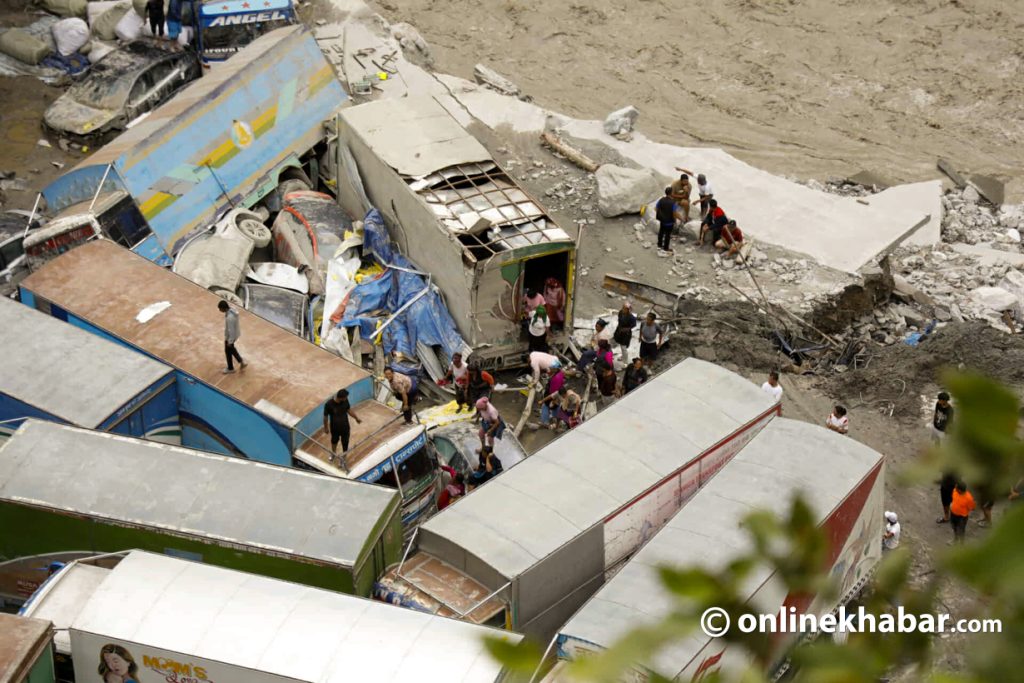
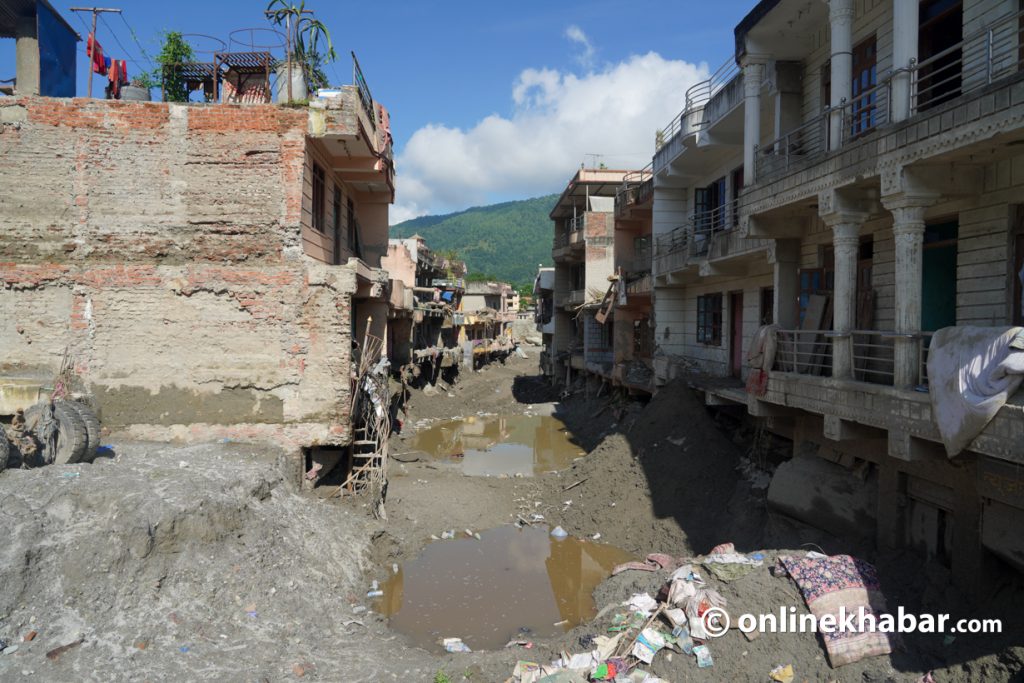
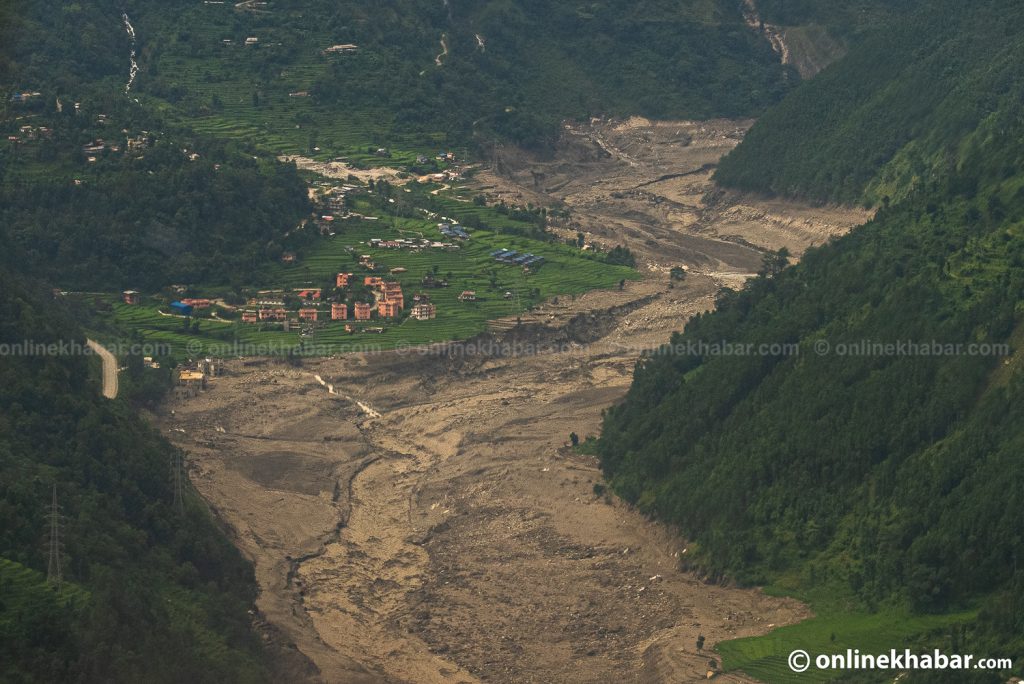
The proposed legislation comes as the government faces renewed pressure to address settlements exposed to floods and other disasters following the devastating Bhotekoshi-Trishuli floods of August 26, which caused extensive loss of life, homes and infrastructure in Rasuwa, Nuwakot and surrounding districts.