
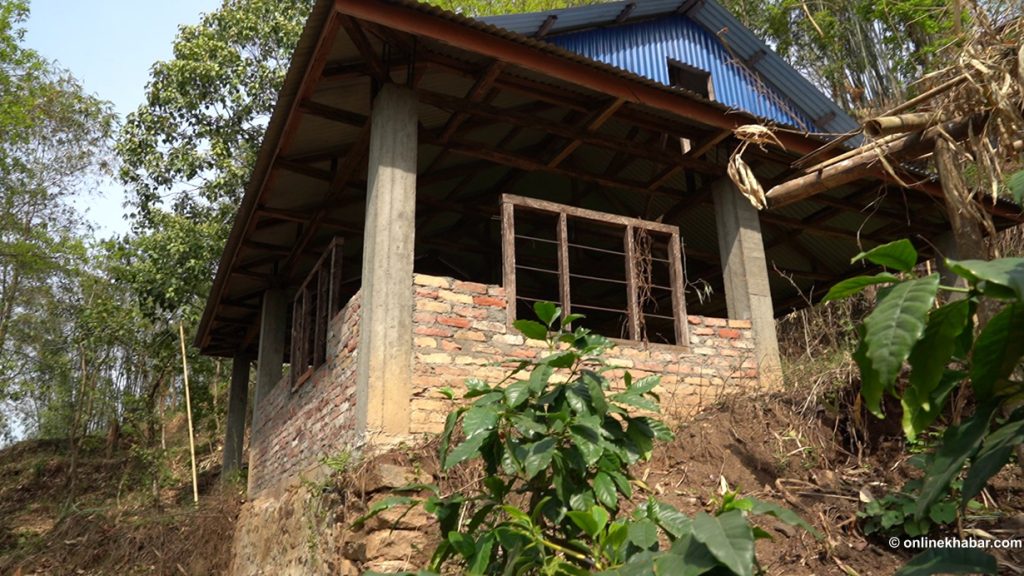
Mangal Bahadur Limbu, who drives an auto-rickshaw in Biblyante Bazaar, Ilam, had a dream of building a house near the market.
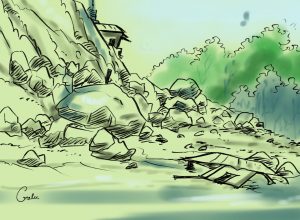
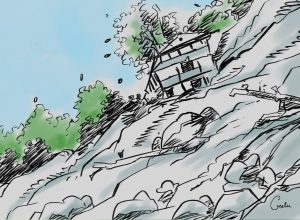
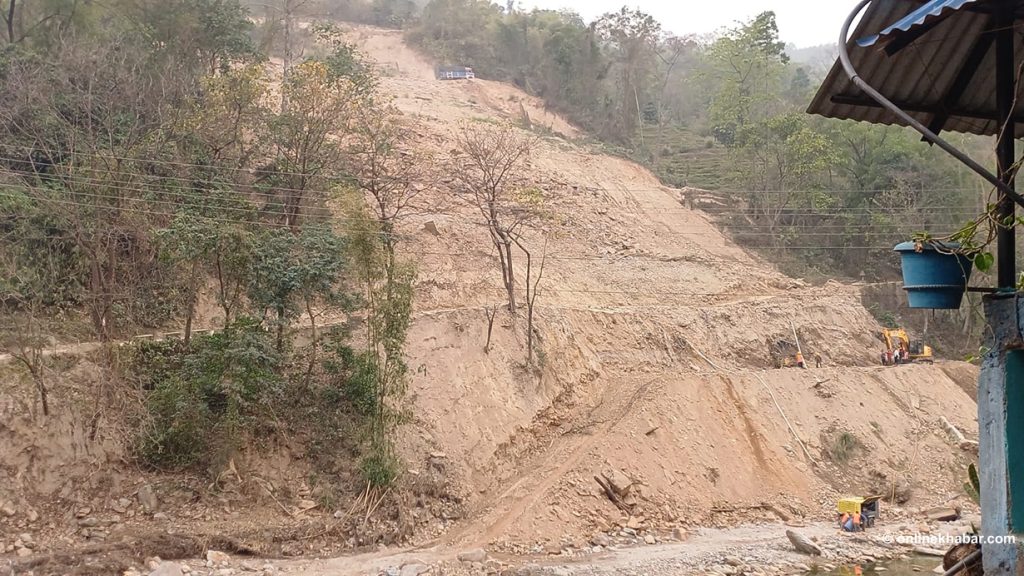
After years of hard work, he bought a plot of land just below the Mechi Highway and began constructing his home. However, the continuous rainfall on October 4 and 5, followed by landslides, has reduced that dream to rubble.
Landslides have struck both above and below his under-construction house.
“I had already spent a lot. If the landslide hadn’t occurred, we would have been living in the new house by now,” he says. “Now everything is uncertain.”
He is deeply worried as the property he built through hardship has been caught in the grip of landslides right before his eyes.
Mangal Bahadur is just a representative case. Ilam, once known as the “queen of hills,” has now been devastated by landslides.
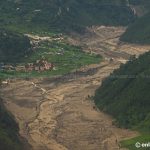
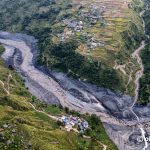
The floods and landslides triggered by the heavy rainfall in October caused damage totalling Rs 11.81 billion to roads, bridges, buildings, drinking water systems, irrigation, livestock, and agriculture in Ilam.
A total of 39 people lost their lives, and 26 were injured. The disaster destroyed 365 houses, while 940 houses suffered partial damage.
The government had announced that families whose homes were destroyed would be provided with new houses through the Reconstruction Authority. However, the victims have not yet received the funds needed to begin rebuilding.
According to Chief District Officer Laxman Dhakal, relief funds for flood victims have still not been distributed.
“Funds for temporary housing have been released,” he says, “but the process of providing relief for permanent housing has not yet begun.”
He added that more than 250 affected families have already received funds for temporary housing. The process for permanent housing will begin once temporary housing is completed.
Local governments are currently entering victim data online, which will then be approved by the National Disaster Authority. As per the federal government’s announcement, each affected family will receive Rs 450,000 in three instalments.
According to provincial assembly member and former Minister for Economic Affairs and Planning Ram Rana, a lack of coordination among the three levels of government has delayed relief distribution, leaving victims unsupported even as another monsoon approaches.
“Although the provincial government announced it would build houses, the Reconstruction Authority’s rules require coordination among all three levels of government,” he says. “Due to insufficient coordination, the work has been delayed, and victims have not received relief.”
Fragile Mechi Highway
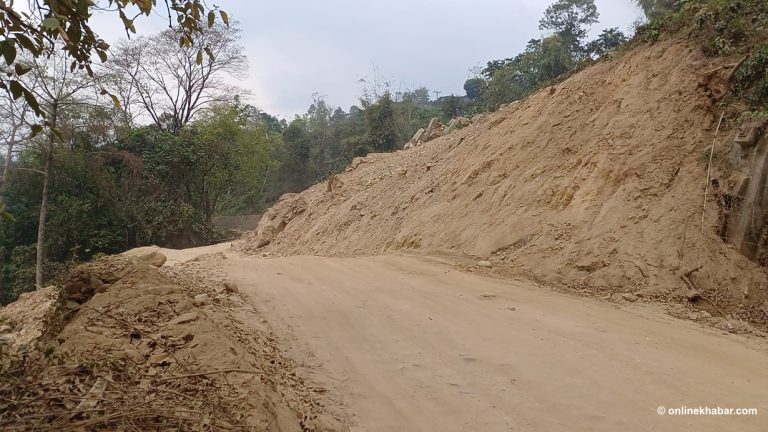
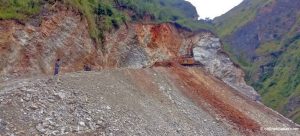
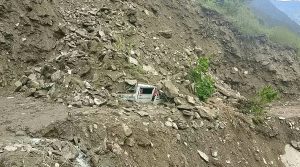
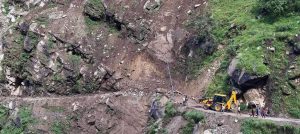
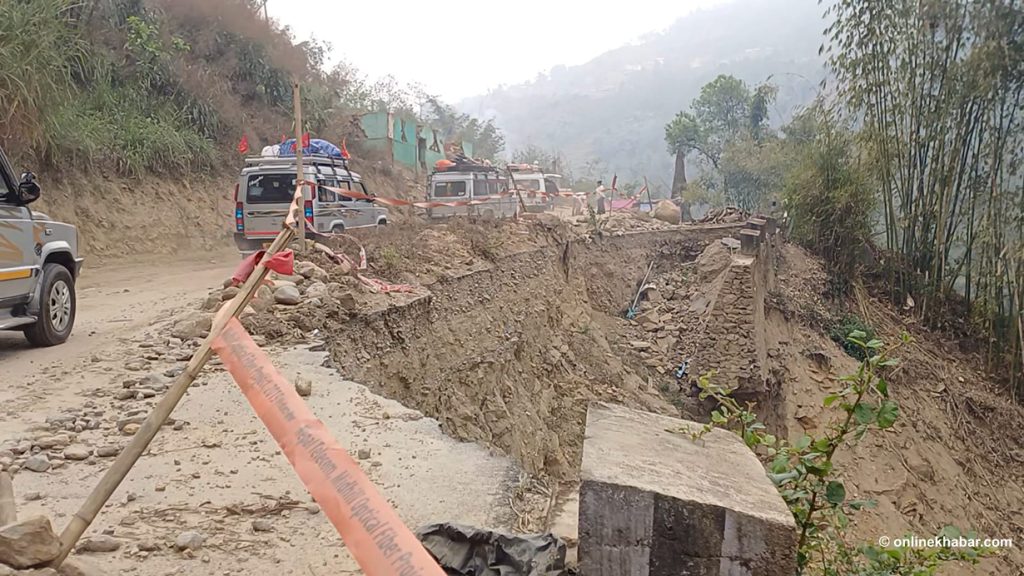
The Mechi Highway, considered a lifeline connecting Ilam and the eastern hills to the Terai, has now become extremely hazardous. In the Ilam section alone, landslides have occurred at more than 200 locations. From Biblyante northwards, including Rajduwali, the road is highly risky in many places.
The situation in the Rajduwali section is even more alarming, with landslides across the entire stretch. Vehicles are currently operating dangerously on temporary tracks built over the landslides.
According to Arjun Ghimire, information officer at the Road Division Office, Ilam, the problem in Rajduwali is deeper than it appears. A study team has concluded that underground water is the main cause of the landslides there.
Water accumulated inside the hill has weakened the soil, causing landslides. Currently, drilling is being carried out at the base of the hill to drain the water.
“After experts reported that underground water is causing the landslides, work is underway to remove it,” Ghimire says. “Drilling is being done beneath the Rajduwali hill, along the banks of the Mai Khola, to drain the water.”
According to Ghimire, it will take several years to fully restore the damaged road.
“A multi-year plan with a budget of Rs 1.5 billion has been secured, and contracts have been invited,” he added. “Reconstruction work is ongoing in landslide-affected areas.”
Work to control landslides along the Mechi Highway is being carried out in four packages.
Two packages cover the Dhobidhara–Nepaltar section, one covers Bakhkhor–Ranke, and another covers the Phidim section of Panchthar. However, due to the scale of the landslides, immediate control is unlikely, raising the risk of similar hardships in the upcoming monsoon.
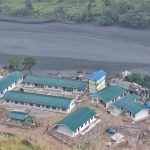
With the main highway disrupted, alternative roads connecting Ilam have also been severely affected. In the Danabari–Ilam section, connectivity was cut off after a bridge at Belase collapsed. Efforts are now underway to install a Bailey bridge there.
A diversion has been created in the river for transportation, but even light rainfall causes flooding in the Mai Khola, damaging the diversion and making transport unreliable. Ongoing road construction in the Danabari section has further complicated vehicle movement.
Processes are also underway to install Bailey bridges on the Puwa Khola and Simaldanda–Tilkeni roads. These bridges are being constructed with grant assistance from the Government of India.
The floods and landslides following the heavy rains in October caused total damages worth Rs 11.81 billion in Ilam.
Under the Road Division, 11 projects alone suffered losses of Rs 6.96 billion. The Infrastructure Development Office reported damages of Rs 2.34 billion across 62 roads, Rs 850 million across 25 bridges, and Rs 40 million in six buildings.
Under the Water Resources and Irrigation Development Division, 16 river control projects suffered losses worth Rs 134.69 million, five landslide control projects Rs 17.42 million, and 72 irrigation projects Rs 177.15 million.
A total of 3,409 farmers suffered crop losses across 892.32 hectares, amounting to Rs 274.99 million. Additionally, 25 tea estates under the National Tea and Coffee Development Board’s expansion program incurred damages worth Rs 47.55 million.
Chief District Officer Dhakal acknowledged that post-disaster reconstruction has been slow. He said the Rajduwali section of the Mechi Highway remains at an extremely high risk of landslides, with vehicles still operating over unstable terrain.
He added that alternative routes could be restored once a Bailey bridge is installed on the Belase road section connecting Ilam. According to him, unless the 14 damaged bridges are repaired immediately, there is a risk of further major losses. He said the provincial government has been urged to carry out the repairs.