Kathmandu, November 2
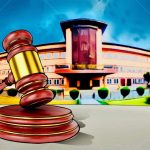
Several judges who issued orders granting relief to Rastriya Swatantra Party (RSP) chair Rabi Lamichhane in cases related to cooperative fraud, money laundering and organised crime have subsequently received judicial promotions or appointments to senior positions.
At least three judges involved in decisions that helped Lamichhane secure release from custody or have charges against him withdrawn have since benefited from transfers, recommendations or promotions within the judiciary.
Lamichhane had walked out of Nakkhu Prison during the Gen Z protests, waving to supporters amid the turmoil. His release triggered anger among inmates in several prisons, with some protesting that if he could be outside, they too should not be kept behind bars. Security personnel even opened fire during unrest at some prisons.
Criticism also mounted against Lamichhane and the RSP leaders and lawmakers who had welcomed him outside prison with garlands, with accusations that he had used the protests as a means of securing his release.
However, he was later required to return to custody. By the end of Poush last year, he had received two significant forms of relief through court orders. He was released after furnishing security for the amount demanded as bail, while the Office of the Attorney General initiated the process of withdrawing charges of money laundering and organised crime against him. The court subsequently allowed the process to move forward.
The judges who issued the orders granting these concessions have, in various ways, received opportunities for advancement. At least three judges involved in the decisions have since benefited from judicial appointments or promotions.
Acharya, who ordered bail, now heads Special Court
The first case dates back two years, when Rupandehi District Court ordered Lamichhane to deposit Rs 10 million in bail in connection with the Supreme Cooperative fraud case. He was released after paying the amount on January 26, 2025.
The Butwal bench of the High Court later overturned the district court’s order and directed that Lamichhane be remanded in custody. The Supreme Court upheld that decision. The order cited grounds to believe that he could face a sentence of more than three years and examined evidence of his alleged involvement in the misappropriation of cooperative funds.
While Lamichhane remained in custody, then interim Prime Minister Sushila Karki was seen as sympathetic towards him. Lamichhane subsequently petitioned the Rupandehi District Court, seeking release after depositing an amount equivalent to the alleged loss attributed to him.
On December 18, 2025, the Butwal bench of the High Court ordered the Rupandehi District Court to consider releasing Lamichhane after accepting the amount that could potentially be claimed as damages. The district court initially rejected his application.
Lamichhane then challenged that decision at the Butwal bench. On August 11, 2025, a bench comprising Justices Basudev Acharya and Tejnarayan Paudel overturned the district court’s decision to reject the security offered by Lamichhane.
The High Court ordered the lower court to secure the amount offered through a bank guarantee and accept it as bail. Acting on that order, the Rupandehi District Court accepted a bank guarantee worth Rs 27.4 million submitted by Lamichhane. No separate judicial order was required at the district court to complete the process, as it directly implemented the High Court’s directive.
Lamichhane was released after furnishing the guarantee.
Following the House of Representatives election, Justice Basudev Acharya was brought to the Supreme Court on deputation. Judges from district and high courts are generally brought to the Judicial Council on deputation when they are assigned special responsibilities. Acharya, however, was transferred to the Supreme Court without any such specific assignment.
He was subsequently recommended for appointment as chairperson of the Special Court after the formation of the new government.
The Judicial Council recommended Acharya for the position on July 16. By then, Dr Manoj Sharma had become chief justice, while Law Minister Sobita Gautam, who is regarded as close to Lamichhane, was serving as a member of the Judicial Council.
Bagchand recommended to the Supreme Court
Although the High Court’s Butwal bench had ordered Lamichhane’s release on bail in Rupandehi, cases of organised crime against him remained pending in several district courts. The money laundering case at Kaski District Court also put his position as a member of parliament at risk of suspension.
During the interim government’s tenure, Attorney General Sabita Baral Bhandari decided to withdraw the money laundering and organised crime charges against Lamichhane that were pending in various district courts. A writ petition was subsequently filed at the Supreme Court challenging her decision.
Acting on the Attorney General’s decision, government attorneys in Kaski filed an application at the district court seeking withdrawal of the two charges.
District Court Judge Nitij Rai rejected the request to amend the charge sheet and withdraw the allegations, citing the fact that a writ petition challenging the Attorney General’s decision was still pending at the Supreme Court.
The government attorneys challenged Rai’s order at the High Court in Pokhara. A bench comprising Chief Judge Dr Ratna Bahadur Bagchand and Justice Merina Shrestha overturned the district court’s decision.
The two judges ruled that no interim order had been issued against the attorney general’s decision and directed the lower court to proceed with amending the charge sheet.
One of the judges who issued the order, Dr Ratna Bahadur Bagchand, was recommended for appointment as a Supreme Court justice by the Judicial Council a few weeks ago. Although he was already ranked first among chief judges of the high courts, he had been left out of an earlier round of recommendations. This time, however, he was given priority.
Promotion four days before retirement
Following the High Court’s order, government attorneys’ application proceeded at Kaski District Court. On May 22, Judge Himalal Belbase amended the charge sheet, removing the charges of organised crime and money laundering.
With Belbase’s order, only the cooperative fraud charge remained against Lamichhane. A decision by the previous government had already opened the way for the cooperative fraud case to be settled through a compromise. The removal of the money laundering charge also meant Lamichhane no longer faced the possibility of suspension from parliament on that ground.
On September 15, 2026, the Judicial Council recommended District Court Judge Belbase for appointment as a High Court judge. He received his appointment letter, reported to the High Court in Janakpur and retired shortly afterwards.
The Constitution of Nepal allows a person to serve as a district or high court judge until the age of 63. Belbase retired on October 8, just four days after his appointment.
At the time of his recommendation, Belbase ranked 13th in seniority. The Judicial Council recommended him for promotion ahead of 12 judges senior to him. His appointment also made him eligible for benefits, including a pension, as a High Court judge.
The appointment has already been questioned during a full court meeting of the Supreme Court. Justices reportedly asked Chief Justice Dr Manoj Sharma why Belbase had been promoted from the middle of the seniority list when judicial practice generally requires judges to go on leave about a month before retirement.
Questions have also been raised at the Supreme Court about Special Court chairperson Basudev Acharya. At last month’s full court meeting, justices reportedly questioned his leadership, administrative capacity and integrity, with some describing the Special Court as having become like a departmental store.
At the time, Chief Justice Sharma had assured the justices that he would make changes to the Special Court’s leadership and some of its judges after returning from a visit to China. However, no changes have been made to the court’s leadership or composition so far.