Kathmandu, September 1
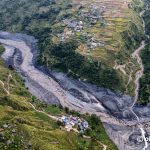
Although rescue and relief efforts are underway for people affected by the floods in Rasuwa, difficulties have emerged in rescuing those believed to be trapped inside tunnels. The rescue of people believed to be trapped inside hydropower project tunnels has been hampered by a lack of adequate equipment and skilled technical personnel needed to assess conditions inside the tunnels, according to authorities.
Bagmati Province Assembly member Indra Prasad Gotame said more than 300 people are feared to be trapped inside six tunnels in different parts of Rasuwa. “The situation here is quite serious. We have been told that more than 300 people are inside six tunnels in Rasuwa,” said Gotame, who is currently in Dhunche. “The government does not have the technical personnel needed to enter the tunnels, nor does it have the necessary equipment.”
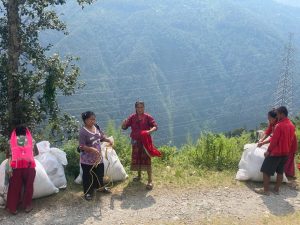
He said the biggest challenge in Rasuwa at present is rescuing those trapped inside the tunnels. “The Army has already rescued the people who survived the floods and were stranded outside. There is no major problem regarding relief here,” Gotame said. “The biggest problem is rescuing the people trapped inside the tunnels.”

Families of people who have been missing since the floods have been urging the government to immediately begin rescue operations to determine whether they are still alive. Gotame said the provincial assembly had also urged the government to deploy skilled technical personnel to assess the situation inside the tunnels. “We made a request to the federal government yesterday,” he said. “We asked it to bring skilled technical personnel along with the necessary equipment and assess the situation inside the tunnels.”
He stressed that efforts similar to those being made to rescue people from the tunnels of the Upper Trishuli 3A Hydropower Project should also be undertaken in the tunnels located elsewhere in Rasuwa. “The way they are working on Trishuli 3A and 3B, we want similar efforts to be made in the other five tunnels in Rasuwa,” Gotame said. He said residents and families of those missing in the floods were making the same demand. “Local people and relatives are demanding that those inside the tunnels be brought out so that we can know whether they are alive,” he said. “You could call it a hope or an assumption that they may still be alive, but it is the hope of their families.”
Excerpts from an interview with provincial assembly member Gotame:
The situation here is quite serious. In terms of rescue operations, the Army has already brought out those who survived and were stranded outside. The biggest problem here is rescuing those trapped inside the tunnels. “There is intense pressure from the families of those trapped inside the six tunnels to find out whether they are alive. The government does not have the technical personnel needed to enter the tunnels, nor does it have the equipment.
We requested the federal government yesterday. We asked it to bring skilled technical personnel along with the necessary equipment and assess the situation inside the tunnels. We have been told that more than 300 people are inside the tunnels. The way excavation and rescue operations are being carried out at Trishuli 3A and 3B, similar efforts should be made in the other five tunnels in Rasuwa. Work is underway in the Nuwakot area, but no rescue effort has yet been launched in the tunnels located in Rasuwa.

Residents here are demanding that work in Rasuwa also begin using the same approach adopted at Trishuli 3A and 3B. The relatives of those affected by the floods are making the same demand. There is no major problem with relief here. People who have made it out are not facing that problem. The pressure on the government is to bring out those inside the tunnels and determine whether they are alive. You could call it a hope, but it is the hope of their families.
This is not a problem of relief. The problem is that the government should bring the necessary equipment and skilled technical personnel and begin rescue operations in all five remaining tunnels. It has already been five or six days since the flood. We need to know what has happened to the people inside the tunnels. This is not the time to accuse the government of treating people unequally during a disaster. The government would not deliberately delay operations hoping that people would die. But there have been shortcomings in the way things have been handled, particularly in the division of responsibilities.
The government has assigned the responsibility mainly to the Army. Nepal Police and the Armed Police Force are also there but have not been fully utilised. If the three forces had been given separate responsibilities—for example, assigning the Armed Police Force to rescue operations, the Army to tunnel operations and Nepal Police to distribute relief materials—the problem could have been addressed more efficiently.
That would have helped resolve the major problems. Instead, the responsibility was concentrated in one place, resulting in a single chain of command. That is why there have been some shortcomings. This is the kind of problem we are seeing here.“The federal government has not really coordinated with local governments and the provincial government. We have been saying that during a disaster, it is everyone’s responsibility, and we should not sit back saying that this is someone else’s job.
There has not been much coordination. The responsibility has been given to the Army. Focusing efforts in one place may be appropriate, but there has been a problem with the division of responsibilities, making the response somewhat disorderly. If responsibilities had been divided properly, these concerns would not have arisen.
People suspect that there may be bodies inside houses that have been buried by the floods. They are saying that the buried houses need to be cleared because there could be bodies inside. The government does not have the necessary equipment for that either. Bodies found outside have been collected, but there are also problems managing them.
The government has done what it could for people who were outside. But rescue operations inside the tunnels have not been possible because of the lack of technical expertise. The government should have understood this. It should have brought in experts even from abroad if necessary.
If that had been done, the government could at least have said that it had made an effort but was unable to succeed. Instead, relatives are complaining that they lost their loved ones because the government did not make enough effort. Many of the workers inside the tunnels are not from Rasuwa. Most of them are from western parts of the country. As a result, their concerns have not received sufficient attention. In situations like this, there is also a problem where the loudest voices tend to get heard. Teams have gone there saying they will begin work on the tunnels from today. But they do not have the necessary equipment or skilled technical personnel.”