
Nepal’s disaster response is facing growing questions over command and coordination after Home Minister Sudan Gurung personally joined the search for missing people inside a tunnel in the Trishuli area, despite the Home Ministry’s broader responsibility for coordinating the country’s disaster response.
Under the Government of Nepal (Allocation of Business) Rules, 2026, the Home Minister is responsible for disaster-related functions including the development and dissemination of early warning systems, national disaster management policy and regulation, relief and rehabilitation of displaced people, and the operation of the national disaster fund.
These responsibilities effectively place the Home Minister at the centre of the country’s disaster command structure.
That means the Home Minister’s role during the devastating August 26 flood in the Bhotekoshi river should include coordinating the deployment of security personnel, setting rescue priorities, identifying shortages of equipment and resources, and directing relief and rehabilitation efforts across affected areas.
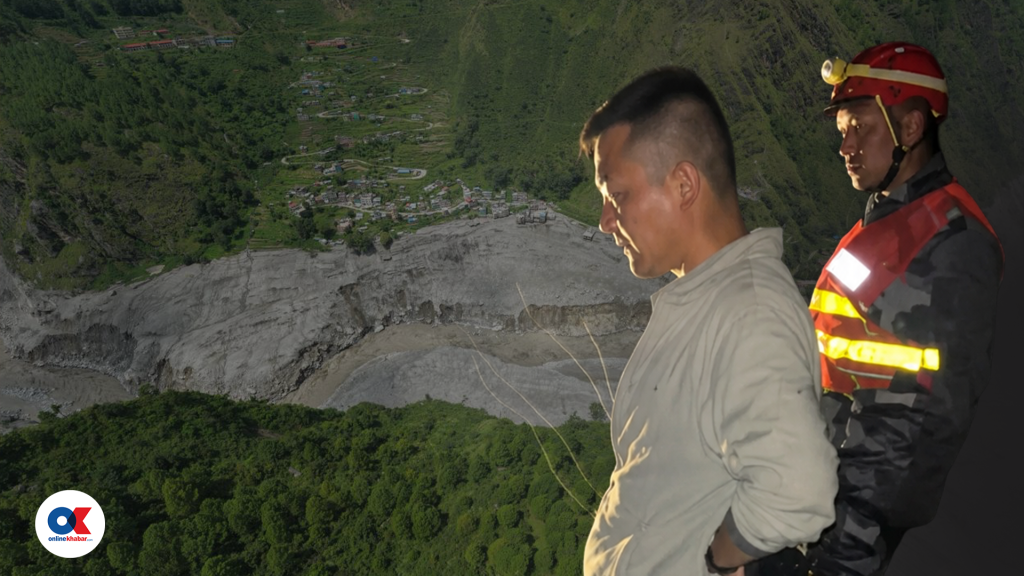
Instead, Gurung has spent several days at a tunnel site in the Trishuli area, personally participating in excavation efforts to search for people missing after the flood.
His hands-on involvement has been welcomed by many as a sign of personal commitment. But disaster management experts and former government officials have questioned whether the approach is appropriate for a minister whose primary responsibility is to coordinate the wider response.
“His eagerness to do something is clearly visible. I had openly praised him earlier. But it appears that he needs to improve his way of working,” a former home secretary told Onlinekhabar.
‘He can dig for 10 days, but that won’t solve the problem’

Families of people still missing after the flood have also expressed frustration.
Sobhit Pokhrel of Lamjung, who has been waiting for news of missing relatives at the Trishuli barracks in Nuwakot for six days, said Gurung’s personal involvement in excavation was not enough.
“The problem is that they built the tunnel, but there is no skilled manpower to carry out the rescue. The Home Minister himself went into the tunnel and worked. He deserves thanks for that. But even if he stays there and works for 10 days, it won’t solve the problem. Rescue requires skilled manpower,” Pokhrel said.
Pokhrel spoke to Onlinekhabar on August 29, when Gurung had gone to the tunnel to help with the excavation. Foreign rescue teams had not yet begun operations at the site. Chinese and Indian teams arrived later that evening and began work.
Gurung had travelled to the Bhotekoshi area on Friday and had remained there, focusing on the tunnel search.
At the same time, reports have emerged that relief supplies are not reaching some of the worst-affected communities in Rasuwa, even as large quantities of relief material remain stockpiled in Trishuli.
Critics say some of the problems could have been addressed through stronger coordination and instructions from the Home Ministry rather than requiring the minister to personally participate in excavation.
Security agencies have the manpower, but lack equipment

The concerns extend beyond the Home Minister’s role.
The Armed Police Force is legally tasked with rescuing people affected by disasters and epidemics anywhere in Nepal. The force has personnel trained in disaster response, including divers and teams trained to conduct search operations following floods, landslides and earthquakes.
But officials say the force lacks the equipment needed to make full use of that expertise.
Among the reported shortages are rescue equipment, drones and human-detection devices. Reaching remote disaster sites by helicopter is also a major challenge.
The Armed Police Force has repeatedly asked the government to provide it with a helicopter for disaster response. That request has yet to be fulfilled.
Gurung had promised to facilitate the purchase of a helicopter for the force when he visited its headquarters in Halchowk for an inspection during his first tenure as Home Minister. He subsequently left the ministry before the promise could be fulfilled.
He has since returned as Home Minister, but the helicopter has still not been provided.
As a result, the Nepal Army has largely taken the lead in helicopter-based rescue operations in difficult-to-reach areas following the Rasuwa flood. The Nepal Police and Armed Police Force have been assisting in areas accessible by road or on foot.
Different agencies, different figures
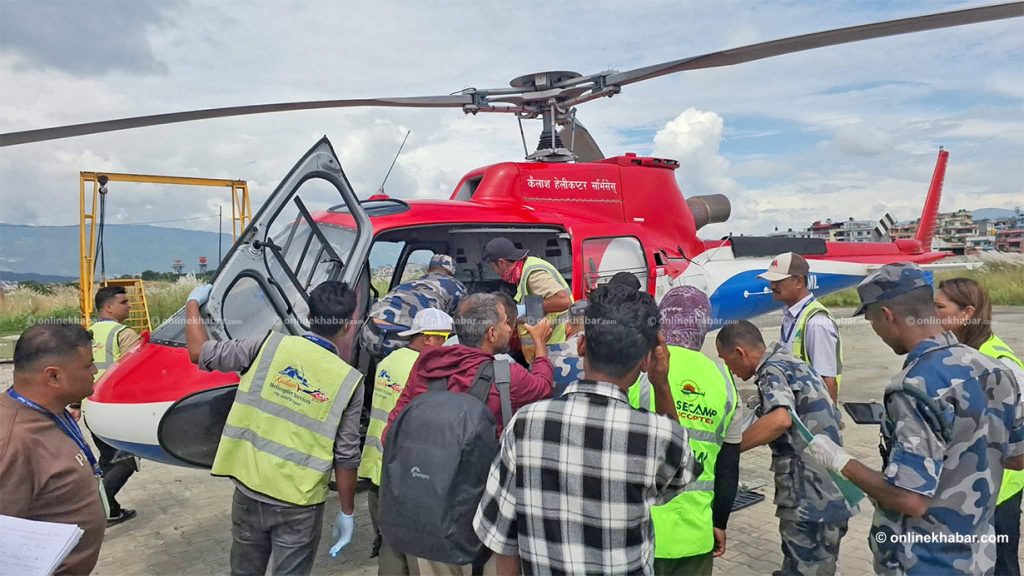
The disaster response has also exposed gaps in coordination between security agencies, with figures on personnel deployed, people rescued and those missing varying between agencies.
According to security sources, 8,399 Nepal Army personnel, 7,293 Nepal Police personnel and 4,203 Armed Police Force personnel are currently involved in search and rescue operations.
The sources say 2,974 people have been rescued by the Army, 2,699 by Nepal Police and 3,057 by the Armed Police Force.
Among the security personnel themselves, 45 Nepal Army personnel, 13 Armed Police Force personnel and 25 Nepal Police personnel are reported missing.
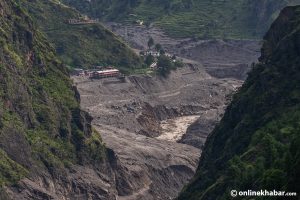
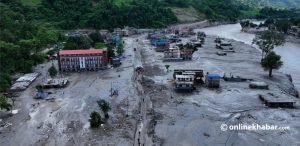
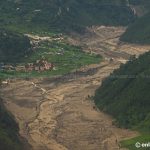
The August 26 flood in the Bhotekoshi caused extensive damage across Rasuwa, Nuwakot and surrounding areas. Over 900 bodies have been recovered, while nearly 4,000 people remain missing, according to the figures cited by security sources.
The government initially received praise for its response. A meeting of the National Disaster Risk Reduction and Management Authority was held soon after the flood, with a focus on rescue, search operations and relief. All three security agencies were mobilised following government instructions.
But as days have passed, criticism has intensified over the lack of progress in some searches, delays in bringing in international rescue expertise and questions over the Home Minister’s decision to personally participate in tunnel excavation rather than focus on overall command and coordination.
A decision reached at an all-party meeting facilitated by Rastriya Swatantra Party chairperson Rabi Lamichhane to cooperate in the disaster response has also failed to gain visible momentum.
The central question now is whether Nepal’s disaster response needs more ministerial presence at individual rescue sites — or stronger command, coordination, equipment and specialised manpower across the entire response system.