
Kathmandu, December 11
The government has taken ownership of the Gen Z movement that took place on Bhadra 23 and 24 against governance disorder, agreeing to address the demands raised during the protests.
The spontaneous youth-led movement had toppled the then-political leadership, eventually paving the way for the formation of a government led by former Chief Justice Sushila Karki at the proposal of Gen Z youths. Since the movement had no organised demands beforehand, there was a growing risk that the issues raised during the protests would fade away without formal recognition.
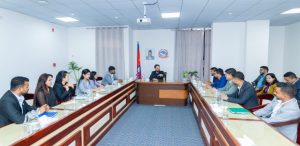
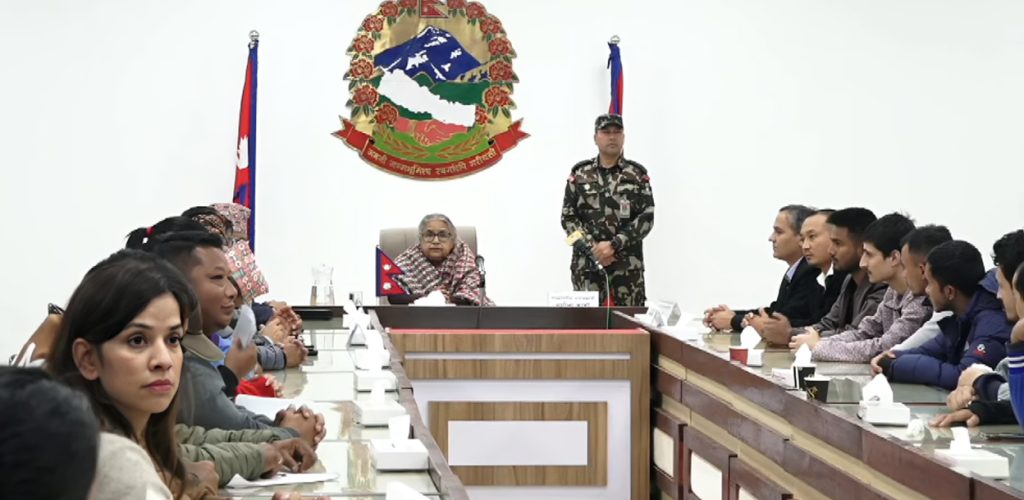
For this reason, some groups within Gen Z sought to formally register their demands with the state. However, long disagreements persisted over what issues should be documented. On Wednesday, both sides reached an agreement at Singha Durbar to formally institutionalise the movement.
Although an interim government had been formed in the aftermath of the protests, a formal agreement has come only three months later. Growing frustration among Gen Z over the criminalisation of the movement and their continued pressure eventually pushed both sides toward signing the agreement.
Gen Z had warned of returning to the streets if the government delayed further. They not only exerted pressure but also submitted their own draft agreement to the government. Based on that draft, both sides held multiple rounds of discussions and finalised a ten-point agreement.
Following are the key points included in the agreement:
1. Recognition and compensation for martyrs and injured
Those who lost their lives during the protests of Bhadra 23–24 will be declared martyrs. Their families and the injured will receive compensation, free health care, education, employment opportunities, social security, and memorial arrangements. A permanent commission will also be formed to promote integrity, good governance, and anti-corruption measures.
2. Investigation of the Bhadra 23–24 incidents
A high-level inquiry commission formed by the government will investigate excessive use of force and extrajudicial killings and recommend criminal action against perpetrators. Protesters will not face criminal charges for participating in political activities. A separate mechanism will be created for institutional reforms to prevent such incidents in the future.
3. Ending corruption and political patronage
A high-level commission will investigate the lifestyles and properties of individuals holding public office. Appointments based on political party quotas will be abolished. Foundations, funds, and trusts operated in the names of political leaders and parties will be examined, and illegally acquired assets will be nationalised.
4. Free and fair elections, and provision of NOTA
Ballot papers will include the NOTA option, “None of the Above.” Mandatory primary elections will be introduced within political parties. Party presidents will be limited to a maximum of two terms. Voting rights for Nepalis abroad, migrant workers, and students will be ensured. Candidate and party expenditure must be made transparent.
Only candidates selected through mandatory internal primaries will be eligible to contest national elections. The Election Commission will determine party and candidate symbols through a lottery system.
5. Formation of a constitutional amendment recommendation commission
A high-level commission comprising independent experts, Gen Z representatives, and stakeholders will be formed to recommend constitutional amendments while preserving the constitution’s fundamental principles. This “Constitution Amendment Suggestion Commission” will hold extensive discussions and public consultations before providing recommendations.
The commission will conduct a ten-year review of constitutional implementation, identifying achievements and shortcomings, and propose measures to enhance effectiveness. It will also gather public input on limiting the tenure of the country’s head of state, the executive heads of all three tiers of government, and cabinet members to a maximum of two full terms.
6. Full proportional inclusivity
Maximum representation will be ensured for women, Dalits, Indigenous nationalities, Madhesi, Tharu, Muslim, minority groups, people with disabilities, marginalised communities, farmers, labourers, and economically disadvantaged Khas Arya. The Gen Z Council will serve in an advisory role.
7. Transparency and accountability
Government decisions and expenditures will be made transparent and easily accessible to the public through social media. Reports of all past inquiry commissions will be made public. Transparent and competitive processes will be ensured for appointments to public positions.
8. Freedom of expression and digital rights
The agreement guarantees that no form of arbitrary censorship will be imposed on the internet or digital media. Legal and technical measures will be introduced to prevent unlawful surveillance and misuse of citizens’ digital data.
9. Formation of the Gen Z council
A Gen Z Council will be established to advise, monitor, and support the government in governance, accountability, and good governance reforms.
10. Implementation of the agreement
All points mentioned above will be implemented. From the date of signing, the agreement will take effect and will be implemented based on mutual consent between the Government of Nepal and representatives of the Gen Z movement.