
Even before the month of Bhadra began, I had already started to feel that Bhadra 23 was approaching. Because when Bhadra 23 draws near, so do fear, anger, helplessness and grief. Above all, another question keeps troubling the mind and unsettling the heart: what really happened that day?
Bhadra 23, 2082 BS, was not merely a date on the calendar. It was a dark day etched into our collective memory. Young people had taken to the streets that day to break the chains of disorder and bad governance.
In fact, the young people had not gone to the streets merely to set things on fire. They had come with proposals for alternatives and to make their voices heard. They had come carrying their questions, frustrations and anger, ready to express all those emotions on the streets.
But instead of listening to those voices, the state turned the streets into a battlefield of brutality. The incompetence of those entrusted with running the state, and the cruelty that arose from it, consumed the very people who had taken to the streets. That day, it was not only bodies that fell on the streets; faith in the state also collapsed, while a deep sense of injustice took even firmer root in the hearts of an entire generation.
Although I was affiliated with a political party, the young person within me carried a consciousness of solidarity with that group. After all, isn’t that what politics is about—to raise one’s voice against injustice, stand on the side of truth, expect competent leadership, aspire to a well-governed state and remain hopeful for a brighter morning?
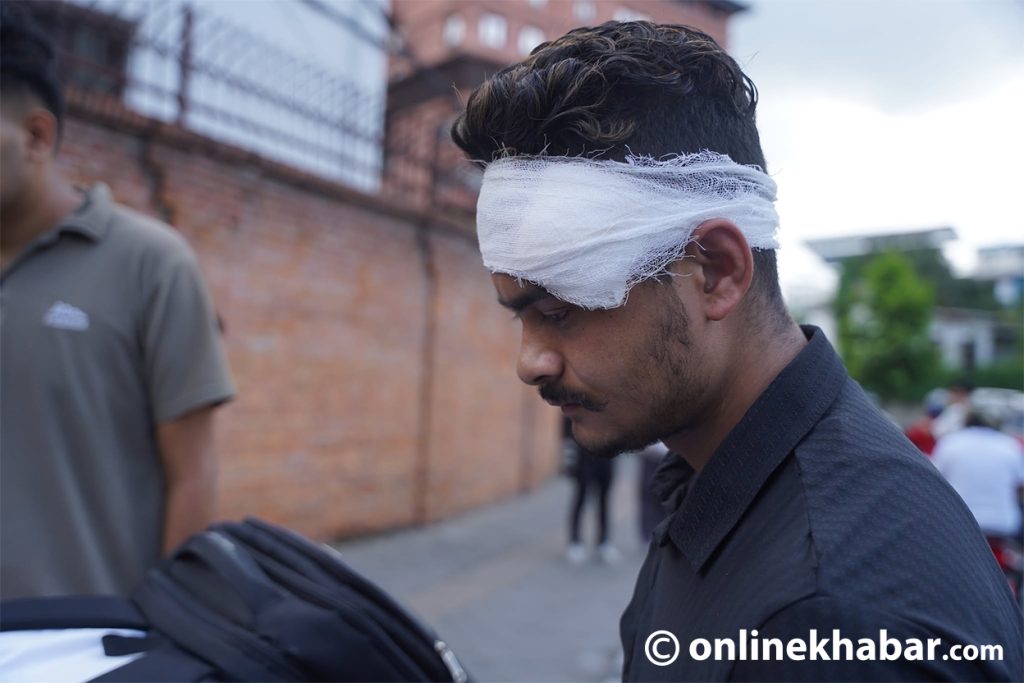
It was with that hope that I reached ‘Ground Zero’. But within a short while, the place before my own eyes was transformed into a scene of bloodshed. The uproar of angry young people and the storm of the state’s insensitivity shook even Singha Durbar.
I was at the forefront myself, trying to protect some of the young people. But the situation had taken such a horrific turn that we were already miles away from being able to bring it under control.
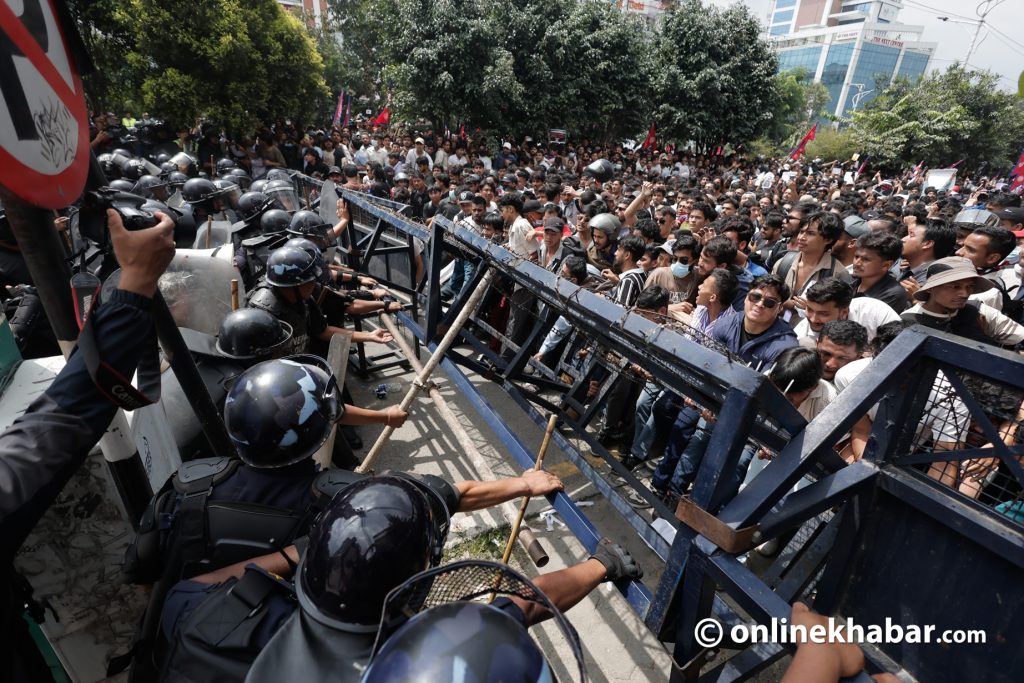
Within moments, an attempt was made to destroy the dignity of the nation. Mothers lost their children. Homes fell silent. The pillars of hope for families lay unconscious. It was not only blood that flowed on the streets; the dreams, trust and future of an entire generation were also stained with blood.
The whole country wept. And fear mingled with those tears. So did anger. So did helplessness. And out of it emerged an uncertain yet inevitable desire for change.
That uprising, and the change it brought about, came to be known as the Gen Z Movement.
But it was not merely the name of a movement. It was the voice of young people aged 13 to 28 who had risen for the sake of their future. They had taken to the streets carrying dreams of changing the system. Yet, ultimately, it was the sacrifice and blood of those very young people that wrote the final chapter of the movement.
The greatest irony of the Gen Z Movement was this: a generation that had taken to the streets demanding a future ended up losing its present.
Even today, I remain conflicted about how we should view the role of young people in the Gen Z movement.
Young people are often called the future pillars of the nation, and that is true. Today’s youth have greater access to knowledge from around the world. Older generations find it difficult to outpace them in technology. They are also more familiar with concepts of human rights. All of this is true.
But that does not necessarily mean that everything young people do, think or choose is right.
Youthful energy, by itself, is not synonymous with wisdom. And this is something young people must be particularly conscious of. Knowing what we are aware of is important, but knowing what we are unaware of is an even greater sign of awareness and wisdom.
Young people may be like a swelling river, but they should not remain confined to the flow of a river. They must become an ocean and connect with the wider sea. Because limited knowledge and limited awareness cannot sustain a long journey.
The process of learning must be continuous. Curiosity should arise not only about what we know but also about what we do not know. The ability to understand a world beyond our own perspective, learn from different experiences and ideas, and accept the possibility that we may be wrong is also part of awareness. If the depth of wisdom does not grow alongside the expansion of knowledge, knowledge itself remains incomplete.
In keeping with the spirit of the Gen Z Movement, young people’s presence and influence in state power have increased today. Efforts to establish stronger youth leadership in the opposition have also gained momentum. Yet, at the same time, the practice of hurling all kinds of abuse on social media is also increasing.
As access to advanced technology expands, is the creative power of our generation somehow weakening? Are serious study and intellectual discourse being displaced by superficial debates on social media? Instead of searching for solutions to problems, are our debates shifting from issues to personal criticism? Is ideological disagreement gradually turning into personal attacks? And in the name of development, are we sacrificing human sensitivity and empathy at the altar of progress? In our attempt to control this momentum, have we overlooked the democratic process itself?
Perhaps the most uncomfortable question is this: We questioned leaders of the older generation for their arrogance in believing that “we are the ultimate authority.” Are we, somewhere along the way, cultivating the same tendency within ourselves?
In the race to become leaders, are we forgetting society? Are we losing our humility in the name of change? Are we moving away from the patience to listen to criticism, the culture of respecting differing opinions and the ability to acknowledge that we, too, may be wrong?
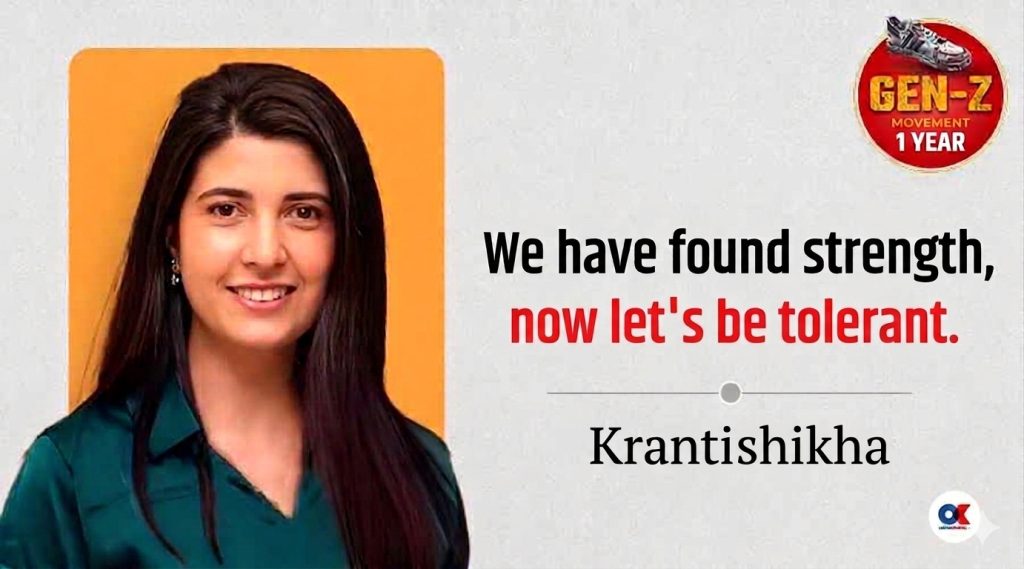
Being young is not merely a description of age; it is also a responsibility of consciousness. The movement may have given us an opportunity to change those in power, but the real test will be whether we can change our thinking, our values and our behaviour. The decisive question is whether we are merely going to change the faces of the old leaders or whether we are going to change the political culture itself.
Because the greatest proof of change is not whom we removed, but what we ourselves became.
Perhaps what this country needs is a generation capable not merely of raising its voice in the name of patriotism, but of softening its own voice in the face of another person’s suffering. It needs a generation that does not merely demand power, but is capable of carrying the burden of power once it has it.
Because having power may be a measure of ability, but exercising power with restraint is a matter of character.
The true success of the Gen Z Movement will not be the day young people reach positions of power. It will be the day they reach positions of power and do not become like power itself.
I remain afraid. And that is precisely why I continue to care.
We questioned the older generation so casually: “Why didn’t you change?”
What if that very question eventually comes back to us?
What if, tomorrow, the brothers and sisters who gave their lives to open the path to change ask us: “How much have you yourselves changed?”
What answer will we have?
Will we have merely continued, under new faces, the very culture of power they sought to dismantle? Will our arrogance, intolerance and hunger for power once again stand where their dreams were meant to be? Or will we truly have succeeded in changing ourselves?
Because they did not merely give us an opportunity to lead. They also gave us the responsibility to prove ourselves.
May we live in such a way that tomorrow we can look into their eyes and answer their questions. For our generation, there can be no greater defeat than reaching a day when we have no answer to give.