The Kathmandu District Court has classified the fake refugee scandal as a “combined offence”, a situation where a single incident of wrongdoing satisfies more than one criminal charge simultaneously. Since fraud, forgery of government documents, organised crime, and offences against the state were all proven, the court held that the case also constitutes a combined offence.
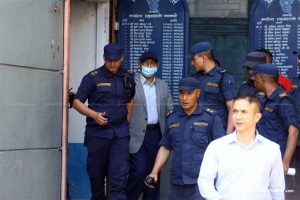
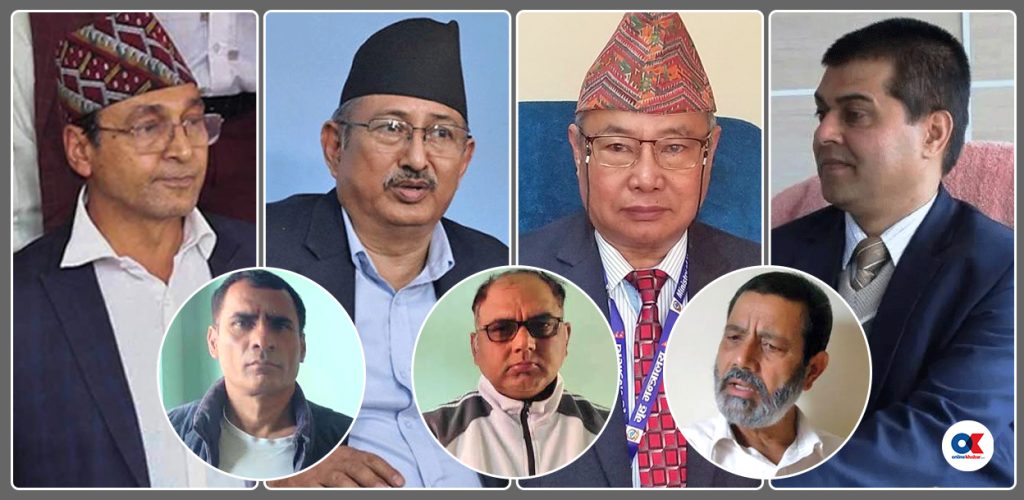
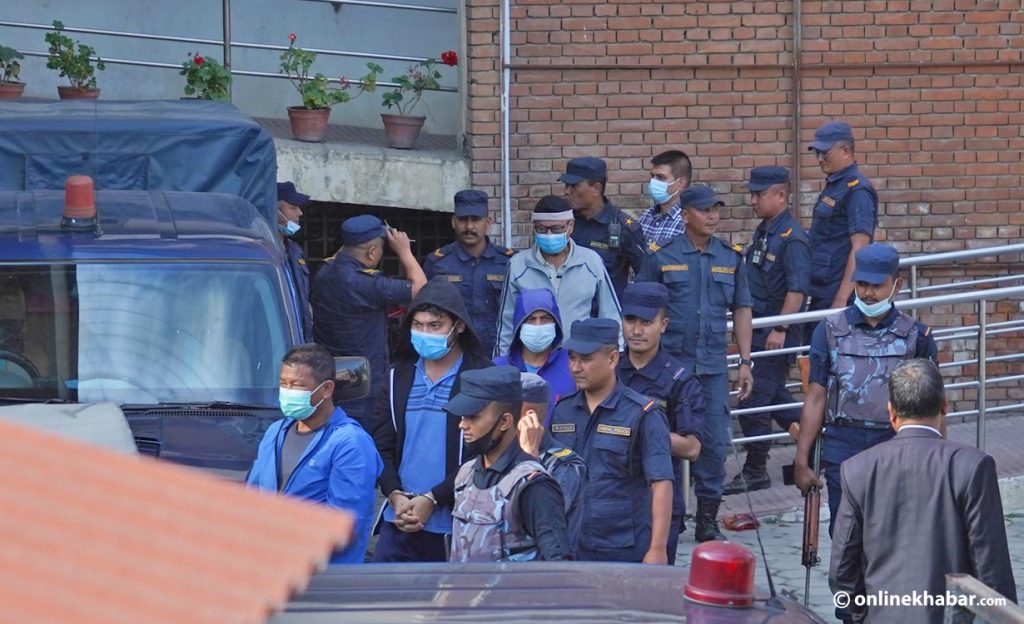
The Kathmandu District Court has found 15 people guilty, including two former ministers, in the case of sending Nepali citizens to the United States by falsely presenting them as refugees. Seven of the accused have been acquitted.
Among those convicted are senior political and administrative figures. Their sentences, damages, and fines will be determined on July 13.
The District Court found the accused guilty of different offences; some were held responsible under the combined-offence provision, while a few individuals were found guilty only as accessories, which carries a lesser sentence.
The District Court has issued a single 15-page order covering three cases related to the fake refugee scandal. Here is what that order contains, in a 13-point briefing:
Forgery charge: 3 guilty, 19 acquitted
The Kathmandu District Court found Bhutanese pro-democracy leader Tek Nath Rizal guilty of forging government documents. Along with Rizal, Keshav Prasad Dulal and Sanu Bhandari were also found guilty of forgery.
Among those charged with forgery, Sagar Rai, Sandesh Sharma, Dr Indrajit Rai, Govinda Chaudhary, Angtawa Sherpa, and Tek Narayan Pandey were acquitted.
Similarly, Bal Krishna Khand, Narendra KC, Shamsher Miya, Hari Bhakta Maharjan, Niranjan Kumar Kharel, Top Bahadur Rayamajhi, Pratik Thapa, Ram Sharan KC, Tanka Kumar Gurung, Sandip Rayamajhi, Laxmi Maharjan, Keshav Tuladhar, and Ashish Budhathoki were also acquitted.
Fraud and organised crime: 9 guilty, 1 accessory
The Kathmandu District Court found nine people guilty of fraud and organised crime. Keshav Prasad Dulal, Sanu Bhandari, Sagar Rai, Sandesh Sharma, Dr Indrajit Rai, Govinda Chaudhary, and Angtawa Sherpa were found guilty of organised crime.
In addition, then-Secretary Tek Narayan Pandey and Top Bahadur Raimajhi were also found guilty of organised crime.
Former Home Minister Bal Krishna Khand was found to be an accessory to fraud and organised crime. Likewise, Tek Nath Rizal, Narendra KC, Shamsher Miya, Hari Bhakta Maharjan, and Niranjan Kumar Kharel were found guilty of committing fraud in an organised manner.
In a separate case, Bechan Jha was found guilty of attempting to commit fraud (as a venture/enterprise). However, the District Court’s summary order states that other charges against him could not be proven.
Offence against the state: 9 guilty, 6 accessories
The District Court also found nine people guilty of offences against the state. According to the summary order issued by Judge Tej Bahadur Khadka, their fraud and organised crime activities were also established as constituting offences against the state.
The District Court found Bal Krishna Khand, Tek Nath Rizal, Narendra KC, Shamsher Miya, Haribhakta Maharjan, and Niranjan Kumar Kharel to be accessories to the offence against the state. All these accused were also found guilty under the combined-offence provision.
Seven people acquitted
The Kathmandu District Court acquitted seven of the accused, including Ramsharan KC, Tanka Kumar Gurung, Sandip Raimajhi, Pratik Thapa, Laxmi Maharjan, Keshav Tuladhar, and Ashish Budhathoki.
The court acquitted them because, although their bank accounts had been misused by other convicted individuals, no further involvement or evidence against them was found.
Who was acquitted, and why?
Among the accused, the court ruled that Ram Sharan KC could not be convicted merely because, trusting refugee leader Tek Nath Rizal, he collected money and handed it over to Keshav Dulal and Sanu Bhandari.
The court acquitted Ashish Budhathoki after finding that convicted defendant Keshav Dulal had misused Budhathoki’s bank account. It similarly ruled that Tanka Bahadur Gurung, a restaurant owner, could not be convicted simply because the accused had gathered at his restaurant.
The court ruled that UML leader Top Bahadur Rayamajhi could not be convicted merely because, out of 20 million rupees owed to him, 4 million rupees had been deposited into his son Sandip’s account.
One of the accused, Hari Bhakta Maharjan, had deposited money he received into the accounts of his wife, Laxmi Maharjan and another person, Keshav Tuladhar. The District Court acquitted Maharjan and Tuladhar, ruling that merely having money deposited into one’s account by someone else does not make one an offender.
Pratik Thapa, son of former minister Ram Bahadur Thapa, was also named as a defendant in the case. The District Court acquitted Thapa after one of the complainants, Bal Krishna Panthi, gave testimony that contradicted his own original complaint regarding Thapa, and no further evidence was found.
About supplementary case
In the supplementary case filed by police, Keshav Dulal, Sanu Bhandari, Sagar Rai, and Angtawa Sherpa were found guilty of fraud, organised crime, offences against the state, and the combined offence. Dulal and Bhandari were also found guilty of document forgery.
Sagar Rai and Angtawa Sherpa were acquitted of the forgery charge. Ramsharan KC was acquitted of all charges in the supplementary charge sheet. After the first case in the fake refugee scandal was filed, police conducted further investigation and filed a second, supplementary case. After Bechan Jha was arrested, a separate case was also registered against him.
Documents gathered again
On September 9 last year, there was vandalism and arson at the Kathmandu District Court, during which all files and documents related to the fake refugee case were destroyed by fire.
According to the order issued by Judge Tej Bahadur Khadka, after the documents were destroyed, copies were obtained again from various agencies to reconstruct the case file. The District Court gathered the case files with the help of the Government Attorney’s office, police, the Supreme Court, and several legal practitioners.
No summon
At the final hearing of the fake refugee case, lawyers representing some of the complainants had requested that certain individuals implicated in the scandal, but not formally charged, be summoned to testify.
Citing their alleged involvement in the fake refugee scandal in one way or another, the lawyers sought to have then-Prime Minister KP Sharma Oli, then-Home Secretary Prem Kumar Rai (now head of the Commission for the Investigation of Abuse of Authority), and former minister Dr Arzu Deuba summoned to court.
They also sought to have Congress leader Manju Khand, former minister Ram Bahadur Thapa (Badal), Naina Kala Thapa, Rajesh Bajracharya, Ajay Kranti Shakya, and Bidya Sundar Shakya appear in court and give testimony.
When the case was first filed in the District Court, police had noted that “investigation remains ongoing regarding individuals named during interrogation.”
Police had indicated that a further supplementary case would be filed once their offences came to light.
However, Judge Khadka noted that he refused to summon them, stating that after police had registered a supplementary charge, the District Court, being a court of ordinary jurisdiction, could not exercise the kind of extraordinary authority the Supreme Court might, to issue such an order.
The District Court further stated that it could not summon individuals who were not named in the charge sheet but were later included by complainants in their petitions, as long as no formal case had been brought against them.
Cases against 8 people held pending
The Kathmandu District Court ordered that the cases against eight people who were charged but did not appear in court be held pending. If they are arrested or appear in court, the pending case will be reactivated, and a hearing will be held again.
The court’s order states that Ashok Pokharel, Dhiren Rai, Deepa Humagain, Niraj Rai, Rajesh Aryal, Mohan Raj Rai, Binita Sawaden Limbu, and Sunil Budhathoki remain at large.
Guilty in document (forgery) case
The Kathmandu District Court found three people guilty of forging a government document. Home Ministry Joint Secretary Bal Krishna Panthi had prepared a report after studying the refugee issue. The District Court ruled that this report, which had nine schedules/annexes, was forged, with various names added, and that fraud was committed in the process, thereby constituting forgery of a government document.
The summary verdict states that in the fake report, certain contents of the original report were altered or added, and fake certificates were issued declaring people to be Bhutanese refugees. It further states that the offence of document forgery was established in this case.
Organised crime also occurred
The District Court has made clear that those involved formed an organised group for fraud and collected money in that organised manner, which falls within the definition of organised crime.
The court explained that political figures organised themselves and, through abuse of power, used administrative officials, staff, and middlemen to commit the crime, finding that the case matched several characteristics of organised crime.
The District Court’s summary order states that the large-scale fraud of falsely presenting people as refugees to send them to the United States could not be considered mere collective fraud, and that this confirmed the offence as one of organised crime.
Damaged the dignity
The District Court has ruled that the fake refugee scandal constitutes an offence against the state. The court found that turning Nepali citizens into fake Bhutanese refugees harmed Nepal’s image within the international community.
The court concluded that the incident negatively affected the UN High Commissioner for Refugees, the World Food Programme, and other agencies that have supported Nepal on refugee matters, and that it damaged the dignity of Nepali citizens as a whole.
The court’s summary order states that, since the organised fraud tarnished Nepal’s international image, the prosecution’s claim that this constitutes an offence against the state was confirmed.
Combined offense overall
The District Court has classified the fake refugee scandal under the definition of a combined offence, where a single incident, through more than one offence, results in all charges being proven.
Since fraud, forgery of government documents, organised crime, and offences against the state were all proven, the court ruled that this also amounts to a combined offence.
The District Court found Bal Krishna Khand, Tek Nath Rizal, Narendra KC, Shamsher Miya, Hari Bhakta Maharjan, and Niranjan Kumar Kharel to be accessories to the offence against the state, and all of them were also found guilty under the combined-offence provision.