

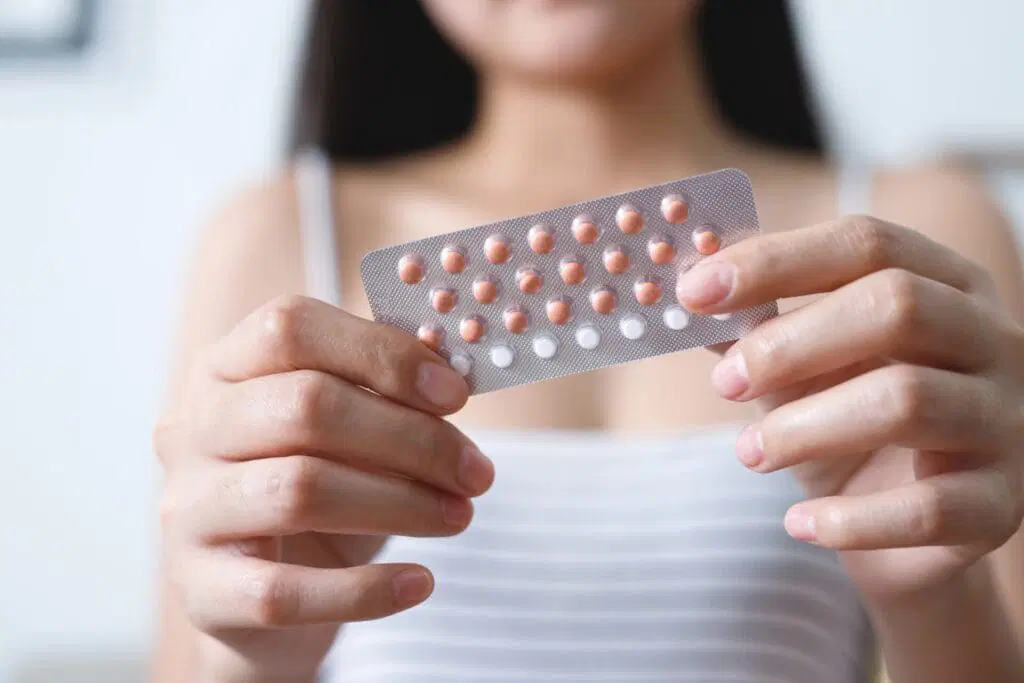
“I took the 72-hour emergency contraceptive pill. Can it harm my body?”
This was a question a friend sent to obstetrician and gynaecologist Dr Dija Khanal through a message. The woman admitted that she had taken the pill on several previous occasions as well and had been experiencing irregular menstrual cycles over the past year.
Similarly, another 32-year-old woman told Dr Khanal that she developed health problems after taking the emergency contraceptive pill. “I noticed four or five drops of chocolate-colored blood five days after taking the 72-hour pill,” she said. “It’s been 10 days since the spotting started.”
She also reported feeling physically weak. “I even bought a pregnancy test kit,” she said. “It came back negative. Why is that?” An ultrasound examination revealed several small ovarian cysts, a thin endometrium (the lining of the uterus), and clear signs of hormonal imbalance. According to Dr Khanal, this is a common issue among many married women and one she encounters almost every day.
“Many women tell me they had to take the pill due to unavoidable circumstances,” she said. “However, they often don’t realise that repeated use can lead to significant complications.”
What is the 72-hour pill?
The 72-hour pill is an emergency contraceptive, commonly known as the “I-Pill.” Even when pregnancy is not desired, unprotected sexual intercourse can sometimes result in conception, especially when no contraceptive method has been used. Pregnancy may also occur if a woman forgets to take her regular birth control pill or if a condom breaks during intercourse.
In such situations, emergency contraceptive pills are available to reduce the risk of pregnancy. These pills should be taken within 72 hours of unprotected sex. “The sooner the pill is taken, the more effective it is,” Dr Khanal says.
Why is it called an emergency contraceptive?
Dr Khanal explains that emergency contraceptive pills contain a high dose of the synthetic hormone levonorgestrel, a form of progestin. “The dose is much higher than that found in regular birth control pills,” she says. “Because it acts quickly, it is recommended only for emergencies.”
Obstetrician and gynaecologist Dr Upama Basnet compares it to a fire extinguisher. “Many women see the 72-hour pill as an easy solution,” she says. “But it is not meant to provide regular contraception. It’s like a fire extinguisher—you use it to put out a fire, not to start one. Likewise, it should not be used repeatedly.”
She emphasises that it is an emergency safety measure, not a long-term family planning method.
How does it prevent pregnancy?
Pregnancy depends on three biological processes: ovulation, fertilisation, and implantation. The emergency contraceptive pill interferes with these stages in different ways.
What happens if the pill is taken repeatedly?
1. Delays or Prevents Ovulation
Around the middle of the menstrual cycle, the pituitary gland releases a surge of luteinizing hormone (LH), which triggers ovulation—the release of an egg from the ovary. According to Dr Khanal, the high dose of progestin in the emergency pill signals the brain that the body already has sufficient progesterone. As a result, the LH surge is delayed or prevented. “If there is no LH surge, the egg is not released,” she explains. “Without an egg, fertilisation cannot occur.” The pill is most effective if taken before ovulation.
2. Makes Fertilisation More Difficult
If ovulation has already occurred, the pill can still reduce the chances of pregnancy. Dr Khanal says the high-dose progestin thickens the cervical mucus. Normally, when estrogen levels are high, cervical mucus becomes thin and slippery, allowing sperm to travel easily to the egg. “Thicker mucus slows the movement of sperm, making it more difficult for them to reach the egg,” she explains. The hormone may also reduce sperm mobility and lifespan, further lowering the likelihood of fertilisation.
3. Changes the Uterine Environment
In rare cases where fertilisation has already occurred, the pill may affect the endometrium, or uterine lining. Normally, balanced estrogen and progesterone make the endometrium thick and receptive to embryo implantation. However, the high dose of progestin may thin the lining. “When the endometrium becomes thinner, it is less suitable for implantation,” says Dr Khanal. “However, if an embryo has already implanted, the pill cannot remove it.”
Possible side effects
Most side effects after taking the emergency contraceptive pill are mild and temporary. Dr Khanal says the high hormone dose temporarily disrupts the body’s natural hormonal cycle, which can cause symptoms that differ from normal. Common side effects include:
- Irregular menstrual periods
- Nausea
- Mild vomiting
- Headaches
- Breast tenderness or heaviness
- Lower abdominal pain or bloating
“Some women may get their period within ten days, others may experience delays, and some may notice prolonged chocolate-colored spotting,” she says. She explains that this brown spotting is usually a hormonal response to the medication rather than a menstrual period. “These symptoms usually resolve on their own within a few days. However, women should seek medical attention if they experience heavy bleeding, severe abdominal pain, or if menstruation does not return for two to three months.”
Repeated use can increase the risk of hormonal imbalance. According to Dr Khanal, the high dose of progestin can repeatedly disrupt the body’s natural estrogen-progesterone balance, resulting in irregular menstrual cycles. Possible effects include:
- Irregular periods
- Prolonged spotting
- Missed periods for two to three months
- Lower abdominal pain or a feeling of heaviness
- Mood swings
- Fatigue
She says ultrasound scans may also reveal small ovarian cysts. These are usually temporary but may indicate that the body has experienced repeated hormonal disruption. Another concern is that if the pill is taken more than 72 hours after unprotected intercourse and pregnancy has already occurred, there is a higher risk of an ectopic pregnancy, in which the embryo implants in the fallopian tube. “If the embryo grows inside the fallopian tube, the tube may rupture, creating a life-threatening emergency,” Dr. Khanal warns.
Can it cause permanent infertility?
Dr Upama Basnet says many women ask whether repeated use of the emergency contraceptive pill can permanently affect fertility. According to current scientific evidence, it does not cause permanent infertility. Using the pill once or twice in genuine emergencies is very unlikely to have a lasting impact on a woman’s ability to conceive.
“The problem arises when women use it repeatedly instead of regular contraceptive methods,” Dr Basnet says. “The repeated high doses of progesterone can temporarily suppress ovulation, disrupt menstrual cycles, or even stop periods for several months.”
She adds that if menstrual periods remain absent for a long time or hormonal problems persist, women should undergo medical evaluation, as underlying conditions such as polycystic ovary syndrome (PCOS), thyroid disorders, or other health issues may be responsible. Dr Khanal agrees. “There is no evidence that the emergency pill causes permanent infertility, but repeatedly exposing the body to high doses of synthetic hormones is not considered good practice.”
What are safer alternatives?
There is no single contraceptive method that is best for everyone. The ideal choice depends on a woman’s age, health, future pregnancy plans, breastfeeding status, and lifestyle. According to Dr Khanal, women who want reliable ongoing contraception and can remember to take a daily pill may choose oral contraceptive pills. When used correctly every day, they are up to 99 per cent effective and can also help regulate menstrual cycles and reduce menstrual pain. For women seeking longer intervals between pregnancies, Dr Basnet recommends long-acting reversible contraceptives such as:
- Copper IUD: A small device inserted into the uterus that can protect for 5 to 10 years.
- Contraceptive implant (Norplant/Implant): A small rod inserted under the skin of the arm that protects for 3 to 5 years and can be removed whenever pregnancy is desired.
- Depo-Provera injection: A hormonal injection given once every three months.
“These methods eliminate the need for daily worry and do not expose the body to repeated hormonal shocks like emergency contraceptive pills,” Dr Basnet says. Experts therefore recommend using the 72-hour pill only in genuine emergencies and choosing a regular contraceptive method after consulting a healthcare provider.
Can the 72-hour pill cause ovarian cysts?
According to Dr Basnet, the high dose of levonorgestrel suppresses the release of luteinizing hormone (LH), preventing ovulation. Without ovulation, follicles stimulated by follicle-stimulating hormone (FSH) may continue to fill with fluid instead of releasing an egg. These enlarged follicles can appear as small ovarian cysts.
Repeated use of emergency contraceptive pills may increase hormonal imbalance and may contribute to the development or worsening of polycystic ovary syndrome (PCOS) in susceptible women. Although these cysts are usually temporary, experts warn that frequent misuse of emergency contraceptive pills may increase the risk of longer-term reproductive health problems. For this reason, gynaecologists recommend using the 72-hour emergency contraceptive pill only in genuine emergencies and avoiding repeated or routine use.