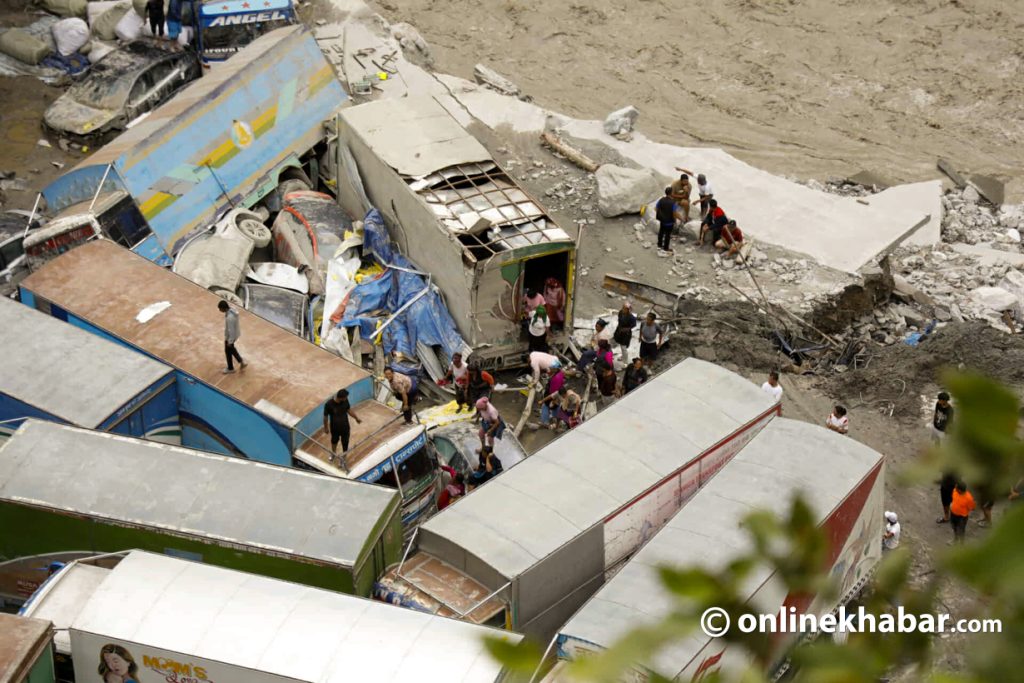

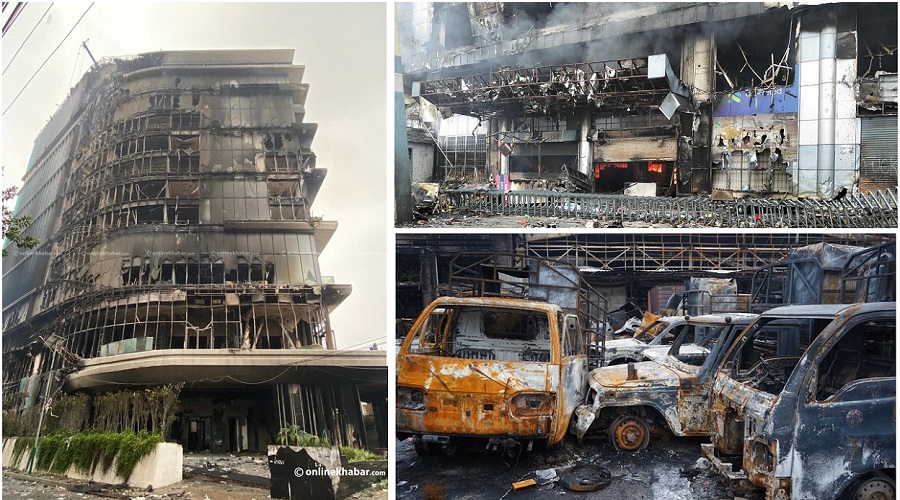
The government has prepared a Private Investment Protection and Promotion Strategy that includes provisions for establishing an Industrial Security Force and declaring areas housing industries as “peace zones.” According to the Ministry of Industry, Commerce and Supplies, the strategy was formulated following incidents of vandalism, looting, arson and theft at private industries, business establishments and commercial structures during the Gen Z movement on September 8 and 9, 2025.
A report prepared by the National Planning Commission estimates that public and private establishments suffered physical damage worth around Rs 84 billion during the movement. The government had announced, in its governance reform action plan approved on March 26, that it would formulate and implement a strategy for the protection and promotion of the private sector.
The government expects the implementation of the strategy to ensure the security and protection of industrial and commercial investments, boost confidence in the private sector and make a significant contribution to overall economic development. Nepal’s productive sector has been affected not only by political movements but also by natural disasters every year. According to the ministry, natural and human-induced disasters cause annual losses equivalent to around 3 per cent of the country’s gross domestic product.
The ministry has said that such losses pose a serious challenge to the national goal of achieving sustainable economic development. The strategy has been formulated to address these challenges.
Aim to boost private sector confidence
The government says it has prepared the strategy with a long-term vision of encouraging private-sector investment to promote economic prosperity. One of its key objectives is to boost confidence in the private sector and promote investment. The strategy aims to create a safe, stable and reliable environment for operating industries and businesses. It also seeks to establish physical and legal security arrangements to promote industries and businesses and protect investments.
The strategy aims to discourage all forms of unwanted and illegal activities—including vandalism, arson, closures, strikes and looting—that may occur at industrial and commercial establishments, while reducing risks to industrial and commercial investments.
Industrial security force, peace zones
In response to demands from the private sector, the government has made it clear in the strategy that an Industrial Security Force will be established to protect the physical assets of industrial and commercial establishments. Existing laws governing industrial security will be reviewed and amended as necessary. Industrial areas, industrial corridors, special economic zones and industrial villages will be declared “peace zones.”
Arrangements will also be made to prevent any form of unwanted activity at industrial establishments. Under the new strategy, the government will classify industrial and commercial establishments based on their security risks and provide security accordingly. Rapid-response security teams will be mobilised based on the risk of damage to industries, businesses and private property.
A designated contact person will be assigned at the nearest security unit to coordinate security for industries and businesses. The government will also adopt a zero-tolerance policy toward attacks, vandalism and arson targeting the physical assets and operations of industrial and commercial establishments.
A zero-tolerance policy will likewise be adopted against attacks, vandalism and arson targeting the private property and residences of industrialists and businesspeople.
Security patrols on highways to ensure smooth supply
The strategy includes continuous security patrols along highways and strategic highways to ensure the uninterrupted supply of goods and services and the smooth operation of services. The government also plans to launch a special search operation to recover goods looted from industrial and commercial establishments during the protests.
In addition, the hotlines operated by district emergency operation centres in every district and provincial emergency operation centres will be operated 24 hours a day as industrial security hotlines.
Relief and concessions for damaged businesses
The strategy proposes simplifying and facilitating regulatory procedures to promote private-sector investment. Private industrialists and businesspeople whose businesses were damaged by arson or vandalism during the movement will be provided exemptions, facilities and concessions for one fiscal year or for a specified period, in accordance with existing laws and provisions in the government’s annual budget.
Businesses affected by vandalism will also receive exemptions when renewing their business registrations or licences. The strategy allows for possible exemptions on building permit fees, electricity and drinking-water connection charges, and integrated property tax. Concessional loans will also be provided through banks and financial institutions.
Tax incentives to remain stable for five years
The government also plans to integrate the electronic information systems of the Department of Industry, Department of Commerce, Supplies and Consumer Protection, and Office of the Company Registrar to simplify procedures related to the registration of industries, businesses and companies.
To make service delivery easier and more efficient, the strategy proposes interconnecting electronic systems operated by different government agencies so that documents submitted to one agency will not have to be submitted again to another. To promote industrialisation and job creation, the strategy also proposes maintaining at least a two-tier difference in customs duty rates on industrial raw materials and finished goods, based on an impact assessment of the relevant sectors.
It further states that tax exemptions, facilities and concessions granted under tax policies and relevant laws will remain stable for at least five years.
Private sector to be included in coordination committee
The government will establish a Coordination and Facilitation Committee to oversee implementation of the strategy, with representation from the private sector. The committee, to be coordinated by the Minister for Industry, will include presidents of umbrella organisations representing the private sector as members.
The committee will also identify problems and obstacles faced by entrepreneurs and investors and take initiatives to resolve them promptly.