Kathmandu, August 26
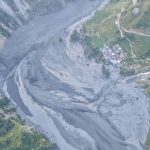
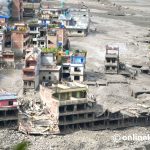
Energy, Water Resources and Irrigation Minister Biraj Bhakta Shrestha has directed officials to immediately collect details of the damage caused by the sudden flooding of the Bhotekoshi River in Rasuwa and surrounding areas and accelerate rescue, relief and rehabilitation efforts.
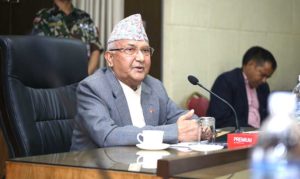
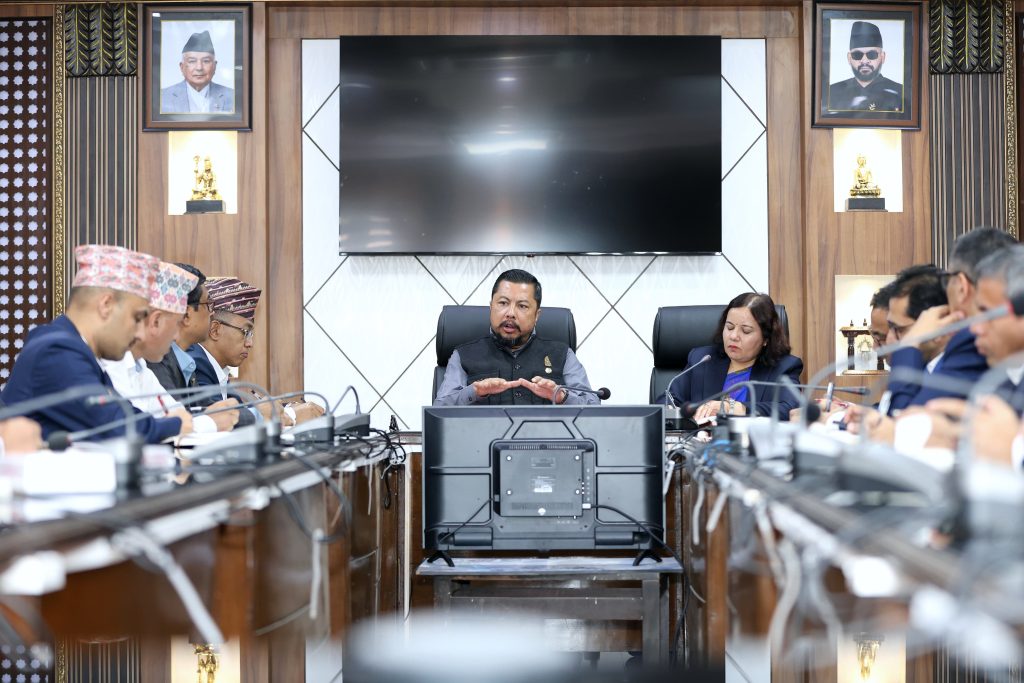
Minister Shrestha convened a meeting of the ministry’s Senior Management Team (SMT) to assess the initial situation. At the meeting, he directed officials to prioritise the rescue and rehabilitation of employees, workers and residents affected by the disaster, coordinate with the Ministry of Home Affairs and other relevant agencies, and immediately mobilise mechanisms in the affected areas.
Shrestha said the ministry should remain active in ensuring the systematic and rapid flow of disaster-related information. He also directed officials to assess the actual damage to energy and other physical infrastructure and begin rehabilitation efforts.
He also instructed the concerned agencies to prepare alternative and emergency arrangements to ensure a regular, safe and sustainable electricity supply across the country, including in the Kathmandu Valley.
The ministry said it is coordinating with the Ministry of Home Affairs to identify the status of employees, workers and residents who remain out of contact following the floods and facilitate their rescue.
The Nepal Electricity Authority (NEA) has already deployed seven vehicles to the affected areas for rescue operations, while another 14 vehicles have been kept on standby.
The ministry also said it is coordinating aerial rescue efforts. A joint secretary of the ministry has also been deployed to the affected areas for rescue and coordination.
Eight hydropower projects in Rasuwa—five operational and three under construction—have been affected by the floods.
The total capacity of the operational projects is 236 MW, while the projects under construction have a combined capacity of 342.42 MW. The affected projects include Upper Trishuli-1, Rasuwagadhi, Rasuwa Bhotekoshi, Sanjen Khola, Upper Mailung A, Mailung Khola, Langtang Khola and Chilime hydropower projects.
Similarly, six projects in Nuwakot—four operational and two under construction—have also been affected by the floods. Their combined capacity is 123 MW for the operational projects and 52.6 MW for those under construction.
The affected projects include Trishuli, Devighat, Upper Trishuli-3A, Upper Trishuli-3B, Middle Trishuli Ganga and a 25 MW solar project.
The NEA has mobilised technical teams to prevent disruptions to the electricity supply. The ministry said efforts are underway to assess the condition of affected infrastructure and restore electricity services as soon as possible.
The Hydrology and Meteorology-related authorities have sent more than 200,000 SMS alerts to residents in downstream areas to provide early warnings about flood risks.
However, damage to some structures, including gauge stations installed by the authorities, has made it difficult to provide further risk-related information.
Meanwhile, the ministry also held discussions with the Independent Power Producers’ Association, Nepal (IPPAN) to gather information on the damage to hydropower projects, the rescue of affected personnel and the rehabilitation of the projects.
The discussions also covered the need to quickly collect details of damage to private-sector projects and coordinate the necessary rehabilitation efforts.
According to the ministry, detailed damage assessments and technical evaluations of the affected projects are being carried out by the concerned agencies. Once the actual extent of the damage is established, the ministry will move forward with a rehabilitation action plan.
The ministry said a committee has also been formed under the coordination of a joint secretary from the Planning Division to oversee the overall assessment and compilation of the damage.