Kathmandu, August 25
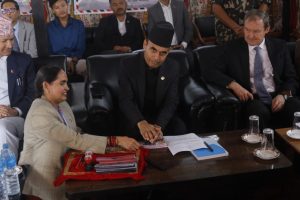
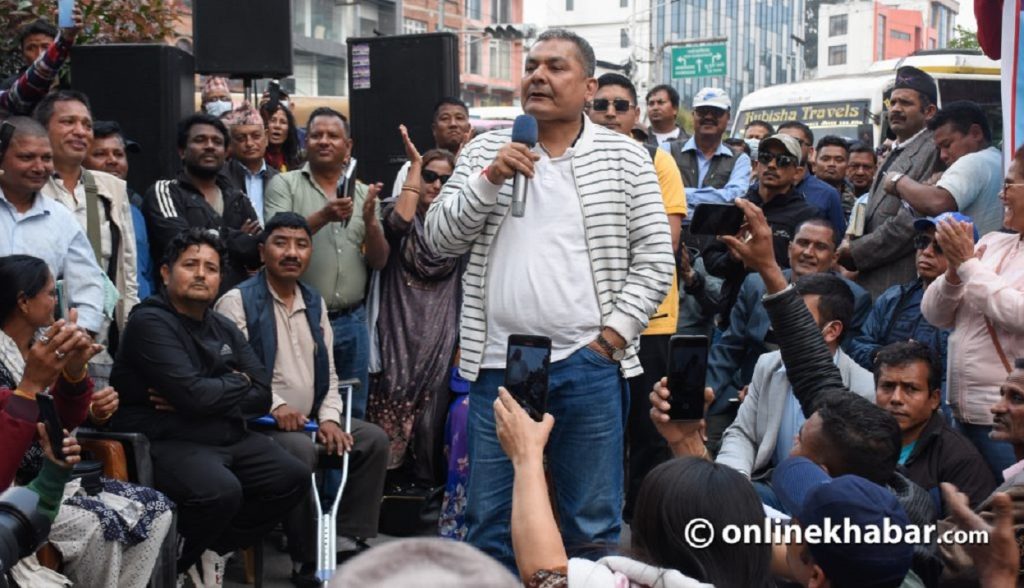
The government has signed separate agreements with three groups representing microfinance victims in the past two months, but the agreement with a group led by Durga Prasai goes beyond microfinance and includes provisions concerning borrowers of banks and financial institutions.
The government reached agreements with groups representing microfinance victims on July 31, August 13 and August 22, following protests, sit-ins and hunger strikes demanding solutions to problems faced by borrowers.
Although loan waivers were among the key demands raised by the groups, the government agreed to study the demand and provide an appropriate and implementable alternative.
All three agreements contain broadly similar commitments on loan rescheduling, blacklisting, collateral auctions and rehabilitation of borrowers.
However, the agreement with Durga Prasai-led Nagarik Bachau Abhiyan also covers borrowers of banks and financial institutions. Prasai has been campaigning against the repayment of bank and microfinance loans since the Covid-19 pandemic.
While two other groups focused primarily on microfinance borrowers, Prasai’s group managed to bring broader banking-sector issues into its 14-point agreement with the government.
What is different in Prasai’s agreement?
Under the agreement with Durga Prasai’s group, banks and financial institutions will be required to ensure that borrowers blacklisted by banks can continue to operate accounts receiving social security allowances, medical treatment payments, pensions and salary payments.
The government has also agreed to introduce provisions for rescheduling loans of borrowers who have been unable to regularly repay principal and interest due to circumstances beyond their control.
Another provision requires banks to provide borrowers with details when money from their savings account is used to adjust outstanding loans.
The government has also agreed to make savings held in accounts other than mandatory savings available to members when requested, while strengthening monitoring of the practice.
Prasai’s group had previously campaigned against repayment of loans taken from banks, financial institutions and microfinance institutions. Its protests had included warnings to the financial sector and opposition to loan recovery efforts.
The group had appeared to become less active after the Supreme Court opened the way for action against borrowers refusing to repay loans.
Similar demands for microfinance borrowers
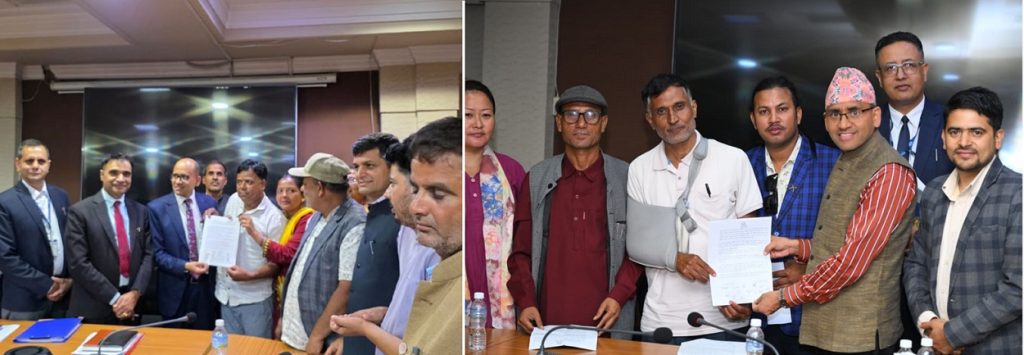
Maniram Gyawali-led Struggle Committee Against Microfinance and Financial Exploitation signed a five-point agreement with the government, while the Microfinance and Financial Exploitation Farmers Workers’ Movement led by Ramesh Senchuri reached a seven-point agreement.
Both groups primarily focused on microfinance borrowers.
Their agreements include commitments to remove affected borrowers from blacklists, prevent collateral auctions and recommend implementable options for the rehabilitation of borrowers.
The government has also agreed to review existing provisions concerning blacklisting and collateral auctions by microfinance institutions.
The agreements further call for implementation of the recommendations of a task force formed to study solutions to problems faced by microfinance borrowers.
Government says implementation will take time
Mahesh Acharya, joint secretary at the Ministry of Finance, said it would take some time to assess the results of the agreements as they were reached only recently.
According to Acharya, the Finance Ministry and Nepal Rastra Bank are holding discussions on implementing all three agreements.
He also said the report prepared by the task force formed to recommend appropriate solutions to problems faced by microfinance borrowers has been made available to the concerned parties.
Under the agreements, the government has also committed to monitoring and ultimately prohibiting practices by microfinance institutions such as taking advance cheques as collateral and making borrowers sign blank promissory notes.
An online complaint system and toll-free hotline will also be established at Nepal Rastra Bank to address problems and complaints concerning banks and financial institutions.
The government has agreed to form a high-level committee comprising independent experts to address problems involving microfinance members, borrowers and employees.
It has also pledged action against illegal debt-recovery practices, including harassment, taking household goods from borrowers’ homes, keeping employees at borrowers’ homes until instalments are paid, and verbal abuse.
Collateral auctions and blacklisting
The government has agreed to make the collateral auction and valuation process more transparent by requiring borrowers to be informed before an auction notice is issued.
It has also agreed to make necessary legal arrangements to clear a loan and remove the borrower from the blacklist once the entire outstanding amount has been recovered through a collateral auction.
The government has further agreed to review the deposit and fees required from borrowers seeking to appeal to the Debt Recovery Tribunal and improve existing policies to address problems in collateral valuation.
Durga Prasai’s group also included the issue of landless squatters in its agreement with the government, while the other two groups focused on implementing the recommendations of the task force.
Representatives of the microfinance victims say they are confident that implementation of the task force’s recommendations could resolve many of the problems in the sector.
The agreement reached with the Struggle Committee Against Microfinance and Financial Exploitation on July 31 also overlaps with several provisions in the agreement signed with Durga Prasai’s group.