
Kathmandu, October 8
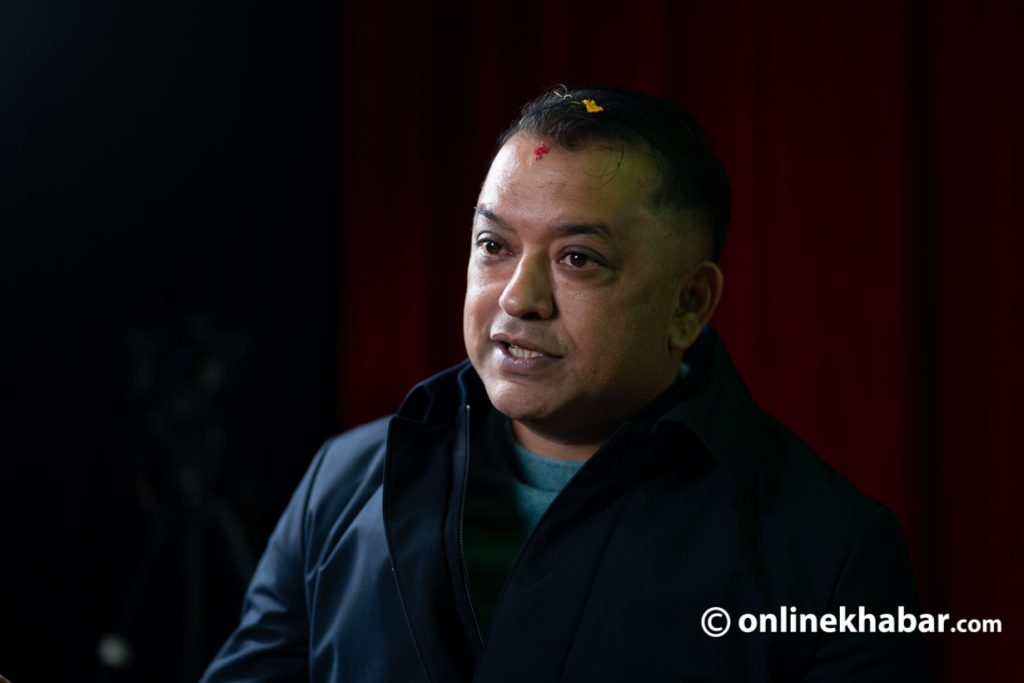
Gagan Thapa has spent much of his political career challenging the power structures of the Nepali Congress. At the party’s 13th General Convention, he entered the leadership race through Krishna Prasad Sitaula’s third faction. At the 14th convention, he joined Shekhar Koirala’s panel to challenge the established Deuba camp.
Now, as the Nepali Congress concludes its 15th General Convention, Thapa is on the verge of becoming the party president with virtually no organised rival left standing. The irony is difficult to miss.
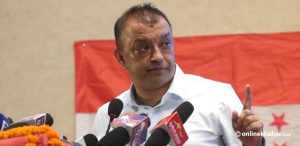
The politician who once had to find space between the Nepali Congress’s established factions has now become the centre of a new establishment. On Wednesday evening, as he closed the convention’s closed session, Thapa declared that the party’s old factional divisions were over.
“From today, all the formal factions that existed for a long time—the 74, 36, Deuba group, Koirala group, Poudel group, special and non-special groups—are finished,” Thapa said. “This is the biggest achievement of this General Convention.”
His declaration came just after former joint general secretary Kishor Singh Rathore withdrew his candidacy for party president. Shyam Krishna Khadgi is now the only remaining candidate challenging Thapa.
That means Thapa is effectively assured of the presidency even before the vote. But removing rivals may prove easier than managing the party once there are no factions left to absorb political tensions. That is the challenge now confronting Thapa.
The end of the old Nepali Congress order
For decades, leadership contests in the Nepali Congress were structured around competing camps.
Deuba had his organisation. Koirala had his. Poudel and other senior leaders had their own networks. Candidates for party positions generally emerged through these groups, and a leader who failed to secure the backing of a faction often had little incentive to contest independently. Thapa himself has argued that this was one reason earlier conventions produced fewer candidates.
That system has now been disrupted.
At the 15th convention, even though the party has increased the number of office-bearer positions to 24, there is no major faction organised against Thapa.
Rathore’s withdrawal was particularly significant. He was among the senior leaders who had left Deuba and was expected to provide an alternative platform for that section of the party. But that effort did not materialise.
Thapa also called on other aspirants, including Dr Minendra Rijal, Min Bishwakarma, Dev Raj Chalise, Yogesh Gauchan and Min Bham, to withdraw their candidacies.
He asked parliamentary party leader Bhishma Raj Angdembe not to contest for an office-bearer position, saying Angdembe was leading a separate political front.
The response to those appeals tells the story of how much the balance of power inside the Nepali Congress has changed. General Secretary Gururaj Ghimire had already referred to Thapa as the party president while addressing the closed session.
The 15th convention is therefore ending very differently from previous conventions. There is no comparable contest between rival power centres.
Thapa has become the centre of the party. And that makes his next challenge fundamentally different.
He has already dismantled the old factions
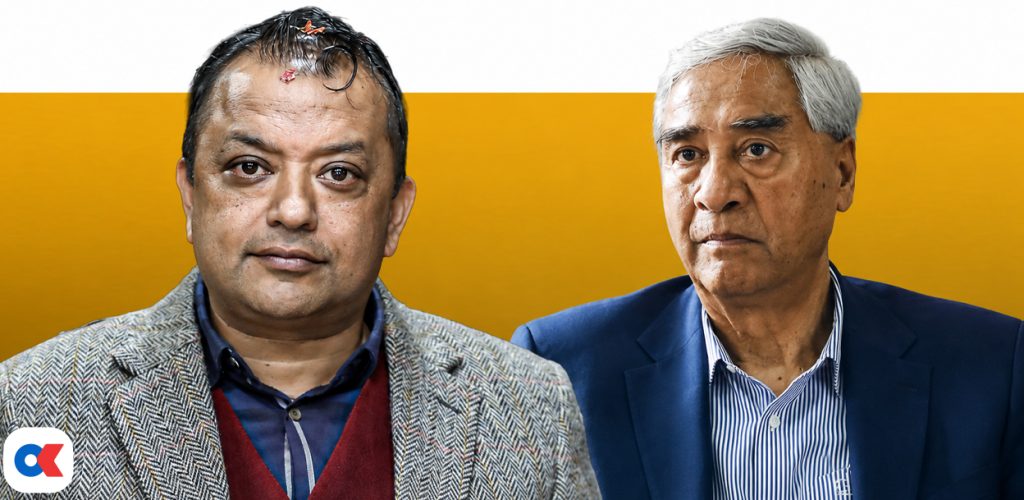
Thapa’s rise to this position did not happen overnight. After emerging as a prominent youth leader during the anti-monarchy movement, he entered the Central Working Committee at the age of 34 at the 12th General Convention.
His popularity allowed him to win without depending heavily on an established faction. But moving from the central committee to the party’s executive leadership was more difficult.
The traditional factions were controlled by senior leaders, and none was initially prepared to make Thapa its principal candidate for an office-bearer position.
At the 13th convention, Thapa therefore aligned himself with Sitaula and contested for general secretary from his panel. Sitaula and Thapa emerged as the third force behind the main Deuba and Ram Chandra Paudel camps.
At the 14th convention, Thapa changed his alignment again. He joined Shekhar Koirala’s panel and contested for general secretary. Koirala lost the presidential race, but Thapa won the general secretary election.
Bishwa Prakash Sharma emerged as another young leader through a similar route. He contested as part of Prakash Man Singh’s panel but won the general secretary election despite Singh’s poor showing in the presidential contest.
The result was the emergence of the Gagan-Bishwa partnership.
From there, the two leaders began challenging the existing balance of power inside the party. The culmination came with the special convention.
The Gen Z uprising changed the balance
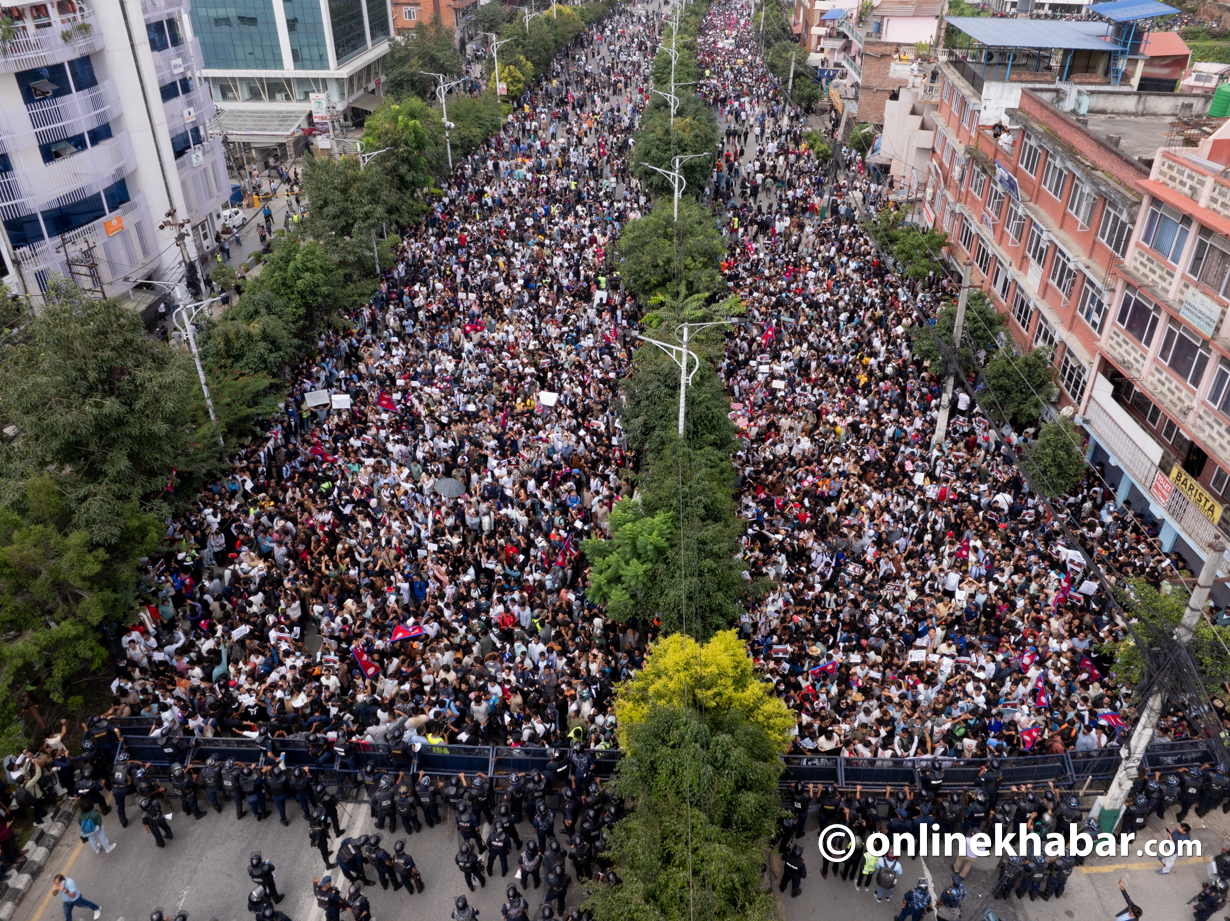
The political upheaval following the Gen Z movement created the circumstances in which Thapa and Sharma were able to challenge the established Congress leadership.
As the Deuba-led leadership faced mounting pressure, the demand for a special convention gained momentum within the party.
The Thapa-Sharma camp claimed that more than 56 percent of convention representatives had supported the demand, well above the 40 percent threshold required under the party statute.
The special convention ultimately produced a new leadership team headed by Thapa.
Bishwa Prakash Sharma and Pushpa Bhusal became vice presidents, while Pradeep Paudel and Gururaj Ghimire became general secretaries.
Farmullah Mansoor, Dila Sangraula, Bahadur Singh Lama, Karna Bahadur Budha, Yogendra Chaudhary, Uday Shumsher Rana, Prakash Rasaily and Mukta Kumari Yadav became joint general secretaries.
The significance of the new team was that many of these leaders had previously been associated with the old establishment.
Mansur and Sangraula had won their positions from Deuba’s panel at the 14th convention. Paudel had contested for general secretary from the Deuba camp. Deuba himself had appointed Bishwa Prakash Sharma as party spokesperson.
Others had been closer to the Koirala camp.
Thapa and Sharma had therefore done something more consequential than simply defeating Deuba.
They had begun bringing leaders from different factions into a new political arrangement.
When the Election Commission recognised the special convention and the Supreme Court later upheld Thapa’s legitimacy, the old power structure weakened further.
The old rivals were brought inside
Thapa then moved to bring former rivals into the new establishment. On May 10, he nominated 19 leaders associated with Deuba and Koirala to the Central Working Committee.
Among those associated with Deuba were Mahendra Yadav, Umesh Shrestha, Ramesh Rijal, Ajay Kumar Chaurasia, Laxmi Pariyar, Angelu Sherpa, Dinesh Kumar Yadav, Rajib Dhungana, Nagina Yadav, Jeevan Rana and Sita Thapaliya.
Leaders associated with Koirala, including Jeevan Pariyar, Sujata Koirala, Dilendra Prasad Badu, Chandra Bhandari, Rajiv Koirala, Govinda Pokharel and Dinesh Koirala, were also brought into the Central Working Committee.
Thapa even appointed Umesh Shrestha as treasurer, the same position he had held under Deuba.
But the process did not end there. As the 15th convention approached, leaders who had continued to operate separately from Thapa increasingly began joining the new establishment.
A group led by Purna Bahadur Khadka initially maintained its own position. Later, Shashank Koirala emerged as another reference point for leaders outside Thapa’s immediate camp.
But on September 12, 31 Central Working Committee members led by Khadka announced that they would participate in the convention.
They said Thapa had agreed to address their eight demands, including bringing 111 former Central Working Committee members into the party structure.
By the time the convention arrived, only four of the 13 office-bearers elected at the 14th convention—Deuba, Khadka, Badri Prasad Pandey and Umakanta Chaudhary—had stayed out.
The old factions had not simply lost an election. They had largely lost their organisational identity.
From fighting factions to becoming the establishment
This is where Thapa’s current position differs from the one he occupied only a few years ago.
He once needed a faction to reach the party’s executive leadership.
Now other leaders need to decide whether to align themselves with him.
A senior Nepali Congress leader who left Deuba’s camp and joined the current convention says many leaders eventually had little choice.
“Many leaders understood that it is impossible to do Congress politics by abandoning the tree symbol and the party’s four-star flag,” the leader said. “But once Gagan prevented us from maintaining group-level unity, we had no option left.”
According to the leader, Thapa ensured that the old groups could not retain a separate organisational identity by bringing their leaders into his camp individually.
Rathore’s withdrawal was the clearest demonstration of that process.
“Those of us who left Deuba could not even build a separate group and participate in the convention. We kept hoping until the end that the court would intervene, but that did not happen,” the leader said.
The former rebel has therefore achieved something unusual in Congress politics. He has not merely defeated the factions that once kept him outside the centre of power. He has absorbed much of them.
But can he keep the Nepali Congress together?
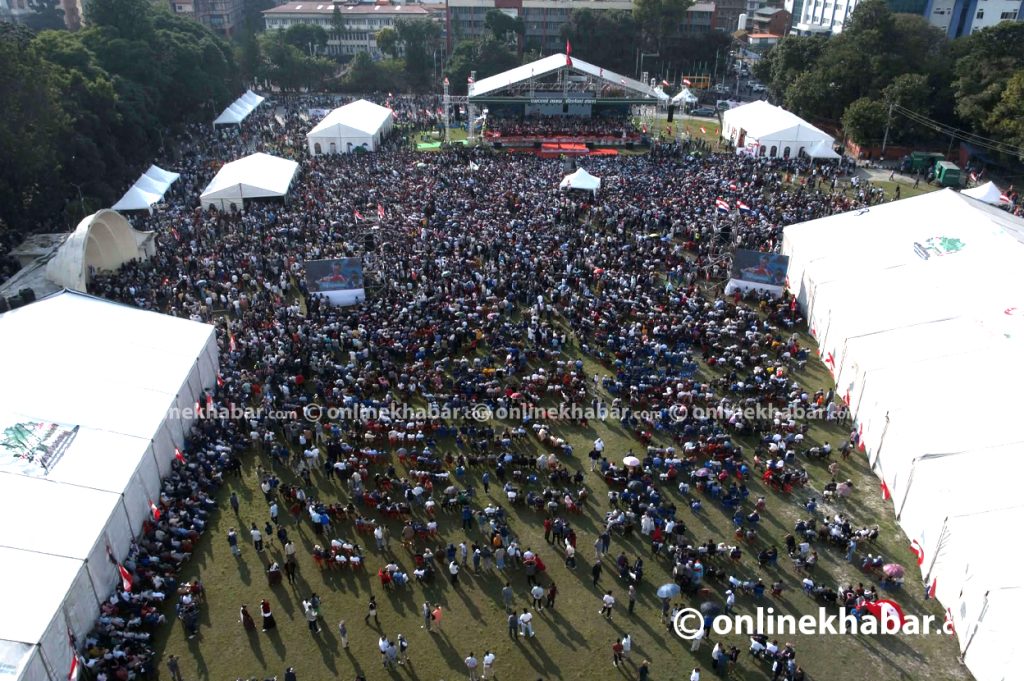
This is where Thapa’s declaration that factionalism has ended becomes a test rather than simply an achievement.
The Nepali Congress has historically been a party of powerful individuals, competing networks and senior leaders with independent political bases.
Thapa now has to manage many of those same leaders without allowing new factions to form around them.
Political analyst Jainendra Jeevan says Thapa’s own declaration will ultimately have to be tested by his ability to manage the people around him.
“Congress has suffered from the disease of factionalism for a long time. Gagan Thapa has recognised that and that is why he has said this,” Jeevan said. “If the central leadership can accommodate everyone, and if he can manage leaders who have the capacity and qualifications to form factions of their own, Gagan Thapa has an opportunity to create a record.”
Jeevan points to BP Koirala’s leadership as an example.
BP led a party containing powerful figures such as Subarna Shumsher, Surya Prasad Upadhyaya and Ganesh Man Singh, as well as leaders from the Madhes including Ram Narayan Mishra and Mahendra Narayan Nidhi.
“There were so many people capable of forming factions, but BP kept everyone together,” Jeevan said.
Thapa has also acknowledged that managing the senior leaders around him will be a major responsibility.
At the convention, he noted that many of the leaders on the stage were senior to him and that the Congress now includes politicians from as many as five generations.
“As president, it will be my responsibility to do whatever is necessary to bring everyone together,” Thapa said.
For Jeevan, the key will be how decisions are made.
“He has to listen to everyone, move forward by taking everyone along, make the right decision at the right time and avoid favouritism,” he said. “Even those who do not get an opportunity should feel that the person who got it was more deserving than them.”
Whether Thapa can create that kind of political balance remains to be seen.
For now, however, the transformation is clear.
The young leader who once challenged the Congress establishment from within has become the establishment himself. His old rivals have either withdrawn, joined his camp or lost the organisational strength to mount a separate challenge.
Thapa may therefore enter the presidency without a meaningful rival. But with the old factions gone, he can no longer blame them for the divisions inside the party. That may be the biggest test of his leadership yet.