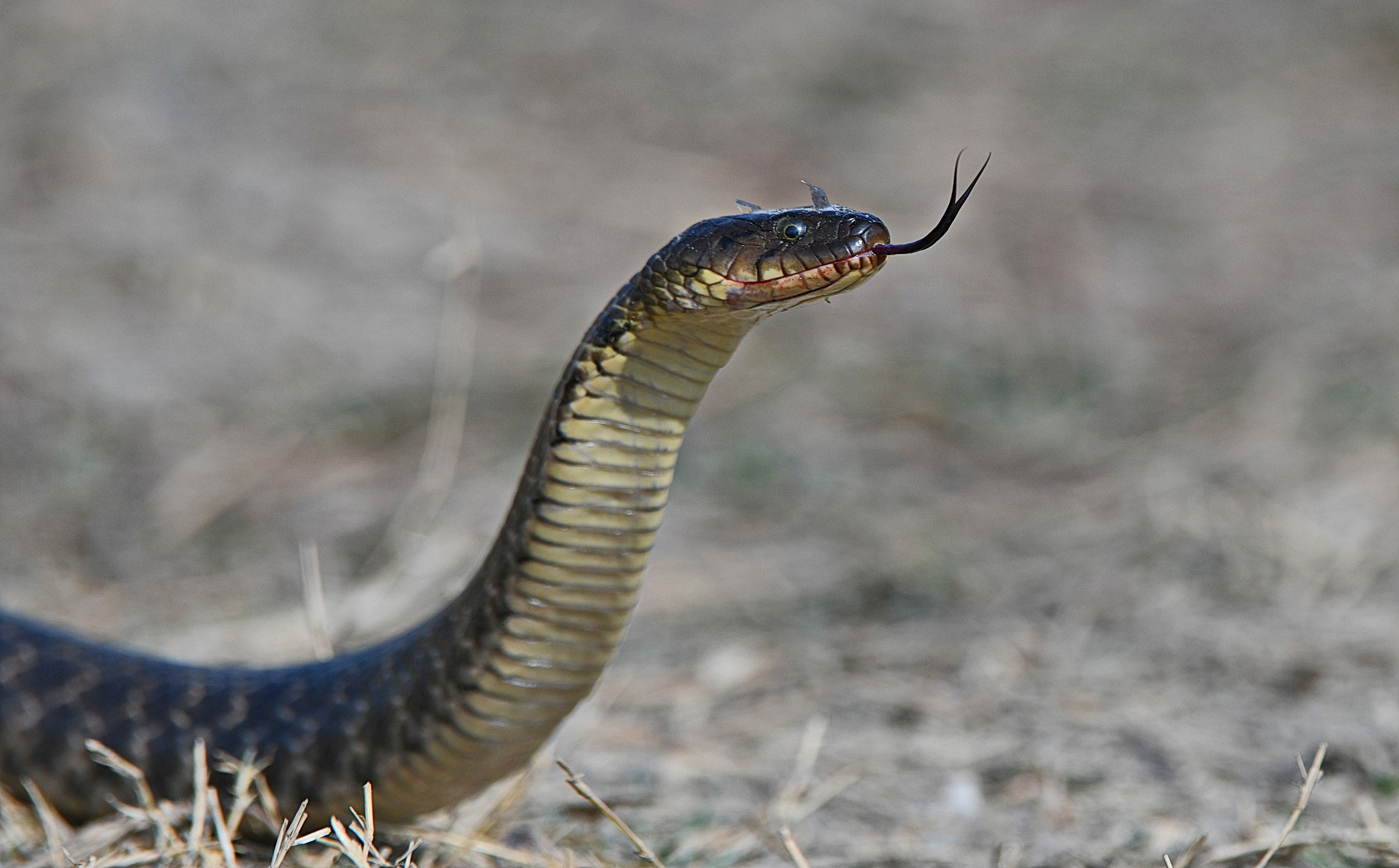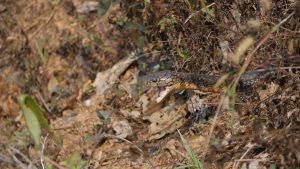

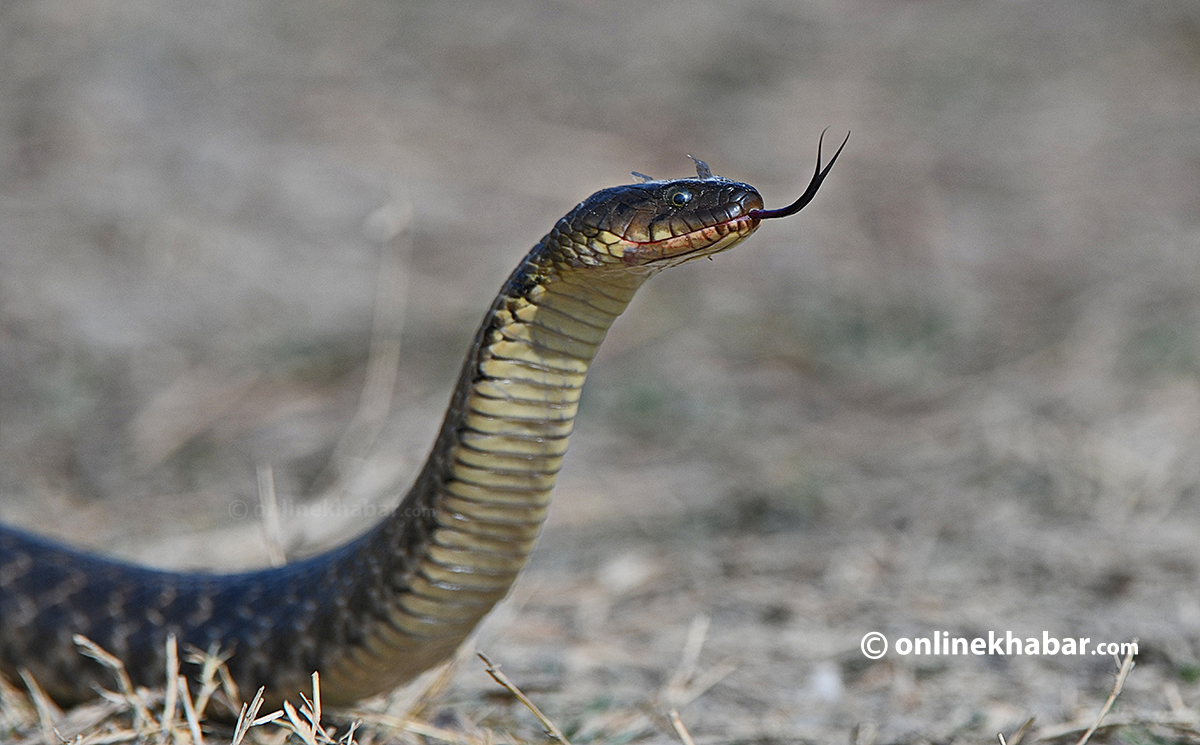
Often seen near ponds, rice fields, and irrigation canals, the checkered keelback snake is one of Nepal’s most attractive and valuable species in the ecosystem. The unique features of this snake, including its checkered pattern and swimming ability, make it an intriguing species to observe. In addition, its role in controlling the population of small species such as fish and frogs helps maintain the balance of the ecosystem. This characteristic makes this snake an important predator. The conservation of its natural habitat and its survival play an important role in maintaining the overall biodiversity of the country.
The checkered keelback snake thrives in its natural habitats, which include freshwater ponds, lakes, canals, and streams in various parts of Nepal. It uses reeds, aquatic plants, and crevices to live its adapted life. The checkered keelback snake, found almost throughout the mainland of Nepal, has successfully adapted to live among humans. In cities, they live in gardens, fields, courtyards, and any damp places where they can find shelter and food. In rural areas, checkered keelback snakes prefer rice fields because of the abundance of fish and frogs they provide. They are also common in open wells, irrigation tanks, lakes, and ponds.
The checkered keelback, whose scientific name is Fowlea piscator, is also known as the Asiatic water snake. In Nepal, this snake is called the water snake, while in the local language of the Kapilvastu district, it is called the Dodahawa snake.
While I was photographing this snake, I saw local children identifying this species and playing with or killing it by holding its tail or wrapping it around a stick. The locals consider this snake to be non-venomous. This snake is found in Nepal, Sri Lanka, Myanmar, India, Pakistan, Afghanistan, Bangladesh, West Malaysia, Vietnam, Thailand, Laos, China, Australia, Taiwan, and Indonesia.
The body of the checkered keelback snake is slender and long, making it agile and swift. Its skin has a distinctive checkered pattern, with black and light yellow stripes. The average length of the checkered keelback snake is about 3 to 4 feet. It weighs 200 to 500 grams. They are relatively light, which allows them to move quickly, and they can also swim well due to their flat and broad tail. The eyes of this snake are shorter than their distance from the nostrils in adults. Its rostral scale is visible from above. The inner nasal scales are very narrow at the front and have a sub-triangular shape, with the anterior angle truncated and their length equal to that of the prefrontal scales. The frontal skate is longer than its distance from the end of the snout, and it is as long as the parietals.
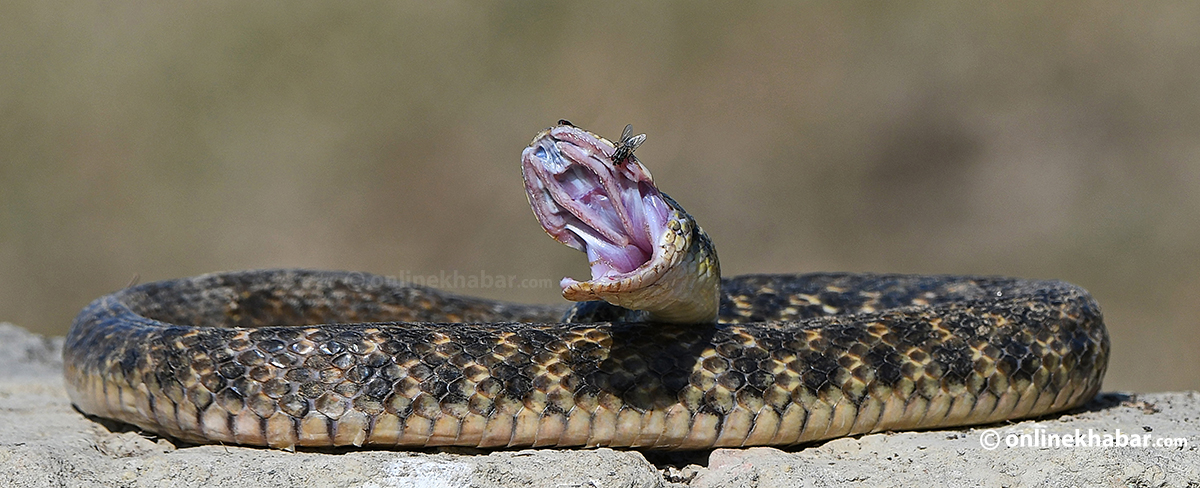
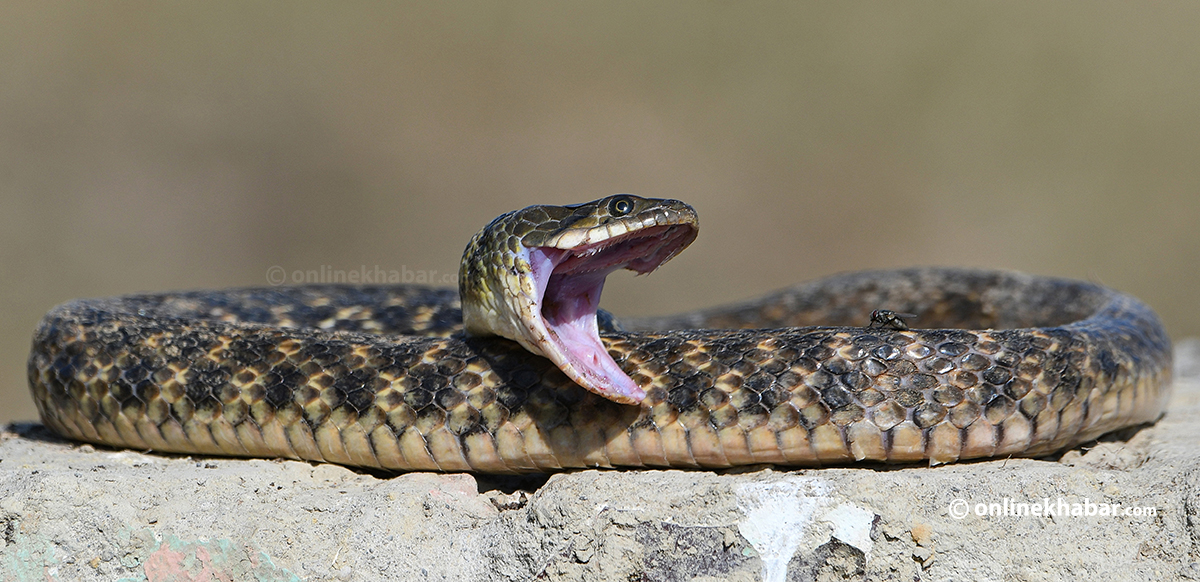
Checkered keelback snakes are semi-aquatic and rarely venture far from water. They live a solitary life and are active both day and night. These snakes can be aggressive. They often try to raise their heads as high as possible and spread their neck skin, imitating the hood of a cobra, to scare off danger. If they cannot escape from danger, they will easily strike and bite viciously. They can also lose their tail as an escape mechanism.
These snakes are carnivorous and usually feed on small fish and water frogs, mice, lizards, small birds, insects, and even small snakes. This makes them a valuable predator, helping to maintain the balance of the ecosystem.
Checkered keelback snakes lay eggs. The clutch size can usually be 30 to 70 or more eggs, and each egg can be 1.5 to 4.0 centimetres long. They typically have an incubation period of 37 to 60 days, during which the female stays with her eggs. Females guard their eggs until they hatch. Each hatchling measures about 11 centimetres in length. In English, we refer to a baby snake as a snakelet.
According to Sunil Sapkota, the Capacity Building Officer of the National Trust for Nature Conservation (NTNC), the checkered keelback is a snake that inflicts venomous bites, although their danger is unknown. People also call it a water snake in English and a dhodiya in Nepali. Interestingly, the species also holds cultural and religious significance in some communities. In Shardanagar, Bharatpur-19 of Chitwan, the snake was reportedly worshipped for over a month, reflecting the complex relationship between people and snakes in Nepal. According to the International Union for Conservation of Nature (IUCN), the checkered keelback snake is classified as a species of “least concern” due to its wide distribution and stable population. However, habitat loss due to human activities such as deforestation and urbanisation may pose a threat to the snake’s survival. In addition, a lack of public awareness leads children in the Terai region, in particular, to catch and kill the snake with sticks.