Kathmandu, August 27
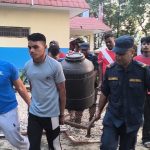
Chakradevi Hospital in Bidur has been operating in “emergency mode” to treat people injured in the flood that struck the Bhotekoshi River in Rasuwa. The hospital has been providing first aid to the injured and airlifting critically ill patients to Kathmandu by helicopter.
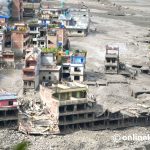
According to Dr Rakesh Pariyar of Chakradevi Hospital, the hospital is about one kilometre from the flood-affected area, so rescued victims have been brought there for treatment. The flood has caused extensive damage to settlements in Trishuli Bazaar, Betravati Bazaar, Dhunge Bazaar and Devighat areas of Nuwakot.
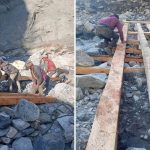
He said access to Trishuli District Hospital, the main treatment centre in the area, has also been affected after roads and bridges were swept away by the flood. With concrete bridges in the Dhunge area washed away, transportation has come to a standstill, making it impossible to send critically ill patients to Kathmandu by road, he said.
According to Dr Pariyar, 24 patients had been brought to the hospital as of Thursday, nine of whom were in critical condition. They were airlifted to Kathmandu in coordination with the Nepali Army. The other patients are receiving treatment at Chakradevi Hospital. Dr Pariyar said patients were still being brought to the hospital and that treatment was being provided under emergency conditions.
He said the number of injured people could increase further as search and rescue operations have only recently intensified. “Search and rescue operations have only just begun,” he said. “There is a possibility that a much larger number of patients could arrive.”
The 15-bed Chakradevi Hospital has also prepared to manage a large influx of patients at once through a triage system if necessary. However, Dr Pariyar said the hospital has limited human resources. According to him, a limited number of health workers, including two doctors, have been providing continuous services at the hospital.
Following the flood, the biggest challenge to the hospital’s medical services has been the disruption of electricity. The power outage has made it difficult to operate equipment needed for continuous monitoring of patients. The hospital is currently relying on a petrol-powered inverter to continue providing medical services. However, a shortage of petrol has made it difficult to sustain this arrangement for long.
Dr Pariyar said the flood also swept away a petrol station in the Dhunge area, while a shortage of petrol at another station in Battar has further aggravated the problem. “The main problem right now is electricity. Without power, it has become difficult to keep patients under continuous monitoring,” he said. “We have also run out of petrol to operate the generator.”