
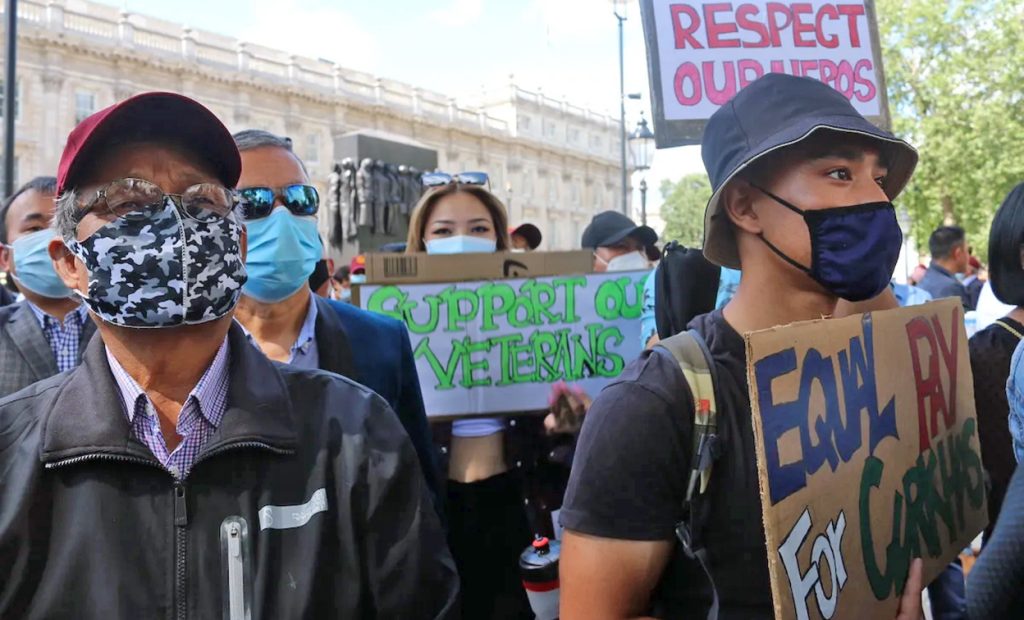
London: Former British Gurkhas have been fighting for equal rights from the British government for nearly 35 years. Although partial demands were met after several rounds of negotiations over the years, their call to receive pensions equal to those of their British counterparts has never been addressed. Gurkha activists staged hunger strikes twice, held talks, and submitted reports, but implementation never followed.
Regardless of which party came to power, the British government repeatedly stated that equal pensions were not possible. Now, former Gurkhas have shifted their focus to an “affordable solution,” presenting an 11-point demand package that includes financial compensation instead of equal pensions.
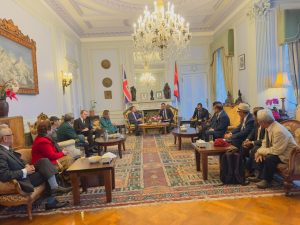
Under the coordination of Nepali Acting Ambassador to the UK, Bipin Duwadi, representatives of various Gurkha organisations involved in the movement formed the G-Ten group, which submitted the 11-point demand to the UK Ministry of Defence (MOD) and has begun some initial rounds of talks.
What is in the 11-point demand?
The demand received by Onlinekhabar largely resembles the final report prepared about eight years ago by a technical committee consisting of the UK government, the Nepal government, and representatives of former Gurkhas. However, the current demand has removed the call for “equal pensions.”
- Former British Gurkha soldiers with 15 years of service should receive a pension proportional to 15 years, equivalent to the 22-year pension that British soldiers receive. Those with 22 years or more of service should receive full equality, and those with 15–21 years should receive proportional recognition based on a 22-year career.
- Since the allowances previously given to Gurkhas were far less than those given to British counterparts, a one-time tax-free payment is demanded for ex-servicemen and widows.
- Demands for corrective measures in the Gurkha Offer to Transfer scheme.
- After wars in Malaya, Borneo, and the Falklands, many Gurkhas were removed from service without redundancy benefits. Injured or disabled Gurkhas did not receive benefits equal to those of British soldiers. Therefore, a one-time redundancy payment, preserved pension for eligible personnel, proportional recognition for those nearing retirement, and equal pension rights for those medically discharged are demanded.
- Gurkhas, who paid taxes, held National Insurance numbers (NI), and had deductions similar to NI from their salaries, should be eligible for state pensions upon meeting qualifications.
- British soldiers who left service after April 6, 1975, received preserved pensions, but Gurkhas were not equally covered. They demand the same rules be applied, with proportional recognition for slightly shorter service. Currently, at least five years of service after April 6, 1975, qualify for a preserved pension.
- Close family members or dependents of Gurkhas who lost both parents should receive a one-time goodwill payment.
- Active Gurkhas demand retention allowance. Despite their strong commitment, they are not included in incentive schemes. The allowance should be reviewed based on equality and inclusiveness.
- After accepting redundancy, previously granted service forgiveness was withdrawn. They demand recognition or proportional calculation of this service.
- India provides special pensions to war widows and injured soldiers, but British Gurkhas do not receive such benefits. They demand similar provisions.
- Eligible Gurkhas should have access to a provident fund.
Positive discussions
Bipin Duwadi, Acting Ambassador to the UK, stated that the UK is engaging in intensive discussions on the 11-point demand, which should be viewed positively.
Duwadi also noted that due to the firm stance of both the embassy and former Gurkhas, the UK now feels pressure to address the Gurkha issue.
Krishna Bahadur Rai, Chief Coordinator of the Gurkha Satyagraha Joint Struggle Committee, emphasised that since the Supreme Court of Nepal directed the government to take initiatives to address Gurkha demands, the newly formed government under Ballen Shah should take this matter seriously.
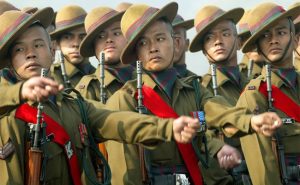
Under the 1947 tripartite agreement, Gurkhas formally became an integral part of the British Army. Since the formation of the Gurkha Brigade in 1948, Gurkhas have fought for Britain for decades, facing risks and responsibilities similar to their British and Commonwealth counterparts.
Retired British Gurkha Major (Rtd.) Jud Bahadur Gurung notes that while the UK government and military leadership have consistently praised Gurkhas for their loyalty, courage, and professionalism, former Gurkhas have faced discrimination in salaries, pensions, career duration, promotions, family support, and post-service provisions.
Gurung added that the fact that the British government, which previously refused even to discuss pensions, is now engaging in talks over the 11-point demand should be seen as a positive development.