Kathmandu, November 15
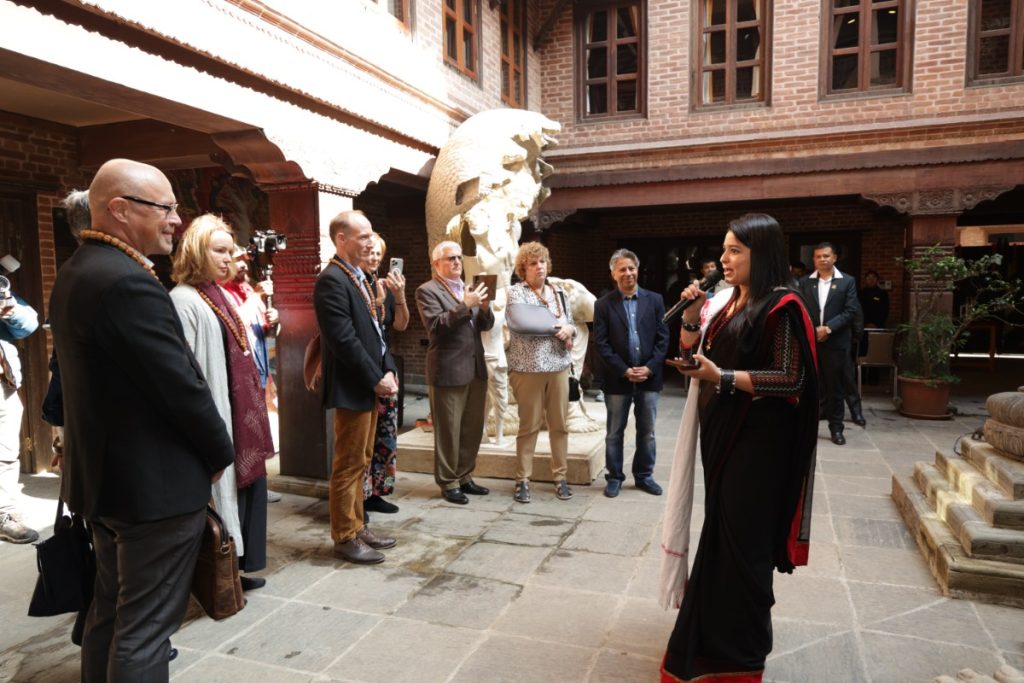
Namuna Foundation has launched the ‘Bring Me Home’ festival in Kamalbinayak, Bhaktapur, to strengthen efforts to return Nepal’s stolen religious and cultural heritage to its communities of origin. Ambassadors and diplomatic representatives from several countries attended the inauguration, held on the International Day against Illicit Trafficking in Cultural Property.
Those present included Israeli Ambassador Shmulik Arie Bass, Australian Ambassador Simon Ernst, Swiss Ambassador Dr Danielle Meuwly, Norwegian Ambassador Dagny Mjøs, former Australian Ambassador Felicity Volk, and UNESCO Representative to Nepal Jaco du Toit. Speakers highlighted the importance of international cooperation in heritage protection and restitution.
The festival was conceptualised and curated by Shreena Nepal, Programme Coordinator at Namuna Foundation, under the guidance of the foundation’s founder, Rabindra Puri. Continuing the heritage conservation efforts Puri began in 2003, the foundation works to raise awareness among the public and relevant authorities about heritage theft and illicit trafficking.
‘Bring Me Home’ is part of this ongoing awareness campaign. Heritage activist Ganapati Lal Shrestha and Advocate Sanjay Adhikari are also associated with the initiative.
Speaking at the inauguration, Puri recalled that he began working alone in heritage conservation in 2003 and that the team supporting the cause has expanded over time. He said the foundation would observe this day annually to raise awareness of heritage crime and advocate for conservation. ‘People in our country need to be aware of this problem, we are doing from our level, now all the concerned authorities must come together’ he said.
UNESCO Representative Jaco du Toit said the 1970 Convention provides a common framework for countries to work together.
“It is a shared framework through which countries can cooperate to protect heritage, prevent illicit trade and return objects to their places of origin,” he said.
He encouraged embassies to designate contact persons to help identify claims and information promptly and direct them to the relevant authorities. Heritage restitution, he added, is closely tied to people’s identity, lives and beliefs.
Shreena Nepal, the festival’s coordinator, said, “Even when substantial evidence has been gathered, bringing sacred heritage home can remain an enormous challenge. Museums may present an object’s provenance as unproblematic, but to the communities of origin, these objects are still their gods. Namuna Foundation’s objective is not merely to bring the deities back to national museums, but to return them to their communities.”
Australian Ambassador Simon Ernst said the discussions had deepened his understanding of the spiritual significance of these objects beyond their artistic value. Referring to cultural materials and even human remains taken from Aboriginal communities in Australia and held in overseas museums, he noted that the movement extends beyond Nepal.
“This is not just a movement in Nepal; it is part of a wider movement taking place around the world. You are part of that movement,” he said.
Israeli Ambassador Shmulik Arie Bass expressed his willingness to assist the initiative in any way possible and encouraged the organisers to contact him if they identify relevant information or require his support. Former Australian Ambassador Felicity Volk also offered her assistance and emphasised the need to address security concerns after restitution to safeguard returned heritage. Norwegian Ambassador Dagny Mjøs welcomed the initiative, stressing the importance of raising awareness among concerned authorities and noting that programmes like this can inform individuals while encouraging wider institutional action.
The festival will run through November 21 at Nepal Vocational Academy, Bhaktapur and may be extended for another week if needed.
It features live stone and wood carving demonstrations, documentary screenings, and a special presentation on heritage homecoming, interactive activities and an exhibition of replicas of stolen heritage.
This exhibition disseminates field experiences from research, documentation, and digitalisation conducted as part of Supporting Nepal’s Grassroots Response to Cultural Property Crime, in collaboration with the Swiss Federal Office of Culture (BAK), ALIPH, and ARCA. The programme particularly aims to help young visitors understand the journey from heritage theft and investigation to restitution and reunion with communities.