

Chitwan, December 7
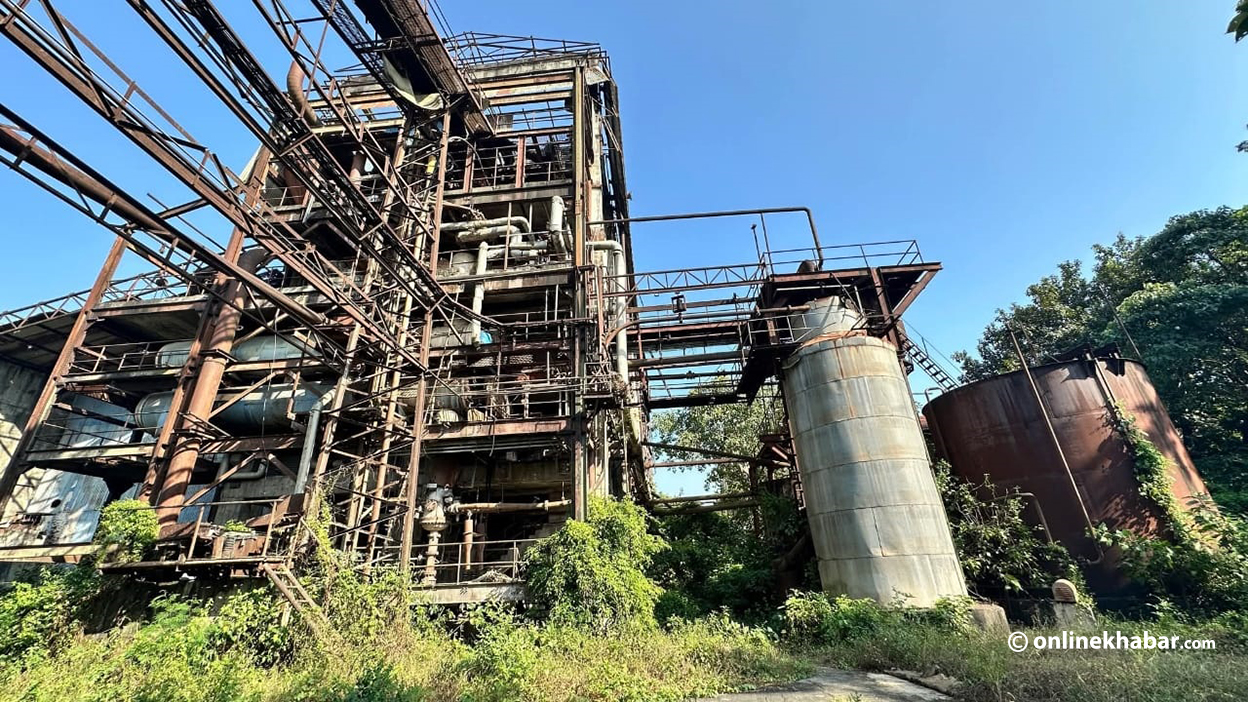
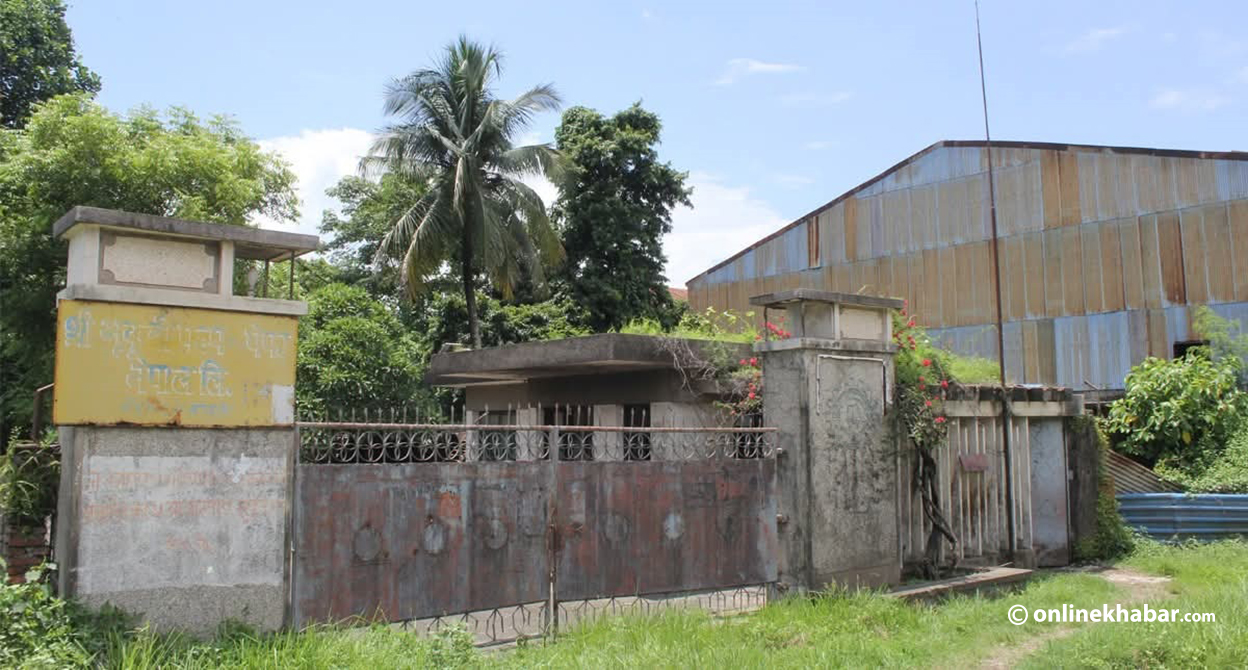
It has been 15 years since the Bhrikuti Paper Factory located in Gaidakot, Nawalparasi, was completely closed. Once a major industry that met the country’s paper demand and even exported pulp to Japan, the factory has now deteriorated into a dilapidated structure.
Built by the Chinese government to help Nepal become self-reliant in paper production, the factory was shut down on Falgun 19, 2067 following privatisation. After the management unilaterally posted a notice announcing the closure, 333 permanent workers were left unpaid. More than a dozen workers have since died due to various reasons.
Although the law requires formal notification to the Department of Labour before closing an industry, the operators shut the factory without obtaining approval.
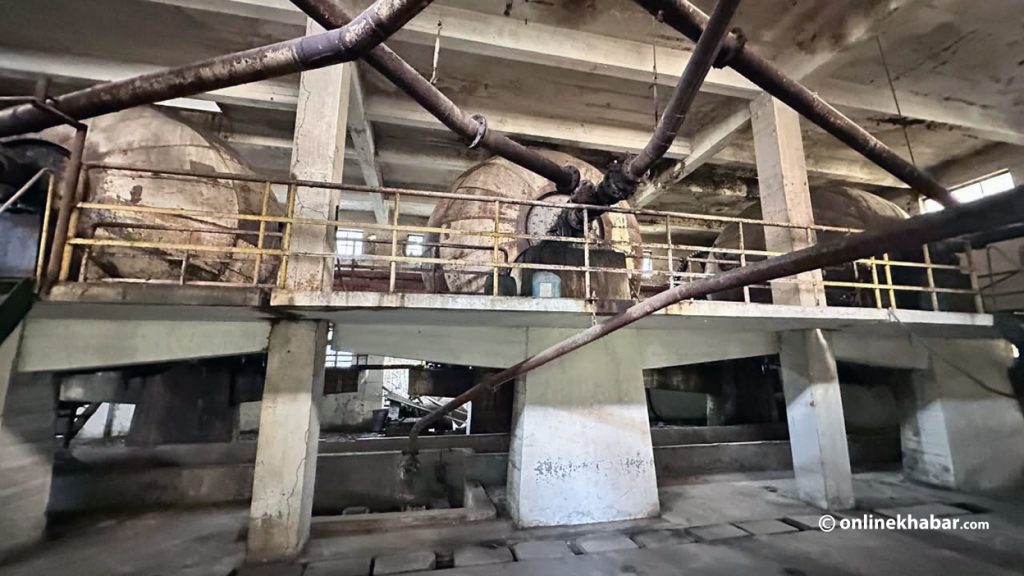
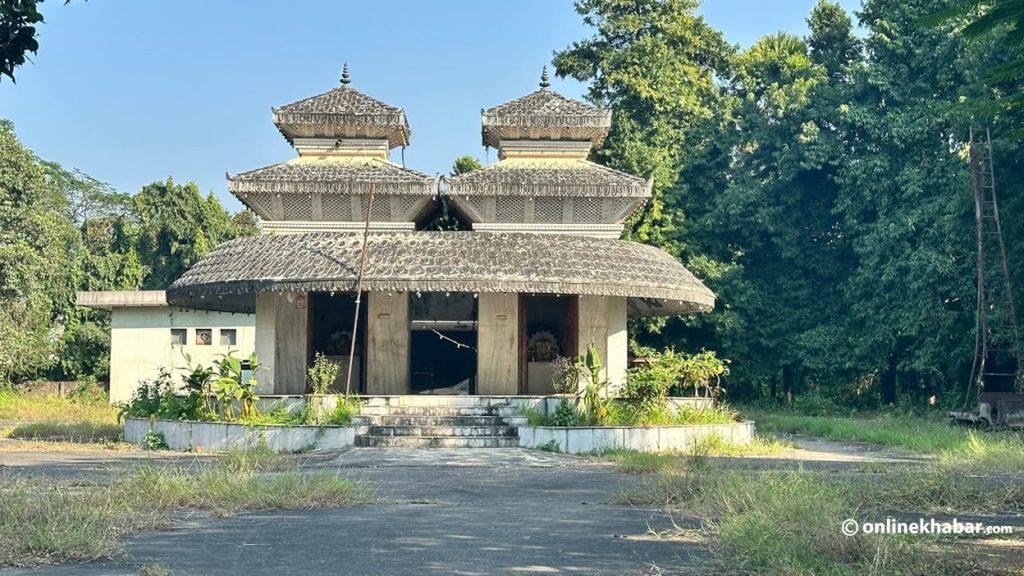
The factory premises are now overgrown with bushes and have turned into wasteland. Security guards said jackals howl there in the evenings. “All the structures are in a ruined state, covered by bushes, and it is not possible to enter inside,” a guard said.
The tin roofs have rusted and collapsed. From outside, only skeletal frames are visible. The walls have crumbled, allowing easy entry from anywhere. A few guards barely manage to guard the main gate. It is impossible to reach the areas where machines and tools were kept.
Once exporting paper, the country turned import-dependent after the closure
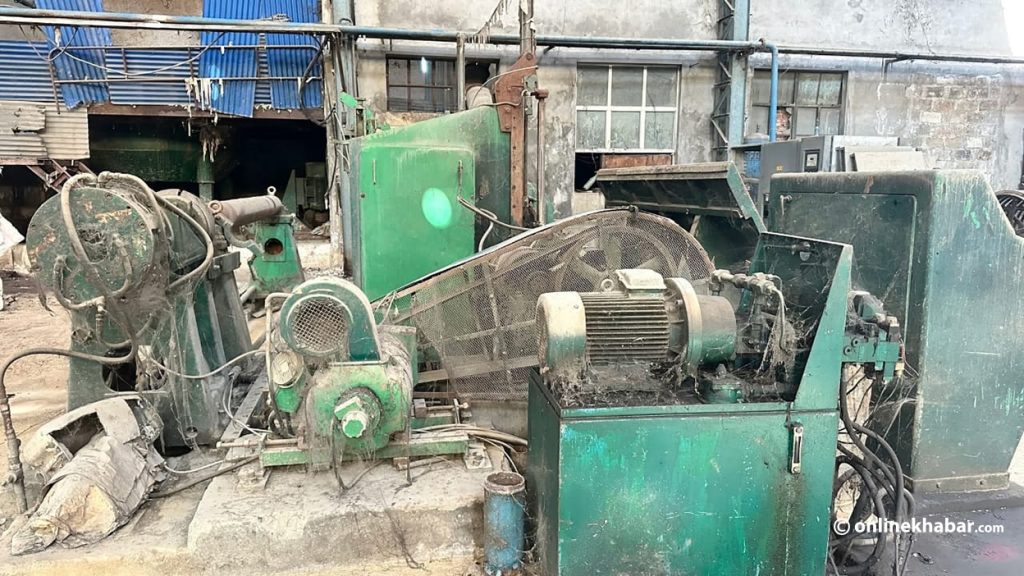
At one time, this factory met nearly 60 per cent of the country’s total paper demand. Using domestic raw materials such as straw, bamboo, babiyo grass, wheat husk, kans grass from the national parks, and waste paper, it used to produce 12,000 to 15,000 metric tons of paper daily. After its sudden closure, Indian paper products have flooded the Nepali market.
Bhrikuti exported 1,500 metric tons of raw paper annually to Japan and up to 3,000 metric tons of paper to India. With the factory’s shutdown, not only did hundreds lose their livelihoods, but the country also became dependent on imports for paper.
Although there were repeated written agreements between the workers’ representatives and factory management to pay the dues, the management has not paid wages to date.
About 300 permanent workers who had been working at the factory have not received their salaries and allowances since Mangsir 2067 BS. Meanwhile, 22 temporary workers, 44 contract workers, and 92 probationary workers were paid their dues and dismissed immediately after the factory was closed.
In 2049 BS (1992/93), under the government of then Prime Minister Girija Prasad Koirala and its policy of transferring state responsibilities to the private sector, the Bhrikuti Paper Factory along with 60 bighas of land was sold to Golchha Organization, Kabra Group and Kankraft.
Although it was said that the group purchased the factory, which produced eight tons of paper daily, for Rs 170 million, sources claim it was acquired for only Rs 129.8 million. The operators later sold eight bighas of land separately. They also received a concession of nearly Rs 50 million from the government in relation to continuing government employees.
Built by China, decline began after privatisation
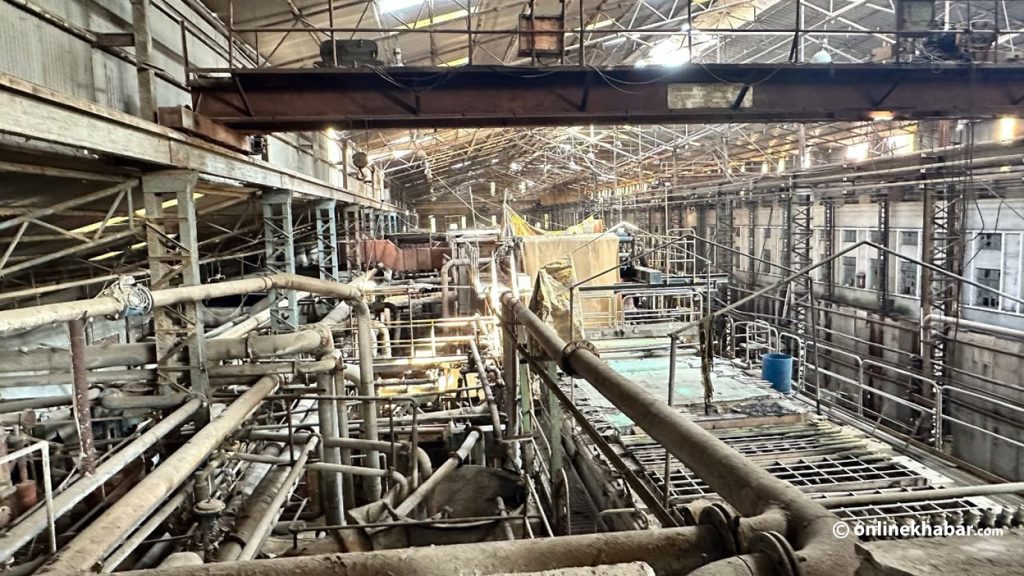
The factory, constructed by the Chinese government in 2039 BS (1982/83) and handed over to the Government of Nepal to make the country self-reliant in paper, began to decline after it was privatised in 2049 BS.
While some have demanded the factory be brought back into operation, others have argued that due to dense settlement in Gaidakot, it should be relocated elsewhere.
Demand for settlement of overdue wages
Workers have been continuously demanding the settlement of their long-overdue wages, saying they have suffered greatly.
Darsan Sapkota, coordinator of the Victims’ Workers Struggle Committee, said the problem must be resolved by the central government. “We have informed everyone from the central government to the local level about workers’ problems,” Sapkota said. “There is no one unaware of Bhrikuti’s situation. We have submitted all documents related to past agreements and legal cases, but the problem has not been resolved.” He complained that no one has spoken up against the injustice.