Kathmandu, November 12
Dr Arjun Kumar Karki has called on developed countries to fulfil their climate finance obligations by providing adequate, predictable and accessible public funding in the form of grants rather than loans.
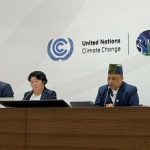
Speaking at a side event titled ‘Turning Climate Declarations into Action’ at the Nepal Pavilion during the 31st UN Climate Change Conference (COP31) in Antalya, Turkey, on November 12, Karki said climate justice required reparations worth trillions of dollars, not billions.
The event was organised by LDC Watch in collaboration with the Asia Pacific Movement on Debt and Development (APMDD) and the Parliamentarians Network for a Fossil-Free Future. Parliamentarians from least developed countries (LDCs) and partner countries discussed ways to advance the 2026 Dili Ministerial Declaration on Climate Change.
Addressing the gathering, Karki said Nepal was among the countries suffering severe consequences of a climate crisis to which it had contributed very little.
He referred to a recent glacier-rock avalanche and subsequent floods in the Himalayas, which claimed lives, damaged infrastructure, displaced communities and disrupted livelihoods.
“These are stark reminders of the growing climate injustice faced by Nepal and other countries of the Global South, which are much more vulnerable to the climate crisis than the rich countries of the Global North,” he said.
Karki argued that climate finance should not be treated as charity or aid, but as an obligation arising from the historical and continuing responsibility of developed countries for greenhouse gas emissions.
He said climate finance was also a matter of people’s safety, livelihoods and future, affecting whether farmers could recover damaged agricultural land and families could rebuild homes after climate-related disasters.
He also linked climate finance to the transition away from fossil fuels and the development of renewable energy systems. According to him, developed countries must finance mitigation efforts in developing countries as part of their fair share of global climate action, rather than relying on carbon offsets.
Karki said the climate finance target agreed at COP29 in Baku — USD 300 billion annually by 2035 — was insufficient and came too late. He also pointed to the call to scale up climate finance to USD 1.3 trillion by 2035, noting that it was not adopted as the main target.
He raised concerns over the emphasis on mobilising finance rather than directly providing it, arguing that developed countries must meet their obligations under Article 9.1 of the Paris Agreement, which requires them to provide financial resources to developing countries.
Karki further stressed that the quality of climate finance was as important as its volume. For Nepal and other least developed countries, he said, funding should come from public sources and be provided as grants rather than loans.
“We cannot be expected to borrow money to address a crisis we have contributed very little to creating,” he said.
The 2026 Dili Ministerial Declaration has also called for increased grant-based public finance, with resources that are predictable and easier and faster to access, according to Karki.
He urged parliamentarians from the Global South to press their governments to maintain a firm position in demanding that developed countries fulfil their climate finance obligations.
“Trillions, not billions,” he said, underlining the scale of funding needed to address the climate crisis.