Kathmandu, November 13
Five Nepali ministers have travelled to Antalya, Turkey, to attend the 31st United Nations Climate Change Conference (COP31), prompting questions over whether all of them needed to be present at the international gathering.
The conference, which has been underway for five days, has brought together government representatives and experts from around the world. Nepal has sent Foreign Minister Shishir Khanal and Minister for Agriculture, Forests and Environment Geeta Chaudhary as its official political representatives, while three other ministers have also attended various sessions and side events.
Foreign Minister Khanal is scheduled to return to Nepal on Saturday. Chaudhary will represent the country in the sessions that follow.
Education Minister Sasmit Pokharel left for Turkey on Friday to participate in COP-related programmes. Finance Minister Dr Swarnim Wagle is already attending the conference, while Health Minister Nisha Mehta visited the conference venue before travelling to Sri Lanka for a programme. She returned to Nepal on Thursday.
According to a statement issued by the Ministry of Foreign Affairs, Nepal’s official delegation includes Khanal, Chaudhary, National Planning Commission member Professor Dr Sanjay Acharya, Agriculture, Forests and Environment Ministry Secretary Dr Rajendra Prasad Mishra and other senior government officials.
The other ministers, lawmakers and officials who travelled to the conference outside the formal delegation have arranged their participation in different programmes.
Initially, only Environment Minister Chaudhary was scheduled to attend COP31. However, Prime Minister Balendra Shah wanted Foreign Minister Khanal to lead the delegation, after which the government decided to send both ministers as official representatives.
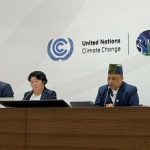
Khanal addressed the conference’s opening session. He also spoke at a programme jointly organised by Nepal, Tajikistan, Kyrgyzstan, Bhutan and Pakistan.
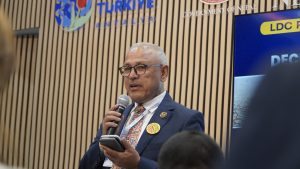
Nepal has established a pavilion at the conference venue, where discussions on climate change and related issues are being held through various sessions. Other Nepali ministers attending the conference have also participated as speakers at the pavilion.
Nepal had sought to include Himalayan issues in the conference’s formal agenda, a proposal also supported by Bhutan. However, the issue was not included, with developed countries giving it limited attention, according to the report.
Khanal raised the issue again at a programme on Friday, calling for grant-based, predictable and concessional climate finance to address the needs of countries vulnerable to climate change.
Speaking at a high-level event on climate finance needs and access for small island developing states and least developed countries, Khanal called for easier and direct access to climate funding.
He said countries such as Nepal, which have contributed negligibly to climate change, should not be forced to take on additional debt in the name of climate resilience.
“Climate resilience must not come at the cost of debt sustainability. We need predictable public grants and highly concessional financial resources, not commercial loans,” he said.
Finance Minister Wagle, who travelled to Antalya on Monday, is scheduled to represent Nepal and advocate for the country’s positions on climate change and sustainable economic development at around half a dozen high-level sessions, according to his secretariat.
On November 10, he addressed a programme on the Systematic Observations Financing Facility at the UNFCCC Pavilion.
Health Minister Mehta chaired a panel discussion at the Nepal Pavilion, where she called for climate change to be recognised as a serious public health crisis and for health to be placed at the centre of climate action plans.
After the discussion, she travelled to Colombo, Sri Lanka, to attend the first BIMSTEC Health Ministers’ Meeting.
Environment Minister Chaudhary has raised issues including the protection of Himalayan ecosystems, easier access to adaptation finance, compensation for loss and damage, and climate action led by local communities.
Speaking at a Nepal Pavilion session on the ‘Living Sagarmatha: Nepal Himalayan Resilience Strategy’, Chaudhary said the strategy brings together fragmented programmes in the Himalayan region under a unified national approach covering biodiversity, sustainable forest management and the health of the cryosphere.
She said 35 priority areas had been identified to protect rural livelihoods through Himalayan agriculture, herbal production and the development of value chains for local products. Implementing these priorities would require investment of more than USD 4 billion, she said.
Chaudhary also described the protection of the Himalayas as a shared global responsibility, noting that the region is linked to the water and climate security of nearly two billion people.
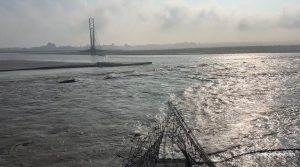
Referring to climate-related disasters in the Himalayan region, including floods in Rasuwa, she highlighted their direct effects on public health and service delivery and called for easier access to grant-based climate finance for least developed countries.
The participation of large numbers of government officials in international climate conferences has drawn criticism in previous years, with concerns that such events are sometimes treated as opportunities for travel rather than substantive engagement.
Questions have also emerged this year over whether all five ministers needed to attend the conference.
Former minister Dr Madan Pariyar, who attended COP30 last year, said the substance of a country’s participation mattered more than the size of its delegation.
“What matters is not how many people attend, but what agenda they present and how they present it,” he said, adding that COP conferences also include numerous side events beyond the main sessions.
Environmentalist Bhushan Tuladhar said COP31 was important for Nepal, but the roles played by individual ministers should be examined to assess their participation.
“As far as I know, the foreign, finance and environment ministers appear to have had clear reasons to attend. In the case of the other ministers, their programmes need to be examined before drawing conclusions,” Tuladhar said.