

Having grown up in London, I took its infrastructure for granted. It was only after moving to Cardiff University that I began to appreciate it. Although Cardiff was a developed city, it lacked the range of infrastructure I had become accustomed to in London. This contrast made me realise how deeply urban infrastructure shapes everyday life and highlighted the importance of balancing progress with resilience and sustainability, a theme I will explore throughout this essay.
For example, I had completely taken the London Underground for granted. Can you imagine being able to travel from the suburbs of London to Big Ben in just 30 minutes? Looking back, that was incredible.
While I was in Cardiff, however, I witnessed considerable infrastructure development across Wales. This became particularly apparent during my engineering studies, when local engineers discussed the Welsh Government’s plans to invest £3 billion from its capital funds in transforming the national transport network and making the energy supply greener. At the time, I was surprised by the scale of this investment, particularly given Cardiff’s susceptibility to severe storms. I now realise that sound policymaking requires a balance between immediate needs and long-term risks.
I remember studying for my exams when Storm Bert and Storm Darragh struck just weeks apart. These events brought home the significance of global warming, particularly as they coincided with my studies. During this period, my professor reiterated that, according to BBC News, the Earth was one degree Celsius warmer than the previous year. What struck me was that the engineering curriculum, particularly environmental engineering, emphasised preserving what we already have rather than pursuing innovations that could generate high carbon emissions.
What I found particularly interesting, however, was that while scientists and academics advocated phasing out environmentally damaging development, the Welsh Government appeared to take a different approach by pursuing rapid urbanisation. Nevertheless, it did not disregard all environmental recommendations. Much of its investment focused on green projects and renewable energy, including the Pembroke Power Station expansion, which aimed to enhance the UK’s renewable energy distribution.
This decision to prioritise certain forms of development over others reflects an attempt to reconcile economic growth with environmental sustainability. However, it also raises questions about the environmental risks governments are willing to accept in pursuit of immediate benefits and the potential long-term consequences if those risks are not properly managed. By targeting green energy projects, the Welsh Government appeared to acknowledge the importance of sustainable progress. Yet its strategy also highlights the complexity of policymaking in the face of climate change. One possible approach is to encourage development while rigorously integrating sustainable practices. Achieving this balance, however, requires continuous evaluation of potential trade-offs and a clear understanding of how present decisions might affect future resilience.
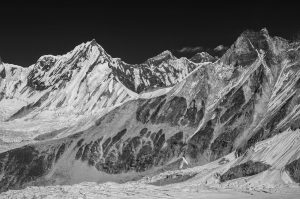
You might be wondering why I am talking about this. Recently, my father asked me to attend a webinar with environmental experts to analyse the catastrophic floods that struck Nepal over the past month. The Nepal-Tibet floods of 2026 reportedly caused more than 1,500 deaths, injured 9,300 people and left as many as 5,300 missing. The flooding was attributed to a massive glacier collapse and a rock avalanche.
One expert advocated an approach often supported by environmentalists: limiting environmentally damaging development and reconsidering whether the Himalayas can support large-scale infrastructure projects. He argued that Nepal could focus on alternative forms of development, given the significant environmental and geological consequences of building major infrastructure, such as a railway through the Himalayas. In his view, the risks might outweigh the benefits.
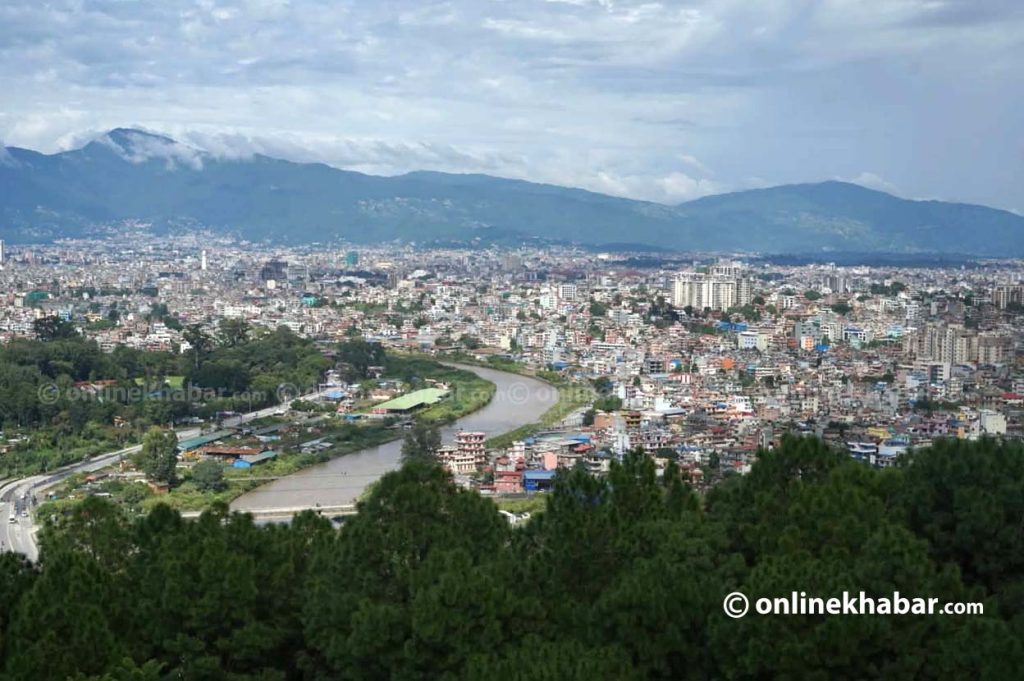
He also referred to the 2015 Gorkha earthquake, which exposed Kathmandu’s geological vulnerability. The city lies on a basin of relatively soft sediments, which can amplify seismic waves compared with solid bedrock. He argued that this makes it particularly important to account for Nepal’s geological risks when planning major infrastructure projects. Rather than concentrating on large new developments, he believed Nepal would benefit more from maintaining, strengthening and improving its existing infrastructure.
His argument was clear and, to be honest, quite challenging for someone as enthusiastic about development as I am. Nevertheless, he made a fair point. Geographically, Nepal faces significant challenges, with the Himalayas presenting considerable engineering difficulties. Although I did experience a natural disaster in Cardiff, it was not on the same scale as the disasters Nepal faces. I can therefore understand why environmentalists are cautious about large-scale urbanisation in Nepal. At the same time, I believe the country can continue building its capacity to respond to and mitigate such disasters through phased and carefully considered development.
As someone passionate about Nepal’s development, I remember meeting a girl from Chongqing, China, while I was at university. She told me that her home city was built across three layers, with trains running through and between buildings. Hearing her describe the city made me hopeful that London and Kathmandu, my two homes, would continue to embrace engineering innovation thoughtfully, improving everyday life while respecting their unique geographical and environmental challenges.
As a young person in my early twenties, I have always envisioned a world that prioritises comfort, accessibility and time efficiency, with these values reflected in the infrastructure we build. At the same time, I want engineering to be visually appealing without compromising functionality. I want every city to preserve its cultural identity while striving to become a smart city. After all, the true essence of a smart city was never about sacrificing the environment. It has always been about progressing alongside it.
I am tired of seeing traditional engineering approaches prioritise form over function while overlooking human-centred design. The future we were promised, and when I say “we”, I mean Gen Z and millennials, was depicted in Back to the Future, where engineering advancements made everyday life more exciting. We were promised flying cars, the abolition of lawyers, self-drying clothes, skyway traffic systems, weather control services, the Power Oasis and so much more.
The fact that engineering experts and environmentalists argue that countries should slow urbanisation raises concerns among those who regard innovation and progress as essential. However, after reflecting on these arguments, I have concluded that calls for restraint do not necessarily mean development should stop. Rather, they suggest that the development we pursue must be sustainable and resilient. I believe that when scientists and environmentalists call for reduced urbanisation, their intention is to encourage infrastructure that can withstand future challenges and environmental pressures, ultimately achieving a better balance between progress and sustainability.
In practical terms, I believe the time has come for Nepal to embrace engineering challenges and take bold steps forward, while ensuring that risk assessments and environmental impact assessments are integrated into every stage of the engineering design process.
My position is that Nepal should move forward with major projects such as the Nepal–China railway, but it must do so by incorporating sound engineering principles and nature-based solutions. Since the railway would pass through the Himalayas and Nepal’s mountainous terrain, construction activities involving mountain cutting and excavation could increase the risks of landslides, soil erosion and biodiversity loss. It would therefore be essential to incorporate bioengineering techniques for slope stabilisation, watershed and forest restoration, natural drainage management and ecological protection into the railway’s engineering design. These measures should complement conventional engineering solutions to minimise environmental impacts, reduce disaster risks and ensure the long-term safety, sustainability and resilience of the railway infrastructure.
Furthermore, major infrastructure projects often require substantial financial investment, potentially amounting to billions of dollars. For example, the proposed Nepal–China railway is estimated to cost approximately USD 8 billion, making effective project planning and management crucial to its successful delivery. Given the unprecedented scale and technical complexity of such a project, particularly in Nepal’s challenging Himalayan terrain, the potential for unforeseen challenges, cost overruns and implementation risks could be significant.

The use of advanced project management software and digital tools would therefore be essential to facilitate cost control, budget monitoring, resource allocation, risk management, construction scheduling and coordination among diverse stakeholders.
Moreover, integrating digital technologies such as Geographic Information Systems (GIS), remote sensing, satellite imagery and real-time environmental monitoring into the overall project management framework could play a crucial role in mitigating environmental risks. These technologies could help identify environmentally sensitive areas, landslide-prone slopes, biodiversity hotspots and vulnerable watersheds before construction begins. They could also support the continuous monitoring of environmental changes, including soil erosion, slope instability, water pollution, vegetation loss and habitat fragmentation throughout the construction process.
This would enable project teams to identify potential environmental problems at an early stage and implement appropriate mitigation measures, including bioengineering, slope stabilisation, watershed restoration and biodiversity protection.
Integrating these digital tools and environmental management systems from the initial planning and feasibility stages through construction and eventual operation would help minimise financial risks, prevent unnecessary environmental damage, reduce construction delays, improve decision-making and strengthen accountability among stakeholders. Ultimately, this proactive and integrated approach would contribute to more efficient project delivery while ensuring that economic development, environmental sustainability and engineering resilience remain central to the project’s implementation.
Ultimately, I do not want Nepal, or any other country, to fall behind in engineering development. This essay has sought to highlight that engineering development is fundamental to humanity, serving as a driving force behind economic progress, technological advancement and improvements in everyday life. Although the world faces increasingly unpredictable challenges, including natural disasters and environmental changes, I believe engineering development should not be viewed as a threat to the environment. Instead, it should be seen as an opportunity to integrate environmental and geographical considerations into the design and development of our infrastructure.
Reflecting on these challenges has encouraged me to think more critically about how we approach infrastructure development and the responsibilities that come with it. I do not believe Nepal should abandon ambitious projects such as the Nepal–China railway simply because its geographical landscape presents significant engineering challenges. Rather, these challenges should encourage engineers, policymakers and environmental experts to work together to develop innovative solutions that prioritise safety, sustainability and long-term resilience.
At the heart of this essay is my frustration with the tendency to put Nepal in a box when discussing engineering development. I do not want the country’s geographical challenges to become limitations that we, as stakeholders in its future, simply learn to accept. Nor do I believe engineering innovation should be restricted by the circumstances of the country in which it takes place. Instead, I want us to challenge conventional thinking and use engineering to reshape what is possible for Nepal.
Rather than allowing geographical difficulties to dictate the boundaries of our ambitions, I want them to inspire us to develop innovative solutions that demonstrate how humanity can overcome challenges intelligently. Ultimately, I want Nepal not merely to adapt to the limitations of its environment, but to help push the boundaries of engineering innovation itself.