Kathmandu, October 30
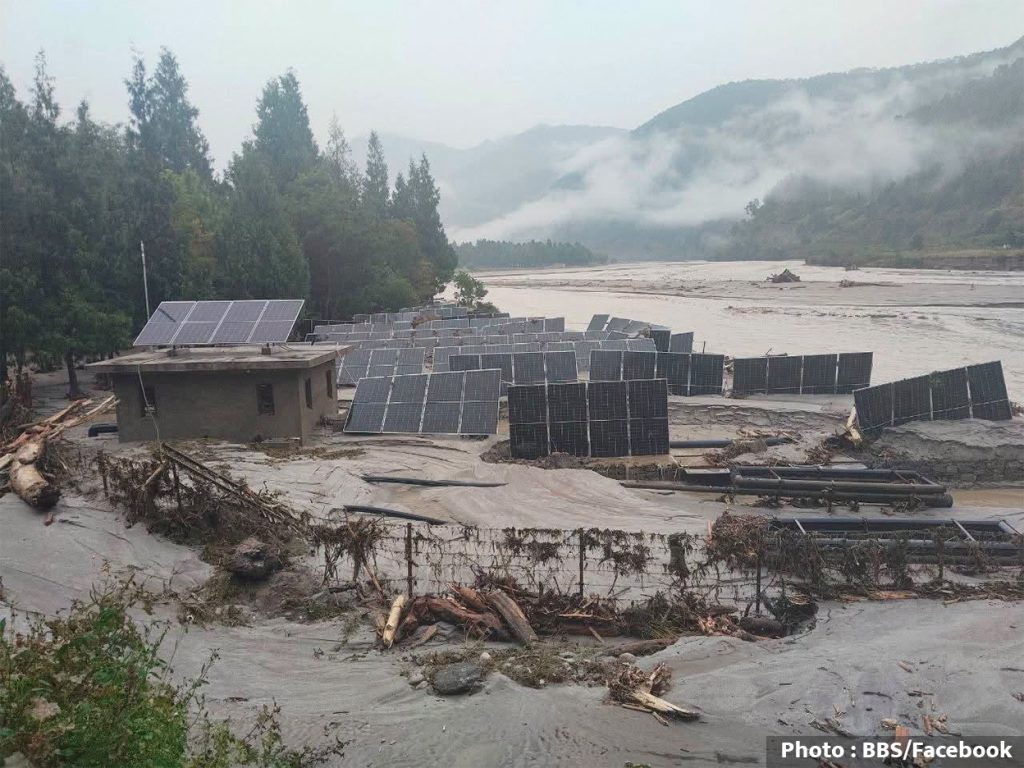
A sudden major flood struck Bhutan last night, raising suspicions of a possible glacial lake outburst flood (GLOF). The flood swept away the entire Tsachu area in Gasa district. The swollen Mo Chhu River also damaged a solar irrigation system in Punakha district.
The sudden flood, carrying debris, washed away a section of the Punakha-Gasa highway in the Jomlingthang area.
According to the Bhutan Broadcasting Service (BBS), the flood also washed away part of the Tongchudrak section of the road in Laya Gewog. Following the disruption, the Laya area has been cut off from other parts of the country by road.
BBS reported that no human casualties had been reported so far. Officials said the full extent of the damage could not be immediately assessed as the flood occurred at night.
Security personnel and concerned agencies said they were continuously monitoring the situation in the affected areas and water levels in the rivers.
Sintaphu glacial lake suspected of bursting
The flood is suspected to have been triggered by an outburst from Sintaphu glacial lake in Gasa district. The lake is located in the Lungo area of Laya Gewog, at the foothills of Mount Wakila in Gasa district.
Sintaphu is among Bhutan’s 17 potentially high-risk glacial lakes. It lies in the headwaters of the Mo Chhu River. The suspicion of a lake outburst has arisen because of the flood in the Mo Chhu River.
Some photographs circulated on social media appear to show water flowing out of the glacial lake. However, their authenticity has yet to be verified.
People in vulnerable areas moved to higher ground
Authorities have relocated military personnel, government employees and residents in the affected areas to safer locations in view of the flood risk.
Soldiers stationed at Taktsimakhang, project office employees and people in the Gasa Tsachu area were instructed to move to safe locations. Employees and visitors at the hot springs in Gasa Tsachu were also evacuated.
Floodwater has also reached the Yebisa area of Punakha. Punakha Central School confirmed that all its boarding students had been safely moved to higher ground.
River levels monitored, sirens activated
However, there has been no official confirmation yet on whether the glacial lake actually burst.
Details about the actual situation, the volume of floodwater and the extent of the damage have also not been made public.
Bhutan’s National Centre for Hydrology and Meteorology (NCHM) said it was monitoring water levels in the Mo Chhu River at Tashithang and Yebisa.
Siren systems installed along the downstream stretches of the Mo Chhu and Punatsangchhu rivers have been activated. Neighbouring districts at potential risk have also been alerted.
In view of the risk of rocks, soil and other debris being carried downstream by the floodwaters, the Punatsangchhu-II Hydropower Project has shut down its power-generating units.
The project has also opened its dam gates to lower the reservoir’s water level. The precautionary measures have been taken to allow floodwater and the debris accompanying it to flow out safely.