Kathmandu, October 15
CPN-UML Chair and former Prime Minister KP Sharma Oli has said recent political developments and other events have dealt a setback to Nepal’s goal of building a “Prosperous Nepal, Happy Nepali”, pushing the country’s development trajectory back by several decades.
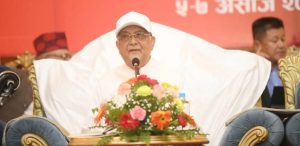
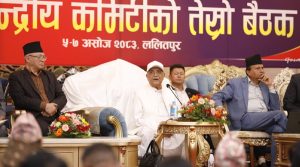
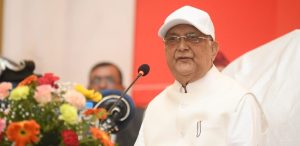
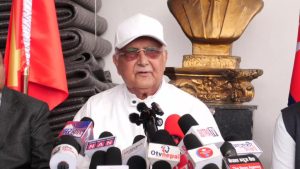
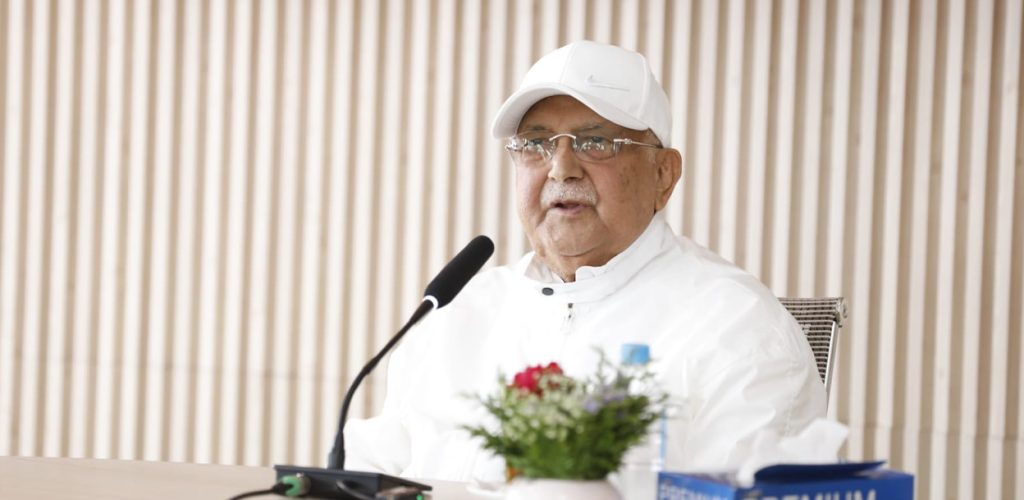
Speaking at the launch of the website of the CPN-UML’s Policy Study and Research Foundation at the party’s central office in Chyasal on Thursday, Oli said the setback should not be viewed as a failure or defeat.
“We have set the goal of a prosperous Nepal and happy Nepalis. Recent events have pushed our destination further back, but that does not mean we have failed or been defeated,” he said.
Oli said increasing production, creating sustainable employment and improving people’s living standards should be the main foundations of prosperity. He stressed that political and policy debates should focus on improving the everyday lives of citizens.
“Our main objective is to raise people’s living standards, eliminate poverty and transform deprivation into prosperity,” Oli said. “For this, we must focus on creating sources of income, increasing production and providing employment opportunities that enable families to meet their basic needs.”
He argued that the value of employment should be measured not by the hours worked but by the income it generates. Creating jobs that provide adequate earnings, he said, was essential to ensuring people’s economic security.
“The value of employment is determined not by the time spent working but by the adequate income it generates,” he said, adding that development should aim to uplift Nepali society as a whole rather than benefit only a particular class, community, profession or region.
Oli said poverty eradication must go beyond slogans, requiring clear policies and productive employment to turn deprivation into sustainable prosperity.
Describing humanism as the foundation of his political and social philosophy, he said the state had a responsibility to ensure that every citizen could meet basic needs, including food, clothing, shelter, education and healthcare.
“Our fundamental philosophy is humanism. It is our responsibility to create conditions in which every citizen can meet basic needs such as food, clothing, shelter, education and healthcare,” he said.
He called for policies that prioritise all citizens without discrimination based on caste, class or community, arguing that social welfare and prosperity could be achieved only through truth, justice and equality.
Oli also cited social programmes introduced during his time in government as efforts to build a state oriented towards socialism. These included rescuing and rehabilitating street children, protecting vulnerable people living on the streets and seeking to end the need for people to beg in public spaces.
He also referred to old-age allowances, health insurance, social security programmes and the “Kholau Khata” campaign for children as examples of a human-centred approach to governance.
Oli said the government’s responsibilities extended beyond accounting and accountability, requiring it to demonstrate care and sensitivity towards citizens.
“Just as a mother cares for her children with love and affection, the government must also act responsibly towards its citizens,” he said.
Addressing criticism of development and social programmes implemented during his tenure, Oli referred to a controversy over a signboard in the Nagdhunga area, describing it as a minor technical issue. He said such disputes could not erase the significance or history of the social initiatives undertaken by his government.
“The importance of the social work we have done does not disappear simply because a signboard is removed. Its impact on society and its history cannot be erased,” he said.
Oli reiterated that achieving the goal of a happy Nepal required addressing people’s suffering, poverty and deprivation first. Ensuring that citizens could meet their basic needs, he said, was the starting point for building prosperity.
“If we want happy Nepalis, we must first alleviate people’s suffering. We must end poverty, deprivation and helplessness and create conditions in which citizens can meet their basic needs,” he said. “First, alleviate suffering; then achieve happiness. This was the thinking behind our efforts to advance social justice and prosperity.”