
Kathmandu, September 18
A photograph posted by CPN-UML Secretary Sherdhan Rai on Wednesday has brought into the open discussions that have been quietly taking place between the UML and the Nepali Communist Party (NCP) for the past two weeks.
The photograph showed Rai with NCP leader Barshaman Pun at Hotel Vivanta in Lalitpur. The two leaders had gone there following discussions related to the convention of Kirat Rai Yayokkha.
The meeting itself was not presented as a formal political gathering. But coming amid growing behind-the-scenes discussions between the UML and NCP, the photograph added to speculation that the two parties are exploring ways to work together again.
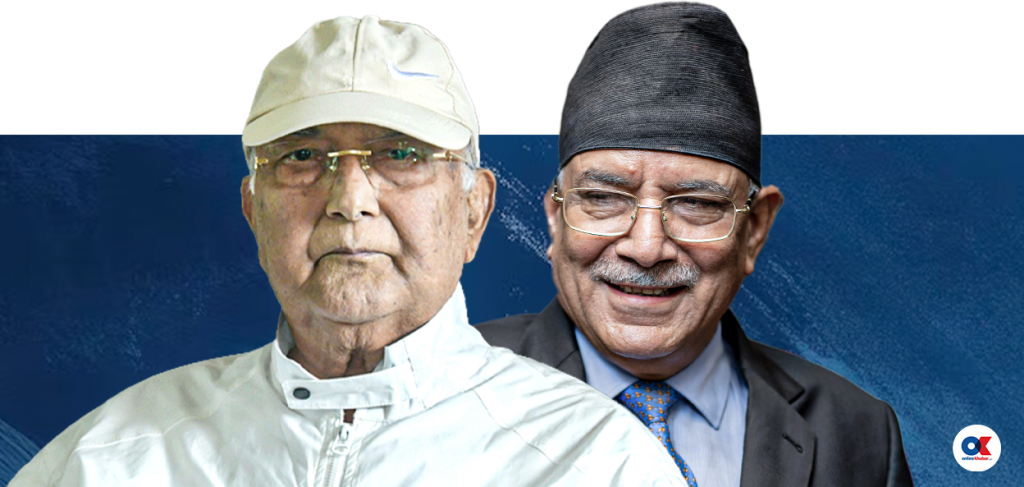
Senior leaders from both sides say UML Chair KP Sharma Oli and NCP Coordinator Pushpa Kamal Dahal are interested in renewing cooperation under the changed political circumstances.
The discussions, however, have yet to produce agreement among the second-rung leaders of the two parties.
The possibility of cooperation has emerged at a time when the UML is itself engaged in an increasingly intense debate over restructuring and leadership. Some UML leaders suspect that the discussion with the NCP could also shift attention away from that debate.
At the same time, there is concern among some leaders that any new arrangement between Oli and Dahal should not repeat the pattern of unity and division that characterised their previous partnership.
Leadership question at the centre of talks
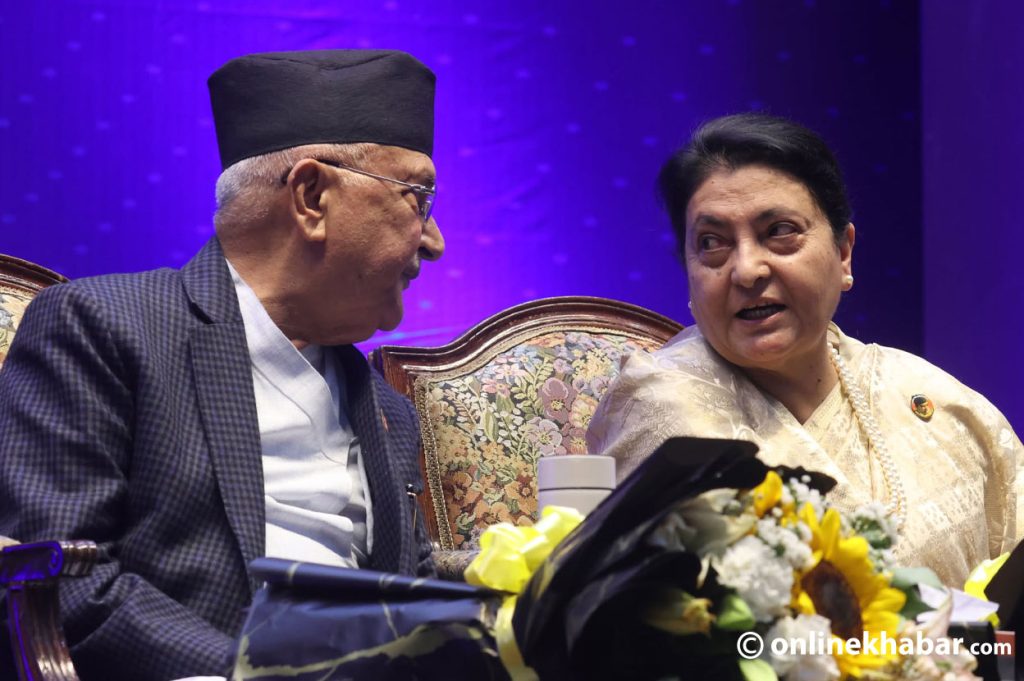
The discussions have gone beyond a simple electoral alliance and have begun touching on possible leadership arrangements if cooperation develops further.
Sherdhan Rai has been coordinating meetings held as part of the initiative. Rai has previously maintained close relations with former President Bidya Devi Bhandari as well as UML Chair Oli.
While the current debate inside the UML has led Rai to favour retaining Oli, he has also argued that Bhandari should return to active party politics if the party undergoes restructuring and its leadership changes.
One proposal being discussed is for the UML to retain the chairmanship based on its organisational legacy and strength, while Bhandari could replace Oli as chairperson.
A senior leader closely following the talks said second-generation leaders from both sides could then help create a favourable environment for cooperation.
“The discussion has begun that if Bidya comes as an alternative to Oli, second-generation leaders could play a role in creating a positive environment within the NCP,” the leader said.
Under this model, the NCP could accept Pun, or another leader of similar stature, as general secretary, with the two sides eventually moving towards a unification general convention.
“If that does not happen, we will also discuss other models of cooperation,” the leader said.
The leadership question gained further significance after UML General Secretary Shankar Pokhrel met Bhandari at Baluwatar on Tuesday.
The meeting came as a majority of UML leaders have been arguing that Oli should leave the party leadership, although an environment for such a change has not yet emerged.
According to sources, Bhandari told Pokhrel to stand in favour of restructuring and conveyed that she would support the process.
The discussions reportedly included the possibility of the UML and NCP beginning a new form of cooperation that could eventually lead to unification.
“Those in the NCP do not appear to have much objection to making Bidya chairperson. I understand that Prachanda will not claim the leadership,” an UML source told Onlinekhabar.
“This would be an interim arrangement. The destination is a new general convention. We are working to start that debate,” the source said.
From quiet meetings to a broader political calculation
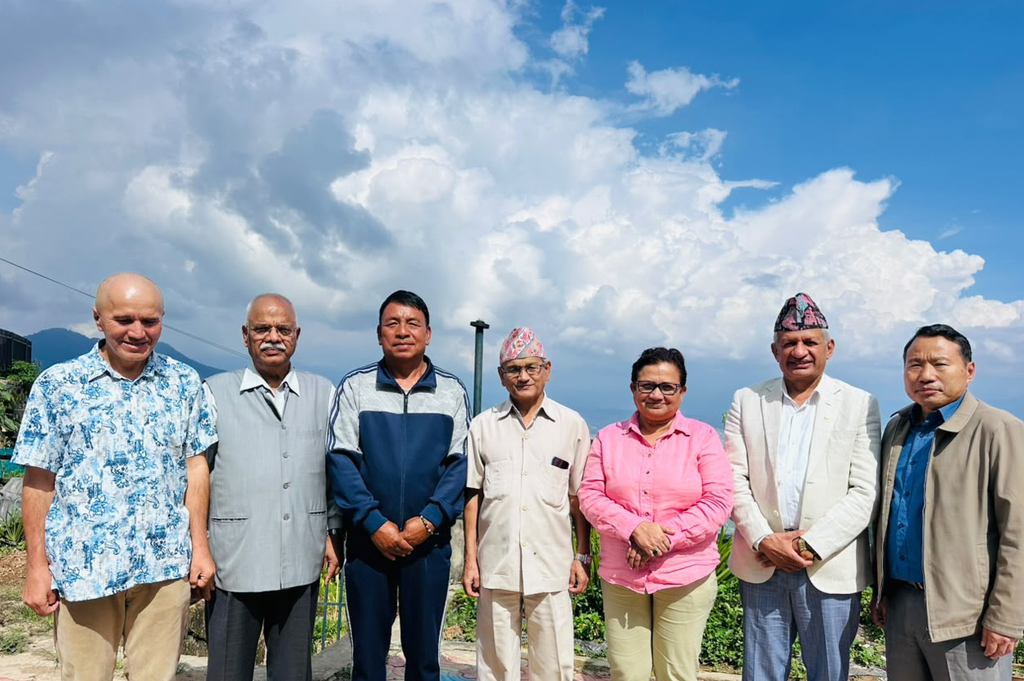
The effort has not been limited to meetings between UML and NCP leaders.
On Teej, former Vice-President Nanda Kishor Pun held discussions with several leaders at his residence in Dahchok.
UML leaders Yubaraj Gyawali and Pradeep Gyawali, as well as NCP leaders Barshaman Pun and Pampha Bhusal, among others, attended the meeting.
According to sources, Nanda Kishor Pun urged the leaders to deepen cooperation between the two parties.
The discussions have now also begun to consider keeping both Oli and Dahal out of executive leadership if the two forces eventually unite. One proposal is to place both leaders in a supreme advisory body instead.
Such discussions are taking place against the backdrop of a significantly changed political environment.
The leaderships of both parties are taking into account the political upheaval following the Gen Z protests, the defensive position of the left vote in the most recent election and the approaching provincial and local elections.
They are also watching changes among indigenous voters who have traditionally provided significant support to the UML and Maoist forces but are increasingly being attracted to newer political figures such as Harka Sampang and Kulman Ghising.
The emergence of newer political forces has added urgency to the search for possible forms of cooperation, according to leaders involved in the discussions.
Pun confirms talks with UML
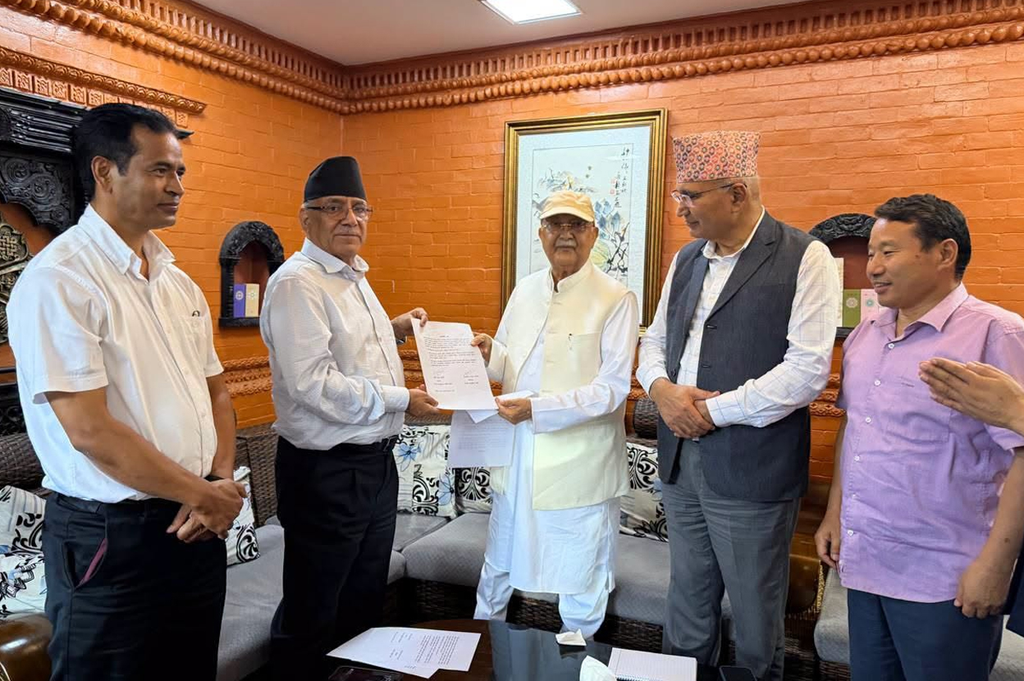
NCP leader Barshaman Pun has confirmed that discussions on cooperation with the UML have begun.
Speaking to Onlinekhabar, Pun said the top leadership of both parties appeared open to either cooperation or unification, although leaders at the middle level still needed to discuss how such an arrangement would work.
“The top leaders on both sides appear ready for unity or cooperation. At the middle level, we still need to discuss how to move forward and what more needs to be done,” Pun said.
The two parties have experience of both cooperation and unification.
In October 2017, the UML and Maoists formed a left alliance with the aim of creating a new communist force. The alliance won a near two-thirds majority and formed an Oli-led government.
On May 17, 2018, the two parties formally merged to form the Nepal Communist Party, with Oli and Dahal serving as co-chairpersons.
The arrangement, however, failed to last amid intense factionalism and disputes over power, eventually leading to the party’s split.
This time, the discussions are taking place with the next provincial and local elections in mind, leaders say.
Cooperation between the two forces has already begun at the provincial level. Under agreements currently being implemented, the UML leads the governments in Koshi, Bagmati and Lumbini, while the NCP leads the governments in Karnali and Sudurpaschim.
The question now is whether the cooperation taking shape at the provincial level can develop into a broader political arrangement between the two parties — and whether the current generation of leaders can avoid repeating the cycle of unity and division that marked their previous partnership.