

Kathmandu, October 2
Nepal Oil Corporation (NOC) has projected a net loss of around Rs 7.5 billion in the first three months of the current fiscal year as international crude oil and refined fuel prices continue to rise.
The corporation says its inability to fully implement an automatic fuel pricing system in the domestic market has added to the financial pressure.
NOC estimates that it will incur a net loss of around Rs 7.5 billion between mid-July and mid-October, with liquefied petroleum gas (LPG) emerging as the biggest source of losses.
The corporation has been selling LPG at a substantial loss per cylinder, while imports have also increased sharply.
NOC reviews its profit and loss position every 15 days based on the latest purchase prices received from the Indian Oil Corporation (IOC).
Losses have grown every two weeks
The corporation began the fiscal year on a positive note. During the first half of Shrawan, NOC recorded a profit of Rs 710 million.
However, losses increased in every subsequent two-week period.
In the second half of Shrawan, NOC recorded a loss of Rs 1.49 billion. The loss stood at Rs 313.5 million in the first half of Bhadra and rose to Rs 1.24 billion in the second half.
The financial pressure intensified further in Asoj.
NOC recorded a loss of Rs 1.9169 billion between September 17 and October 1. For the following 15-day period, from October 2 to October 16, it has projected a loss of Rs 3.2038 billion.
Overall, NOC is expected to incur losses of around Rs 8.1679 billion from the second half of Shrawan through the end of Asoj. After accounting for the Rs 710 million profit recorded at the beginning of the fiscal year, the corporation’s net loss for the three-month period is projected to reach around Rs 7.46 billion.
Geopolitical tensions and LPG losses
NOC spokesperson Manoj Thakur said fluctuations in international crude oil prices and geopolitical developments have put significant pressure on the corporation’s finances.
“We have no option but to accept international market prices, which are beyond our control,” Thakur said. “The biggest challenge at present is the high loss per LPG cylinder and the growing demand for LPG.”
According to Thakur, NOC is currently incurring a loss of Rs 493 on every LPG cylinder it sells.
The corporation is also selling petrol at a loss of around Rs 26.50 per litre and diesel at a loss of around Rs 48.50 per litre, he said.
NOC attributed the growing LPG losses to rising international prices, the decision not to increase domestic prices and a sharp increase in demand during the festive season.
Despite increased imports, however, consumers continue to report shortages of LPG in the market.
LPG imports surge

NOC data show a significant increase in LPG imports compared with previous months.
In Shrawan alone, Nepal imported 57,316 tonnes of LPG, equivalent to around 4.036 million cylinders.
In Shrawan last year, the country had imported around 3.121 million cylinders. This means imports increased by roughly 900,000 cylinders compared with the same month last year.
Similarly, Nepal imported 3.355 million cylinders in Bhadra last year. By September 13 this year, imports had already reached 3.713 million cylinders, or 52,737 tonnes. Total imports for Bhadra were estimated at around 59,833 tonnes.
By September 30, NOC said 25,688 tonnes of LPG had already been imported in the new month.
Thakur said Nepal needs to gradually reduce its dependence on imported LPG by increasing domestic electricity consumption. However, he said the corporation currently has little choice because of consumers’ continued dependence on LPG.
NOC says it will absorb losses during the festive season
NOC Executive Director Nagendra Sah said the corporation is increasing LPG imports from India and will ensure that supplies are maintained.
Sah said NOC was currently absorbing the losses to protect consumers from an immediate increase in fuel prices.
He attributed the recent increase in international crude oil prices to developments in Saudi Arabia and said the corporation was facing growing financial pressure.
“If we increase the price of diesel now, fares for buses and other transport will increase from the next day,” Sah said. “Similarly, an increase in aviation fuel prices would push up airfares. During the festive season, the government and the board have decided to keep prices stable, taking consumer interests into consideration.”
According to Sah, the corporation will use its Price Stabilisation Fund to manage the losses for the time being.
“We have Rs 4.7 billion in the Price Stabilisation Fund. We can use this fund to maintain smooth supplies for a month or two,” he said.
Sah said NOC was hoping international prices would fall within the next 15 days or month.
“If prices fall, we will return to a normal situation. If they do not, we will have to approach the government to increase fuel prices,” he said.
Sah also recalled that NOC had previously borrowed Rs 7 billion from the government by pledging land during the Russia-Ukraine war, but said the corporation currently did not face a similar immediate situation.
Transport disruptions add to LPG supply problems
Regarding the LPG shortage reported in the market, Sah said supplies from India had not been halted.
He said heavy rainfall and strong winds in recent days had disrupted vessel loading and unloading operations in India, while transportation routes had also been affected.
“LPG supplies from India have not stopped. Heavy rain and strong winds over the past four days caused some problems with vessel loading and unloading in India,” Sah said.
He added that supplies arriving through Haldia, Paradip and Durgapur can also face occasional disruptions.
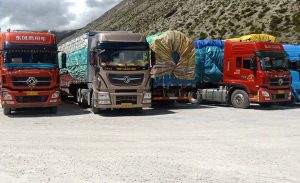
Road disruptions within Nepal have further delayed the movement of LPG tankers, particularly due to flooding in the Bhotekoshi area, the Krishnabhir landslide and continuous rainfall.
“There is some congestion on the roads, but vehicles are continuing to arrive as sand and landslides are cleared,” Sah said. “These three factors have caused some difficulties, but IOC is supplying us with an average of 55,000 to 60,000 tonnes of LPG a month. So, even if there are disruptions for a day or two, supplies should remain manageable.”
Fuel prices to remain unchanged for now
NOC plans to keep petroleum prices unchanged during the upcoming Dashain, Tihar and Chhath festivals.
The corporation has said an immediate increase in fuel prices would directly affect transport fares for people travelling home during the festive season. Transport operators have already indicated that they would seek fare increases if fuel prices rise.
Higher fuel prices could also increase transportation costs for everyday goods, potentially adding to broader inflationary pressure.
NOC last adjusted petroleum prices from the night of August 2. At the time, petrol became Rs 3 more expensive per litre, while diesel and kerosene increased by Rs 5 per litre. The price of aviation fuel for domestic flights was increased by Rs 20 per litre.
Since then, petrol has remained at Rs 200 per litre, diesel and kerosene at Rs 200 per litre and domestic aviation fuel at Rs 249 per litre.
NOC’s decision to absorb losses could provide temporary price stability for consumers during the festive period. However, if international fuel prices remain elevated, the corporation could face increasing pressure to either raise domestic fuel prices or seek other measures to address its deteriorating finances.