
Kathmandu, October 2
The Nepali Congress has spent eight decades helping shape Nepal’s political history. It fought to overthrow the Rana regime, led the struggle against the Panchayat system, helped restore multiparty democracy, played a central role in the peace process with the Maoists, supported the transition from monarchy to a republic and took a leading role in drafting the Constitution.
Yet the party that repeatedly helped transform Nepal has itself struggled to transform at the same pace.
From BP Koirala to Gagan Thapa, the leadership of the Nepali Congress has changed many times. The political system has changed many times. So have the expectations of voters and the society the party seeks to represent.
As the Nepali Congress moves towards its 15th general convention, those changes have brought a fundamental question into focus: how much has the party itself changed?
The answer requires looking back at the party’s journey from the days of BP Koirala to its current leadership under Thapa, and examining how its role in power, opposition and political transformation has evolved.
The Nepali Congress remains one of Nepal’s oldest political parties, and much of the country’s modern political history is intertwined with its own. At different points, it has been the principal force behind political change and, at other times, struggled to adapt to changes it helped bring about.
Its eight-decade history has included periods of extraordinary political influence as well as moments of organisational weakness and internal division.
Today, the question is no longer simply how large or powerful the Congress is. It is whether the party can adapt to a political environment that is itself changing rapidly.
BP Koirala’s Congress: A movement for political change

The origins of the Nepali Congress date back to 1946, when the Nepali National Congress was formed under the initiative of BP Koirala and other leaders. The Nepal Democratic Congress was formed separately in 1948, and the two parties merged in 1949 to form the Nepali Congress.
The new party sought to end the Rana regime and establish representative government.
The 1951 revolution became its first major political test. The Rana regime fell, opening the way for a new political order. The party later won 74 of the 109 seats in the first general election in 1959, giving it a two-thirds majority, and BP Koirala became Nepal’s first elected prime minister.
But the party’s internal divisions emerged early. A dispute between BP Koirala and his elder brother Matrika Prasad Koirala contributed to a split in the party, with Matrika later forming the Rastriya Praja Party.
The democratic experiment was short-lived.
On December 15, 1960, King Mahendra dismissed the elected government and parliament, banned political parties and introduced the Panchayat system. BP Koirala and other Nepali Congress leaders were imprisoned or forced into exile.
For the next three decades, the Congress was defined largely by two struggles: its confrontation with the monarchy and its own recurring leadership disputes.
From the 1990 movement to the politics of power
The 1990 People’s Movement brought the Congress together with left-wing forces against the Panchayat system. Ganesh Man Singh became the movement’s supreme commander, and the Panchayat system was eventually replaced by multiparty democracy.
The Nepali Congress won a majority in the 1991 general election and formed a government under Girija Prasad Koirala.
The post-Panchayat period brought significant economic and institutional changes. The Nepali Congress government pursued economic liberalisation, expanded the role of the private sector and advanced infrastructure and local development.
But the party also entered a new phase in which internal factionalism and the struggle for political power became increasingly prominent.
The tension between the Congress’s historical image as a democratic movement and its behaviour as a governing party became increasingly visible.
Political appointments, competition over ministerial positions and factional disputes contributed to growing criticism of the party.
In 1994, the Nepali Congress government failed to complete its five-year term after internal divisions within the parliamentary party led to an early election. The party fell to second place.
The episode became an enduring example of the difficulty political parties can face when internal competition overwhelms the mandate received from voters.
The 1999 victory and another split
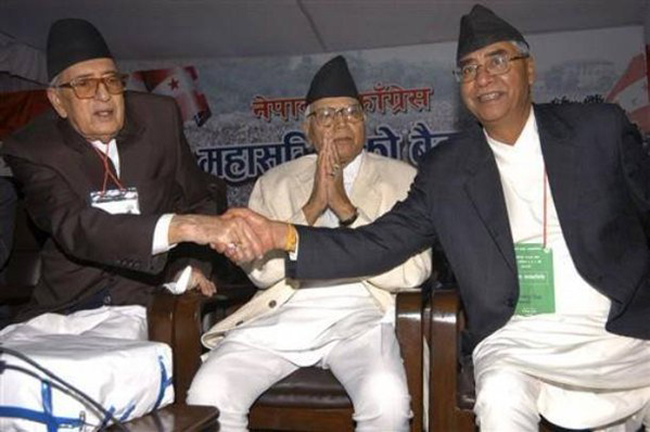
The Nepali Congress returned to power after winning a parliamentary majority in the 1999 election. Krishna Prasad Bhattarai initially became prime minister, but internal tensions again surfaced and Girija Prasad Koirala eventually returned to the premiership.
The rivalry between Koirala and Sher Bahadur Deuba subsequently became one of the defining conflicts within the party.
In 2002, amid the Maoist insurgency, disagreements over the dissolution of parliament, the state of emergency and elections deepened the conflict between Deuba and Koirala. Deuba eventually broke away and formed the Nepali Congress (Democratic).
The split came at a particularly unstable moment in Nepal’s history. Parliament had been dissolved, elections were not held as scheduled and King Gyanendra later assumed direct political power.
The episode demonstrated another recurring feature of Nepali Congress politics: a party with a long history of fighting for democratic institutions was repeatedly challenged by its own inability to maintain internal unity.
Girija Prasad Koirala and the transformation to republicanism
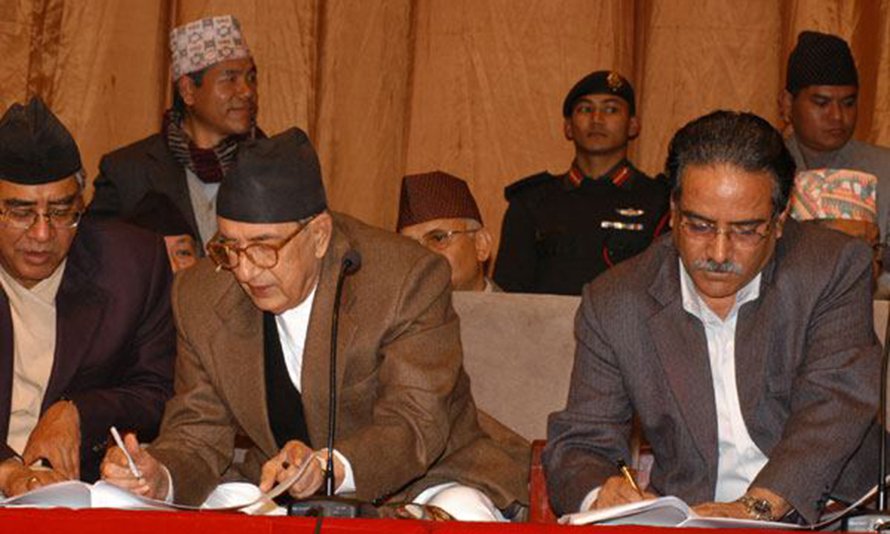
Girija Prasad Koirala’s political legacy cannot be understood solely through the lens of his internal battles for power. He also became a central figure in one of the most consequential transformations in Nepal’s modern political history.
The 2006 People’s Movement, the 12-point understanding between the seven parliamentary parties and the Maoists, and the subsequent peace process fundamentally altered Nepal’s political system. Koirala played a central role in the peace process and in the transition towards a republic. The Comprehensive Peace Agreement formally ended the decade-long Maoist conflict.
For the Nepali Congress, this represented a major political transformation.
BP Koirala’s Nepali Congress had fought against the Panchayat system while retaining a commitment to constitutional monarchy. Girija Prasad Koirala’s Nepali Congress eventually worked with the Maoists to end the monarchy and establish a federal democratic republic.
The party also moved towards accepting federalism, secularism and a more inclusive constitutional order. The transformation was not merely institutional. It represented a significant shift in the party’s political identity.
The Constitution and a new political order
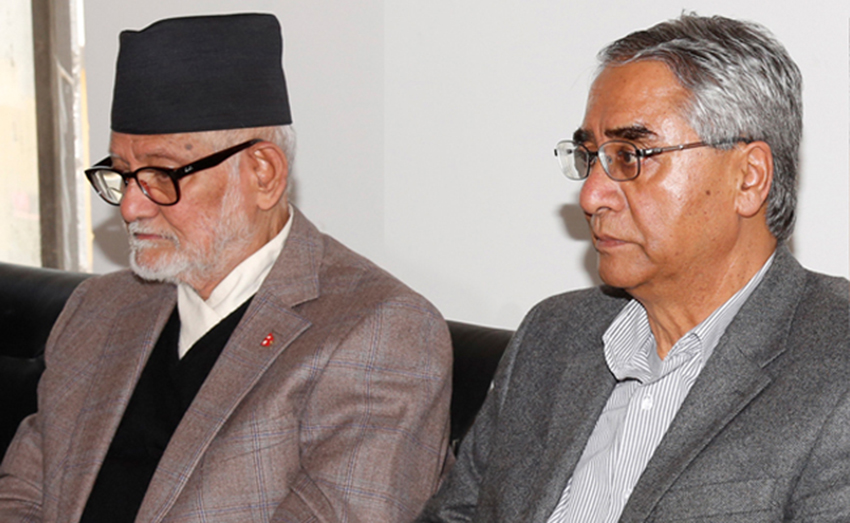
The promulgation of the Constitution in 2015 marked another major chapter in the Nepali Congress’s history. Under the leadership of Sushil Koirala, the Congress worked with other major parties to complete the constitution-writing process. The Constitution was promulgated on September 20, 2015. The Congress subsequently played a role in implementing the new federal system and organising elections at the federal, provincial and local levels.
But the completion of the Constitution did not resolve the party’s internal problems.
Nepal had moved from a unitary monarchy to a federal democratic republic. Representation and inclusion had become central elements of the new constitutional framework.
The Nepali Congress, however, faced the challenge of adapting its own organisation to that transformed political landscape.
The state had changed faster than the party’s internal structures.
The question was no longer simply whether the Congress supported federalism, inclusion and democratic institutions. It was whether its organisation, decision-making structures and political culture could evolve accordingly.
The Deuba era and the politics of continuity
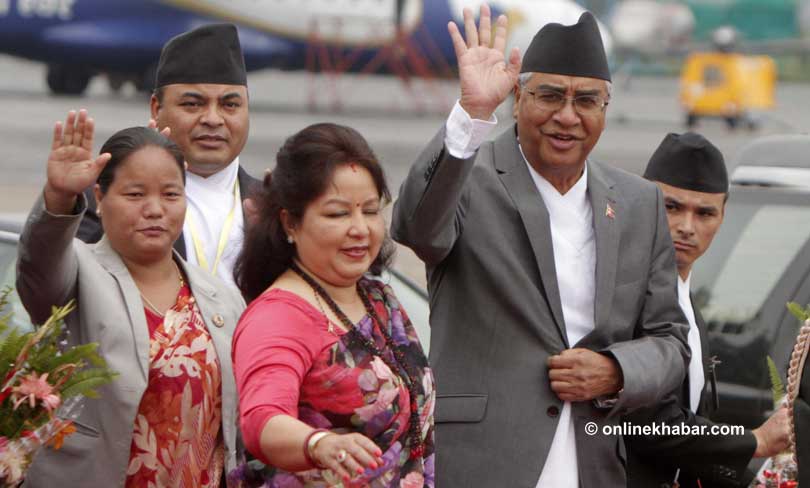
Sher Bahadur Deuba emerged as one of the Nepali Congress’s most influential leaders of the post-1990 era. He served as party president twice and as prime minister five times.
Under Deuba, the Nepali Congress remained a central player in coalition politics, working at different times with the Maoists, the UML and other parties.
That flexibility allowed the party to remain close to the centre of power, but it also generated questions about its political direction and organisational renewal.
The repeated movement between government and opposition, and the frequent changes in political alliances, contributed to a perception that the party’s immediate political calculations often overshadowed questions about its longer-term identity.
The tensions became particularly acute after the rise of a younger generation of leaders and the growing demand for internal reform.
Deuba’s leadership was eventually challenged by a faction led by Gagan Thapa and Bishwa Prakash Sharma. A special general convention held in January 2026 elected Thapa as party president. The Deuba faction challenged the change, but the Supreme Court later recognised the Thapa-led faction as the official Nepali Congress.
The dispute, however, did not disappear.
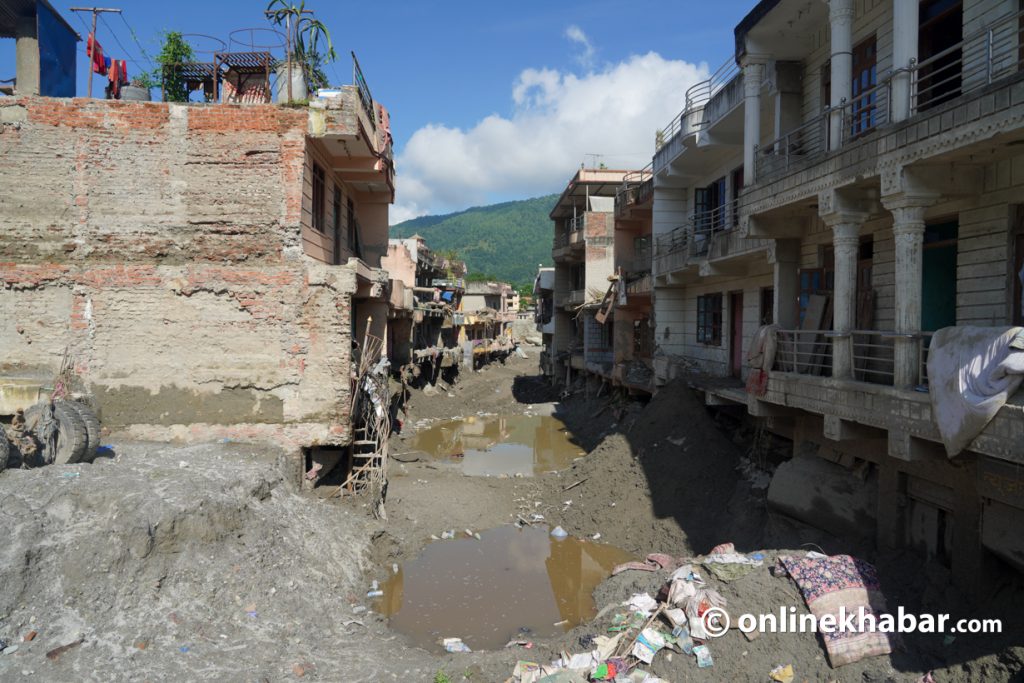
The party is now preparing for its 15th general convention, while the Deuba-aligned faction has also been preparing for a separate convention. The Congress had initially scheduled its convention for October 2–5, 2026, but preparations were affected by floods and landslides, prompting discussions about postponement.
Gagan Thapa and the question of generational change
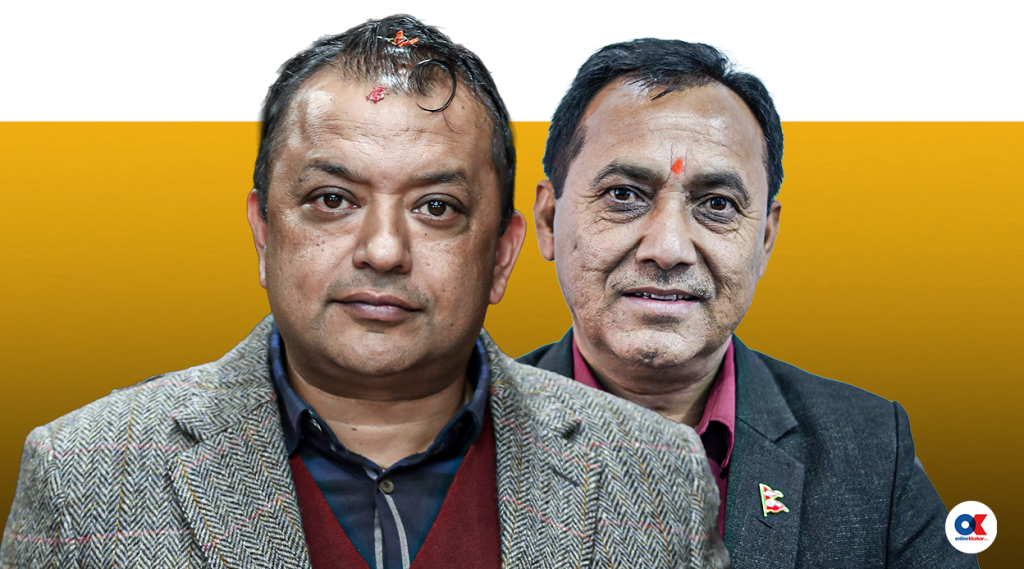
The rise of Gagan Thapa marks a new phase in the Nepali Congress’s history.
Thapa emerged from student politics and became associated with a younger generation of Congress leaders. His rise has coincided with a broader generational shift in Nepali politics, as younger voters increasingly demand changes in political culture, governance and leadership.
His election as party president through the special general convention represented a sharp break from the leadership pattern dominated by the older generation.
But generational change alone does not guarantee organisational transformation.
Thapa now faces questions over how the Nepali Congress will change its internal decision-making, organisational structure, financial transparency, factional culture, management of party cadres and relationship with voters.
These questions are particularly important because the political environment surrounding the Congress is no longer the same one in which earlier generations operated.
A party with a long history facing a different Nepal
The Nepali Congress’s historical record is inseparable from Nepal’s political transformation.
BP Koirala led the party through the struggle against the Rana regime and into Nepal’s first experiment with elected government.
Ganesh Man Singh led the 1990 democratic movement in cooperation with the left.
Girija Prasad Koirala helped move the Nepali Congress from opposition to the monarchy towards cooperation with the Maoists and the establishment of a republic.
Sushil Koirala led the government during the final stage of constitution-making.
Deuba became one of the central figures in Nepal’s coalition-driven parliamentary politics.
Now Thapa represents a generational transition within the party.
The question facing him, however, is larger than leadership succession.
Nepal itself has changed dramatically since the Nepali Congress was founded. The country is more urban, more connected and more diverse. A younger generation has grown up with different expectations of politics, government and public institutions.
The political struggles that defined earlier generations are now history. The questions facing voters are increasingly about employment, migration, economic opportunity, public services, governance and the performance of institutions.
For the Congress, historical legitimacy can provide a foundation, but it cannot by itself guarantee continued relevance.
The party’s 15th general convention therefore carries significance beyond the election of office-bearers.
It will also be a test of whether a political organisation that repeatedly helped transform Nepal can now transform itself.
The Congress has a long history of adapting when the country’s political order changed. The end of the Rana regime, the restoration of multiparty democracy, the peace process, the abolition of the monarchy and the adoption of a federal republican Constitution all required the party to change its political position.
The challenge now is different.
The political system is no longer the principal question. The question is whether the organisation can renew itself within that system and respond to a society whose expectations have moved well beyond the political struggles of its past.
BP Koirala took the Congress into the struggle for democracy. Ganesh Man Singh helped lead it through the restoration of multiparty politics. Girija Prasad Koirala helped take it from constitutional monarchy to republicanism. Sushil Koirala oversaw the completion of the Constitution.
Deuba’s era was defined largely by coalition and power politics.
For Thapa, the next chapter will be defined by whether he can turn generational change into broader organisational and political renewal.
The Nepali Congress has spent much of its history helping change Nepal. Its next test is whether it can change itself.