Kathmandu, October 1
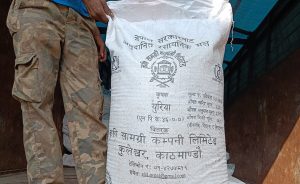
The Ministry of Agriculture, Forest and Environment has said it is committed to preventing a chemical fertiliser shortage in the coming season, but that budget management poses a major challenge.
Ministry Secretary Dr Rajendra Prasad Mishra said the burden of the current subsidy is difficult for the state to bear, and that a new approach to managing it is being sought.
Briefing the Federal Parliament’s Agriculture and Natural Resources Committee on Thursday, Secretary Mishra said that at current market prices, a subsidy of up to Rs 120 per kg is needed. Around Rs 59 billion is estimated to be required to meet this, and raising such a large sum is proving challenging for the government even as it coordinates with the Ministry of Finance.
He said a plan for smooth fertiliser supply, to take effect after mid-February to mid-March, is being advanced. Since demand peaks during the main season from Baishakh through mid-April to mid-August, preparations are being made accordingly.
“We’ve prepared to ensure timely purchase and supply so there’s no fertiliser shortage after February. But the subsidy burden has grown because of rising fertiliser prices,” Mishra told the committee.
He added, “At current prices, DAP alone requires a subsidy of about Rs 120 per kg. Since the estimated requirement for the coming period is around Rs 59 billion, managing this has become challenging. Discussions are under way with the Ministry of Finance on this.”
He said that although the government has been providing farmers large sums in fertiliser subsidies, the benefit has not reached all farmers effectively, and the supply and distribution system needs to be made more orderly so farmers see the real benefit.
Farmers have complained that, due to flaws in the distribution system, genuine farmers have not received fertiliser even as the government spends large sums meant to help them.
Mishra said the ministry is making maximum effort for farmers’ benefit despite the budget shortfall, and that the distribution system needs to be made more transparent and orderly. He said discussions are also under way on increasing private-sector participation, incentivising producer companies, and developing new supply and distribution methods.