


Rasuwa, September 30
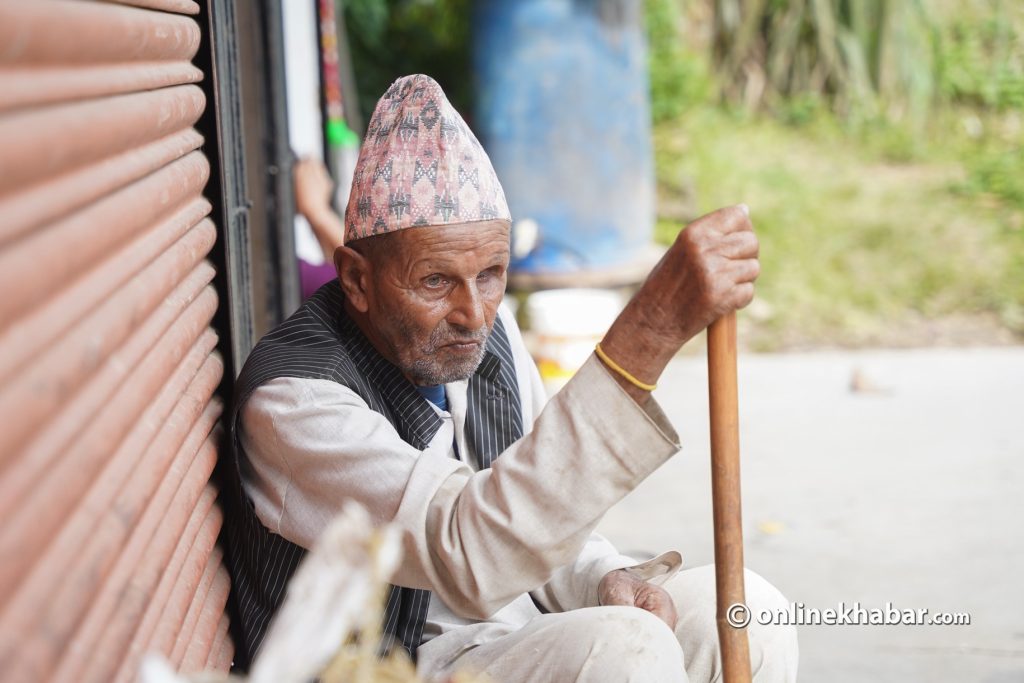
At 86, Homnath Lamichhane spends much of his time talking to himself.
It does not matter whether anyone is beside him. Since the Bhotekoshi flood, the elderly man has been restless, repeatedly talking about what happened.
“He keeps talking even throughout the night. He has not really been able to come back to his senses since the incident,” said Yamuna Dhakal, Homnaths’ second daughter-in-law.
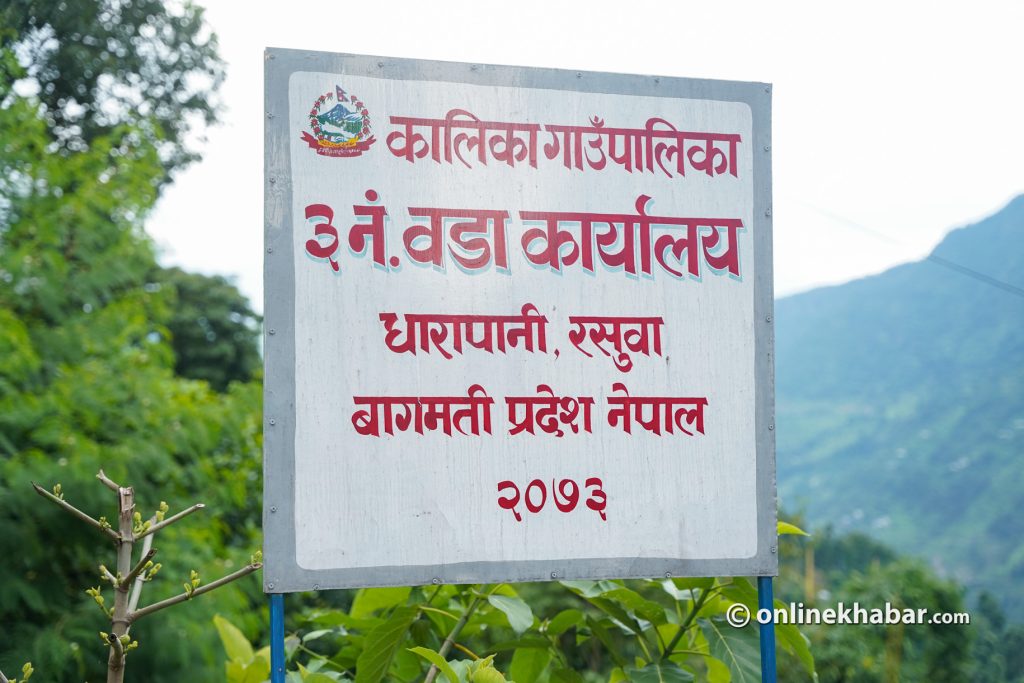
When we visited his home in Dharapani, in Kalika Rural Municipality-3, on September 23, Homnath was sitting on the stairs, wiping tears from his eyes.
For a man who is in the later stages of his life, the scale of the loss he has endured makes his condition difficult to regard as surprising.
After having five daughters, Homnath had three sons in succession.
“He was especially attached to his sons”, Yamuna said. “But the flood took away two sons whom he loved very much, at the same time.”
Homnath’s sons, Balram, 38, and Krishna, 35, disappeared in the flood on August 26. Both were drivers. Balram, the elder son, had been travelling from Kathmandu towards Kerung.
“He was apparently heading from Betrawati towards Syabrubesi,” Yamuna said. “The other friends who reached Dhunche survived. But Balram, who was behind them, disappeared.”
Balram had been driving for 16 years and owned his own large freight truck, locally known as a ‘dibba’. In Dharapani, owning such a truck was more than a means of earning a living. It was also a marker of status and identity.
Krishna, on the other hand, worked transporting vehicles across the Kerung border.
“The Chinese bring the vehicles up to Kerung, and drivers from Rasuwa take the vehicles brought by the Chinese to other Nepali drivers,” said local resident Navaraj Lamichhane. “Krishna did the same work.”
Young drivers from Rasuwa had increasingly found opportunities in this cross-border trade. Krishna, who had also been driving for 16 years, had started working as a cross-border driver only six months earlier.
When the flood struck, he was at Rasuwagadhi.
“We were talking on the phone. He said he was getting work and that he would come home once he had some free time,” his wife, Yamuna, said. “But the phone has not connected since the flood. Everyone says he was swept away by the flood.”
Krishna leaves behind a son and a daughter. Balram leaves behind three daughters and a son.
“The children are still very young. The person who were the main breadwinners are gone,” Yamuna said. “Where do we even go to look for them?”
She has been sitting and crying alongside her elderly father-in-law.
“The grandchildren are still small, and I am old,” Homnath said. “Who will raise them?”
A village of missing drivers
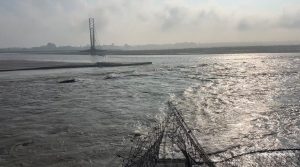
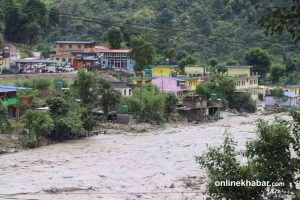
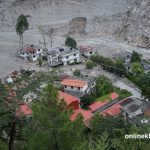
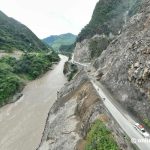
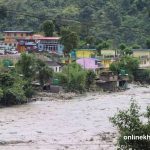
The Bhotekoshi flood swept away the Rasuwagadhi border crossing and sections of the Pasang Lhamu Highway running through Ghattekhola, Timure and Syabrubesi. Dharapani, too, has been left in mourning.
“Seven drivers from our own Lamichhane family were caught in the flood,” Navaraj said. “Twenty-seven people from Dharapani village are missing.”
The Lamichhane family is not an isolated case.
During reporting trips to Rasuwa, Nuwakot and other areas affected by the flood, we encountered a large number of families who had lost drivers.
Rasuwagadhi is one of Nepal’s major border crossings with China. On the day of the flood, the Pasang Lhamu Highway was carrying large numbers of drivers.
Some were driving passenger vehicles. It was the season for trips to Mansarovar and Gosainkunda, and drivers were carrying tourists. Foreign visitors heading for the Langtang trekking route were also travelling through the area.
Large freight trucks carrying goods between Kerung and Kathmandu were also on the road. Their drivers came from different parts of Nepal, but a significant number were from Rasuwa itself.
Being local offered drivers advantages at the border, residents said.
The facilities available to local people from the Chinese side had also helped make driving an attractive profession for young people in Rasuwa.
“Our brothers became drivers because the income was attractive. The flood swept them all away,” said local resident Gomadevi Ghimire.
Four of Gomadevi’s brothers, all drivers, are missing. One of them, Kumar Lamichhane, 38, was her biological brother.
“After Kumar was caught in the flood, our dream of having a home has disappeared,” she said
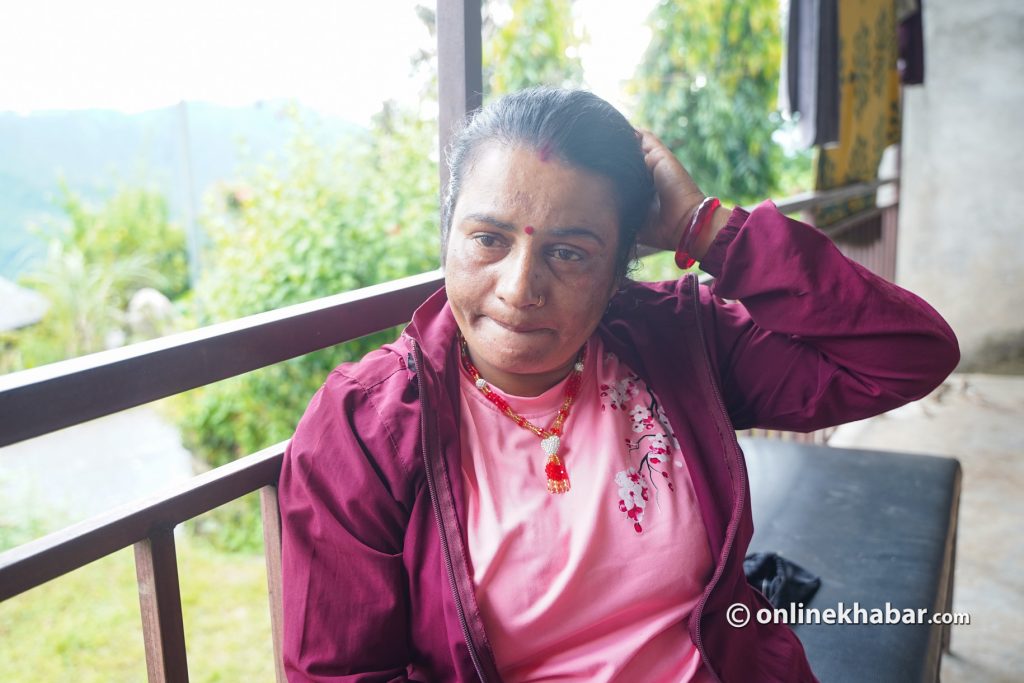
Kumar had been driving for eight years and had only recently bought his own ‘dibba’. He had used the family’s savings and borrowed money to buy the truck. He was the main breadwinner for his family.
“Don’t worry too much. I am here,” his wife, Prasuna, recalled him telling her.
Kumar had been at home until August 24, the day before the flood. He drove between Kathmandu and Rasuwagadhi. After hearing that his vehicle would clear customs, he left for Rasuwagadhi on August 25.
“The customs clearance was done that day, but because it happened at night, the checkpoint did not let him leave,” Prasuna said. “Apparently, he left at 6am the next morning.”
That morning, Kumar video-called his wife.
“When I asked him why he had left so early, he said the gate had opened early,” Prasuna recalled. During the call, he also told her that he was stuck in a traffic jam because of a landslide.
“I spoke to him for about 15 minutes,” she said. “A little later, I heard that the flood had come. When I called him, his phone was already switched off.”
After hearing that there was little left at Rasuwagadhi, Ghattkhola and Timure, Prasuna called again.
“The phone does not connect. Where do I go to look for him?” she said. “There is neither a body nor a breath.”
Prasuna learned that seven of the nine people who had eaten together at the same mess were drivers who had gone missing.
With her husband gone, responsibility for her elderly in-laws and her children has fallen on her.
Her father-in-law, Diwakar, 72, and mother-in-law, Chetakumari, 65, are ill and need regular medication. Her 16-year-old daughter and nine-year-old son are still in school.
“We probably have more than Rs2m in debt,” she said. “I have to regularly buy medicine for my in-laws and educate the children.”
A wedding that will not happen
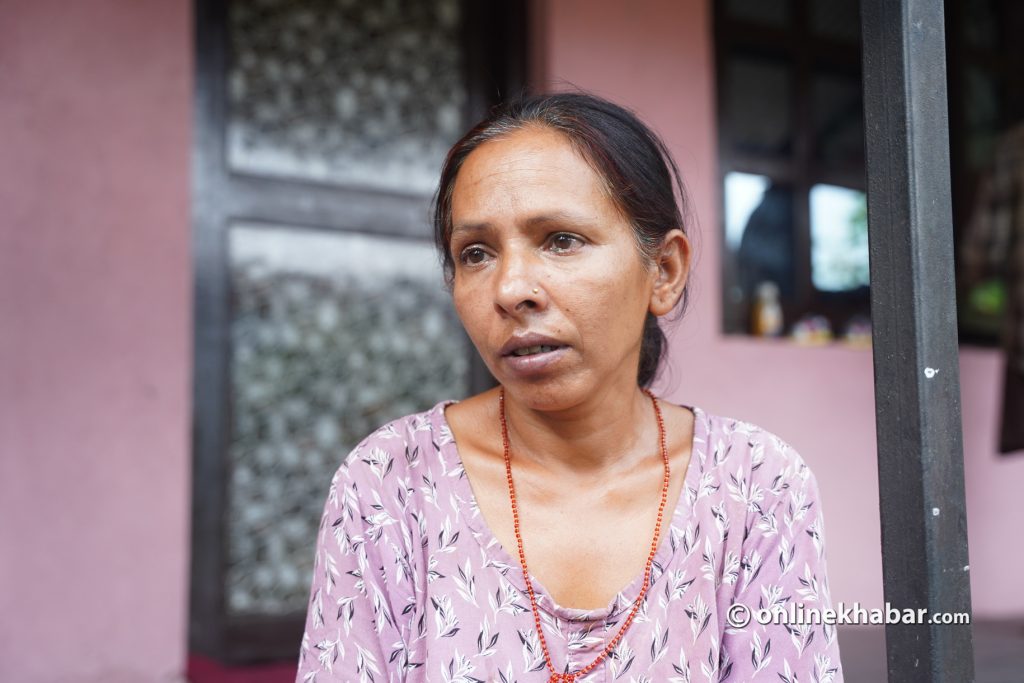
Prasuna’s neighbour, Sita Lamichhane, is living through a similar uncertainty.
Her son Sagar Lamichhane, 32, has been missing from Rasuwagadhi. The family had been preparing for his wedding in November.
Sagar was the eldest son. His mother had long been worried that he had not married despite his age. This time, he had finally agreed.
“Once my son said yes, we started preparing for the wedding,” Sita said. “But they say Sagar was caught in the flood.”
The family had been thinking about arranging his marriage for several years. But Sagar had also been trying to bring his younger brother Santosh home from prison. Santosh is being held on a rape allegation.
“Sagar was working hard because he believed his brother had been framed and that he would prove him innocent,” Sita said.
Sagar had arranged his sister’s wedding. She now lives in Japan, while her seven-month-old son is being cared for by his grandmother, Sita.
“My daughter went to Japan when her baby was four months old, and one son is in prison,” Sita said, wiping away tears.
Sagar had returned home only a week before the flood. He had been driving for 16 years and stayed home for three days before leaving for Rasuwagadhi on 21 August.
“He used to say he would not go abroad to earn money. He would earn here and look after us,” Sita said.
How driving became a way of life
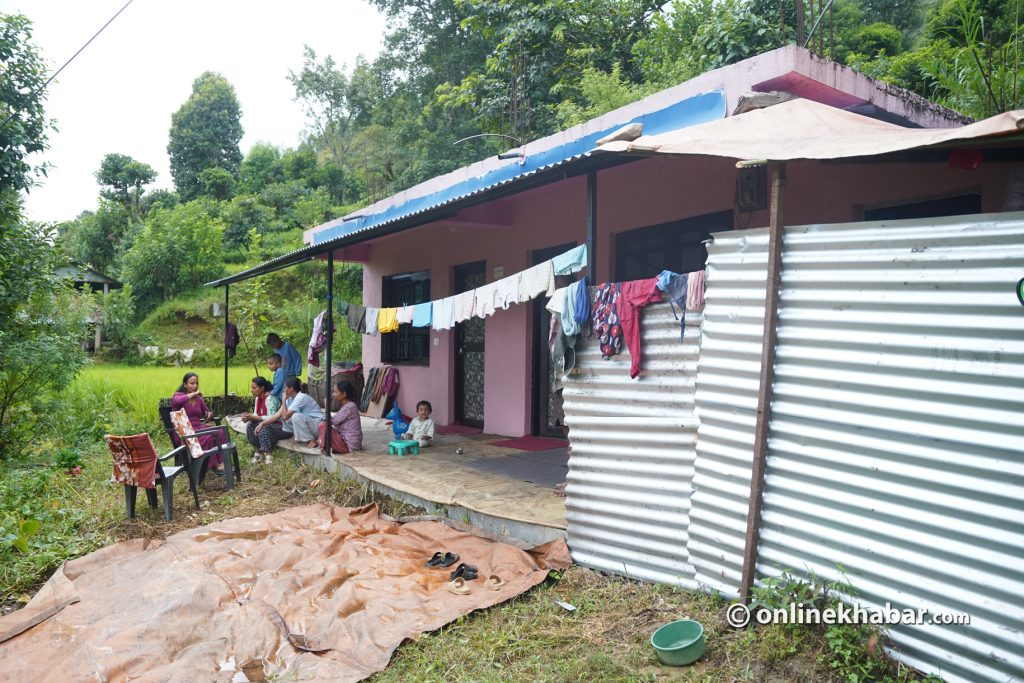
Local residents say one reason the death toll was so high in Kalika Rural Municipality, an area that was otherwise comparatively safe apart from Ward No 1 of Ramche, is that so many people there work as drivers.
According to Gomadevi, this is not unique to Kalika. Across Rasuwa, it is common to find a driver in almost every household, and sometimes more than one male member of the same family works as a driver.
Driving has become almost a culture in the district. The Lamichhane settlement was no exception.
Residents remember Bhim Prasad Lamichhane as the person who first drew members of the Lamichhane family towards the profession. Around 1990, Bhim Prasad started driving, and young people in the village began hearing about his work.
“When the border opened, people started saying that the lives of those who drove vehicles would change. Like other young people, my brother and I also became drivers,” Navaraj said. “Young people were attracted by the facilities local drivers received at the border.”
According to Navaraj, drivers can earn up to Rs7,500 when taking vehicles from China into Nepal.
With that kind of income available, he said, young people in Rasuwa began competing to become drivers. Like other villages in the district, young people in Dharapani gradually joined the driving trade.
“Almost every household had a driver. Brothers drove, fathers and sons drove. It became a culture,” Navaraj said. “Today, that same wave swept everyone away at once.”
Navaraj himself drove on the same route until five years ago.
On March 7, 2019, his brother died while driving a vehicle across the Kerung border.
“The vehicle got stuck in the snow. While trying to get it out, the cold got into him and my brother died,” Navaraj said. “After that, I stopped driving on that route.”
The decision eventually saved Navaraj’s life. He now drives an autorickshaw on local routes.
“I survived. But my friends, brothers and uncles were all swept away,” he said. “I might have been among them in this very flood.”
Who will speak for the drivers?
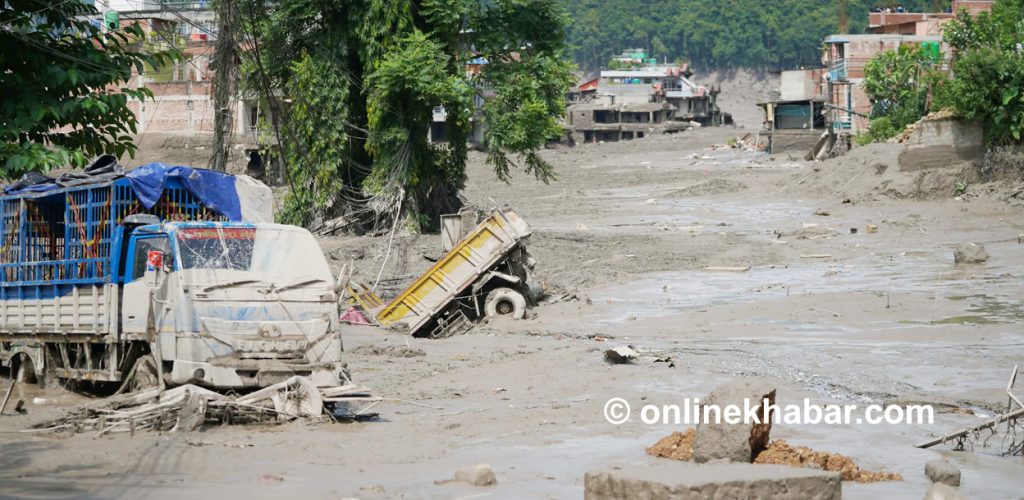
Among the families affected by the devastation caused by the Bhotekoshi flood, a large number are families of drivers.
Rasuwa is a geographically remote Himalayan district, and residents say driving has consequently become one of the preferred professions there. But after the flood, affected families say the rescue and search for missing drivers, and the concerns of their families, have not received enough attention.
“I hear the hydropower companies talking about their employees and workers,” Gomadevi said. “We hear about the suffering of the army, police and armed police and their families. But I have not heard anyone say that drivers also have families.”
She said the state appeared to have forgotten that drivers pay road taxes to operate their vehicles.
“Drivers pay money to the state to operate on these routes, but when they disappear, the state did not make them a priority,” she said.
Navaraj also argues that drivers have been overlooked.
“We must not forget that drivers had lives and families too,” he said. “Some do not have a union, and some may not even have licences. Who will speak for them? Who will do something for the drivers?”
Affected families say government agencies have not yet collected even basic figures on how many drivers disappeared in the flood.
An initial estimate from informal sources puts the number of missing drivers at more than 500. More than 300 of them are believed to have been driving freight vehicles along the Pasang Lhamu Highway.