

For hours, a young boy from Arghakhanchi would walk up and down the hills with a schoolbag on his shoulder. His village was on the hills, while Janjyoti Secondary School stood beside the Sandhikharka stream below. Each morning, Dr Ganesh Acharya walked down. Each afternoon, he climbed back up.
He could not have imagined then that those walks would eventually take him from Kathmandu to the former Soviet Union, Britain, Norway, the United States, China and Sweden — or that he would one day head the Department of Obstetrics and Gynaecology at Sweden’s Karolinska Institutet.
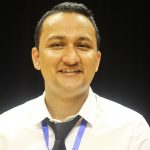
Today, at 65, Professor Dr Ganesh Acharya is a physician, researcher and academic whose work has taken him across some of the world’s leading medical institutions.
But his story began much closer to home.
A childhood shaped by education
Dr Ganesh Acharya was the youngest of six children — five brothers and a sister. His father, Pandit Homakanta Acharya, lived modestly but placed enormous value on education.
Homakanta himself had studied at the prestigious Harihar Pathshala, where students from different parts of Nepal came to study. They had to travel to Banaras in India to sit their examinations.
“My father went to Banaras to take his examination,” Acharya recalls. “It used to take 13 or 14 days to reach Kathmandu from our home. When my father sent one of his brothers to Kathmandu to study, he died after contracting smallpox. So my father chose Banaras.”
For Homakanta, education was more than personal advancement. He saw it as the surest way to give his children a different future. He even sold land to pay for their schooling.
Acharya spent his early years in the hills. After three grades at Janajivan Primary School, he moved to Janjyoti Secondary School beside the Sandhikharka stream.
“It took an hour to get to school and another hour to return. We carried our books in a bag and walked up and down the hills every morning,” he says.
In 1976, Janjyoti did not have an SLC examination centre, so Acharya travelled to Taulihawa in Kapilvastu to sit the exam. He passed in the second division.
At the time, health assistant and overseer were among the most sought-after professional courses. Acharya was drawn towards healthcare. He did not yet know that the decision would take him far beyond Nepal.
A scholarship to the Soviet Union
His elder brother, who had completed his ISc at Amrit Science College, encouraged him to study health assistance.
“My brother suggested that I study to become a health assistant,” Acharya recalls. “His argument was that at least after completing that course, I would definitely find a job.”
Nepal did not yet have a medical school producing doctors. Medical education in the country began only around 1980, making health assistant training one of the highest levels of formal health education available at the time.
Dr Ganesh Acharya enrolled at the Institute of Medicine in Maharajgunj and completed the three-year course with strong results.
“I came second,” he says with pride.
His classmates included people who would later become prominent figures in Nepal, including Prakash Sharan Mahat and Narayan Kaji Shrestha. His academic performance earned him a government scholarship to study abroad. In 1980, aged 20, he left Nepal for the Soviet Union.
“There were about 10 of us,” he says. “When we left, we did not know which city we would end up in. It was a seven-year course — the first year was for language and the remaining six years were medical studies.”
He was eventually sent to Lviv, Ukraine, where he studied at the Lviv Medical Institute and completed his MD in 1987.
The adjustment was difficult.
“The first challenge was simply getting used to the place,” he says.
Four students shared a hostel room — two Ukrainians and two Nepalis. Even basic necessities were sometimes hard to find.
“Essential things were not easily available. We had to stand in long queues. Sometimes it was difficult even to find toilet paper,” he says with a laugh.
He finished his degree and returned to Nepal in 1988.
Looking beyond Nepal
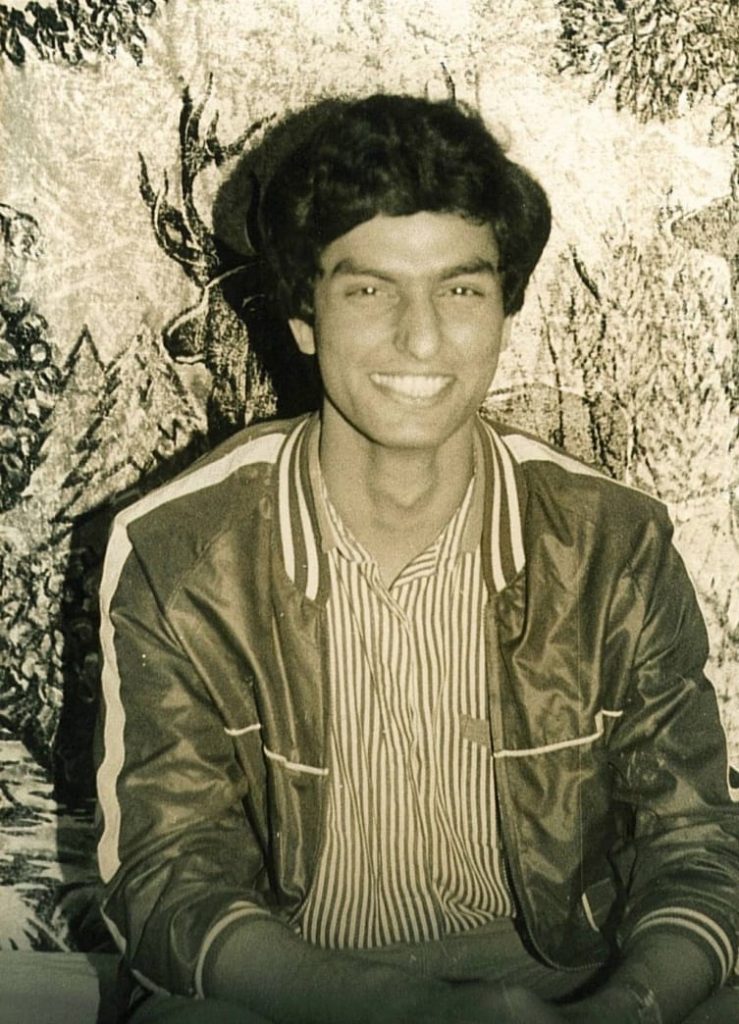
Back in Kathmandu, Dr Ganesh Acharya worked as a resident doctor in obstetrics, gynaecology and surgery. He also completed a postgraduate diploma in obstetrics and gynaecology from Tribhuvan University. But he wanted to continue studying.
At the time, Britain was a popular destination for Nepali medical professionals. Acharya eventually followed that route, initially working in Bristol before joining University College Hospital in London in 1999. There, he trained as a specialist and completed an MSc in ultrasound.
He also considered returning to Nepal.
During holidays, he came home and tried to coordinate with hospitals about continuing his career there. But the professional environment did not match what he was looking for.
“I did not find the kind of environment I was looking for,” he says.
He decided to remain in Britain.
Then he met Professor Torvid Kiserud, a Norwegian specialist who would introduce him to the next chapter of his career.
“We became friends,” Acharya says. “One day he told me, ‘You should come to Norway. They are looking for a specialist to develop a fetal medicine service for diagnosing and treating diseases in unborn babies.’”
The opportunity appealed to him, but moving again meant navigating a new licensing system.
“Every country required a new licence. That was a major challenge,” he says.
The process began in 1999 and was completed in 2001. Acharya moved to Tromsø, northern Norway, close to the Arctic Circle.
Learning to live in the Arctic
Tromsø was unlike anywhere he had lived before. There were periods when daylight seemed endless and others when darkness dominated.
“In the first few months, it felt as though I had lost all sense of time,” he says with a laugh.
Language presented another hurdle. The hospital provided an interpreter, but Dr Ganesh Acharya began learning Norwegian himself. He continued his academic work and completed a PhD in medicine at the University of Tromsø in 2005.
A year later, he travelled to the United States for a postdoctoral fellowship at the University of South Florida, where he studied advanced techniques for detecting heart defects in unborn babies.
He returned to Norway and in 2008 became a professor at the University of Tromsø. The following year, he was appointed head of department.
The university is now known as UiT The Arctic University of Norway.
His academic work soon took him elsewhere. In 2011, he went to Oxford. A year later, he became a visiting professor at Sweden’s Karolinska Institutet. In 2015, he worked in China and the United States.
From 2016, he began working full-time at Karolinska Institutet and its university hospital.
For the past eight years, he has headed its Department of Obstetrics and Gynaecology. His work includes dozens of international research papers, publications and books, and he continues to be invited to major medical conferences as a keynote speaker.
“It was a long journey. It was not easy,” he says. “But every challenge showed me a new path.”
What Nepal can learn
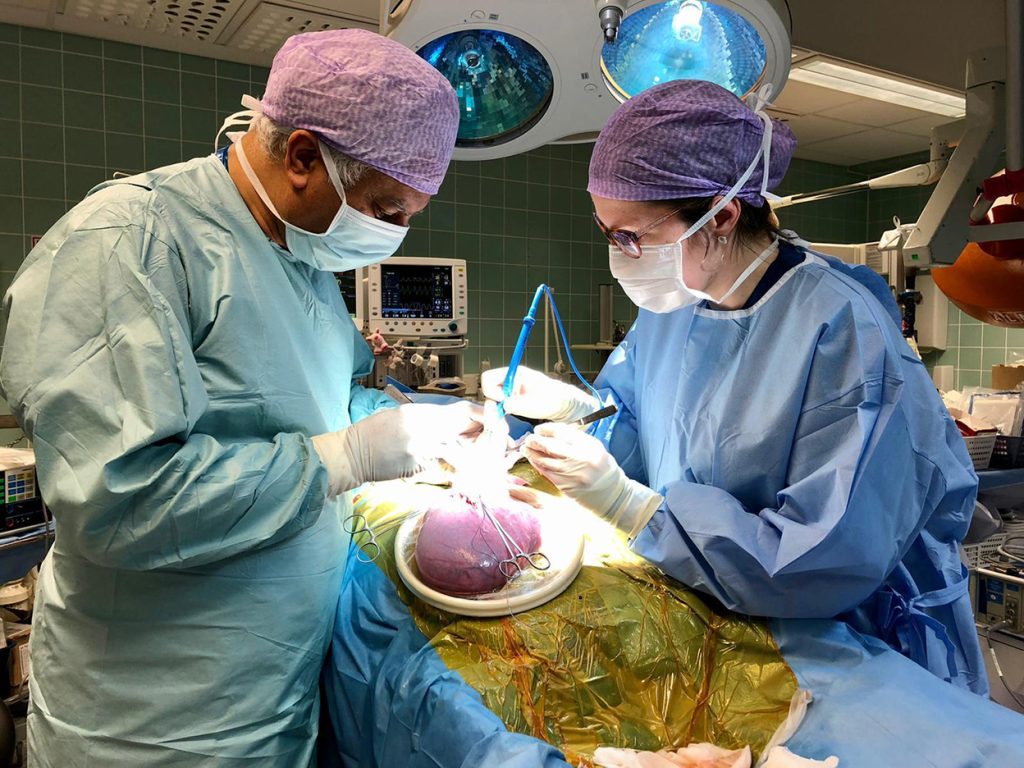
After decades of working in different healthcare systems, Dr Ganesh Acharya has developed clear views about what Nepal could learn from Scandinavia. He points to national health insurance as one of the biggest differences.
“The Scandinavian countries spend around 10 percent of their budget on health. You can see from the budget itself how important health is to the state,” he says.
For him, the central principle should be equal access to care. In Sweden, he says, political leaders, government employees and ordinary citizens receive the same treatment in hospitals. That system has its own trade-offs.
“Sometimes here you have to wait two or four months even for treatment of a common illness,” he says. “In Nepal, people expect everything to be treated immediately. Here, apart from emergencies, it is normal for treatment to take time.”
The difference is also visible outside hospitals.
“Basic healthcare is available in villages across the country. In Nepal, healthcare is still heavily concentrated in Kathmandu. There is still a belief that everyone has to come to one place for treatment.”
Staying connected to Nepal
Despite spending decades abroad, Dr Ganesh Acharya remains keen to work with Nepal.
“I have a strong desire to remain connected with Nepal and work there,” he says.
He believes Nepal’s heavy patient load helps doctors develop strong clinical skills. What is missing, he says, is systematic evaluation and research.
“We need to know what impact the services we provide have had, how many complications occurred and where we stand compared with the rest of the world. We do not have that record.”
That is where he believes his experience in European research could be useful.
“It is not that I have not tried. I have also encouraged other Nepali colleagues,” he says.
But returning to practise in Nepal is complicated by legal restrictions affecting Nepalis who have acquired foreign citizenship.
“If I go to Nepal and work, I am considered a foreigner in the eyes of the government because my passport is foreign,” he says. “We need an environment where Nepalis who have specialised abroad and acquired foreign citizenship can contribute to Nepal’s development without unnecessary legal complications.”
He also believes Nepal needs to move beyond short-term medical missions.
Doctors may visit for a few days, treat hundreds of patients and leave. Conferences are organised, but such efforts rarely produce lasting institutional change, he says.
“Going to Nepal for four days, seeing two or three hundred patients and returning does not bring major change. One conference does not create major change. For sustainable, long-term transformation, we need a system — and it must be a system without unnecessary obstacles.”
The lesson of the journey
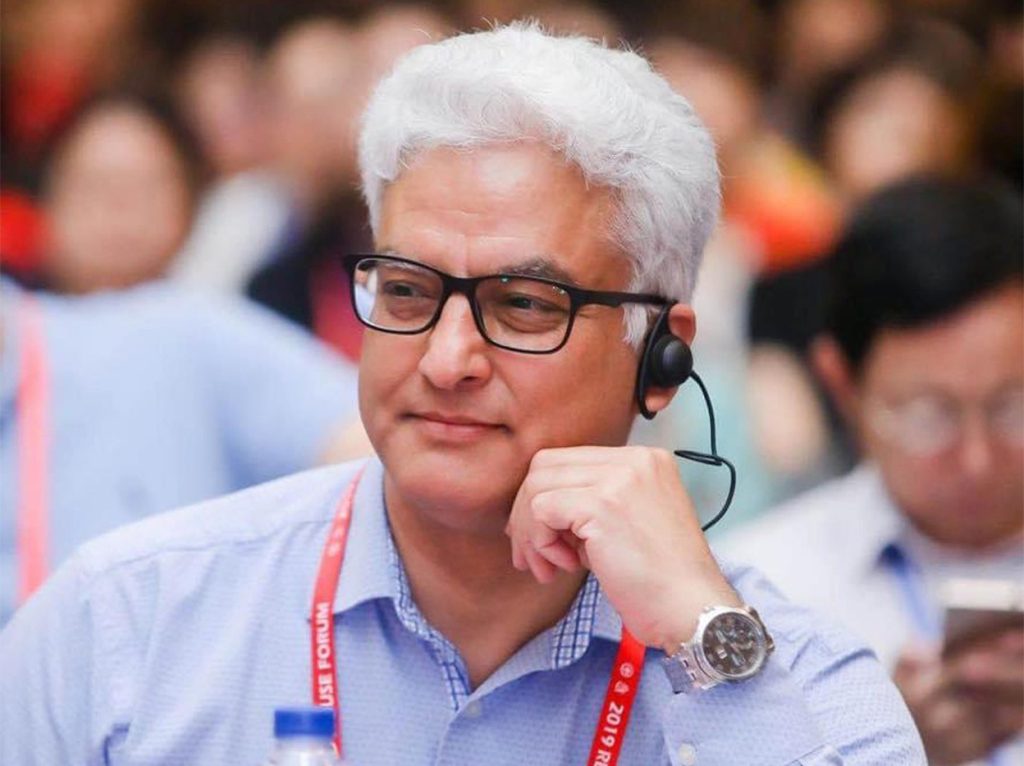
Dr Ganesh Acharya considers himself fortunate, but he places greater weight on persistence than luck.
“I am proud to be a doctor because the knowledge I share grows every day,” he says.
He has also developed a philosophy about time and ambition.
“We always say we do not have enough time,” he says. “But my boss used to tell me, ‘If you need to get something done, go to the busiest person in the world. Only people who have free time say they do not have enough time.’”
For him, the lesson from his own career is straightforward.
“I am still working hard. My journey shows that you should not wait for opportunities. You should create them. Challenges will come, but you need to have the courage to overcome them.”
And despite decades spent abroad, his identity remains firmly tied to where he started.
“I am proud to be Nepali and to have come from Nepal,” he says. “Nepal may have its problems, but internationally, the way Nepalis are viewed is still respectful. People look at us positively. Hearing and experiencing that gives me a great sense of pride.”