Kathmandu, September 21
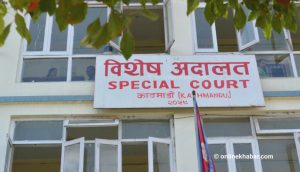
The Supreme Court has ruled that the contract awarded by the Department of Passports for printing e-passports was in accordance with the law.
A joint bench of Justices Kumar Regmi and Shrikanta Paudel dismissed three writ petitions filed by French company IDEMIA, clearing the way for the contract awarded to German company Veridos.
The court also issued a directive in a separate writ petition seeking to have passports printed at Nepal’s Security Printing Centre.
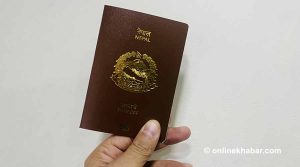
The Department of Passports had awarded the contract for the production and supply of e-passports to German companies Veridos GmbH and Muehlbauer ID Services after an international competitive bidding process. IDEMIA, which had been supplying passports to Nepal, challenged the decision through the public procurement review process and later moved the Supreme Court.
The two German companies were selected for separate packages. Muehlbauer was awarded the package covering the eMRTDS system, including enrolment, data management and delivery, while Veridos was selected for the production and personalisation of e-passports. The combined contract was valued at around Rs 7.66 billion.
The Public Procurement Review Committee had earlier upheld the Department of Passports’ decision and rejected IDEMIA’s objections. IDEMIA subsequently challenged the committee’s decision at the Supreme Court.
Dispute over corruption claim
The passport procurement has also come under scrutiny in a separate corruption case investigated by the Commission for Investigation of Abuse of Authority (CIAA).
The CIAA has treated the total contract amount as the amount involved in corruption rather than limiting the alleged loss to the amount actually paid, according to the allegations cited in the case.
The anti-graft body has sought a combined recovery of Rs 10.13 billion from the accused. However, the amount it has identified for recovery and an equivalent fine is around Rs 184.4 million, according to the case details.
Questions have also been raised over the basis for calculating the claimed loss. The CIAA has acknowledged that around Rs 184.4 million had actually been paid, while its charge sheet sought recovery of more than Rs 10 billion.
In the case against Manindra Raj Malla, the Nepali agent of Muehlbauer, the CIAA has sought Rs 1.90 billion in damages, equivalent to the contract amount.
The Supreme Court’s latest ruling on the procurement contract, however, concerns the legality of the Department of Passports’ tender process and the Public Procurement Review Committee’s decision. It is separate from the issues raised in the CIAA corruption case.