

Kathmandu, November 23
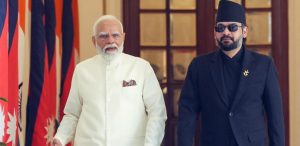
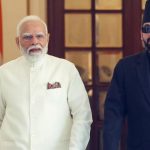
Indian Prime Minister Narendra Modi praised Balendra Shah, referring to him as the world’s youngest prime minister and recalling having heard him speak at the United Nations General Assembly. At a joint press conference in Hyderabad House in New Delhi on Monday, Modi also said discussions over the past few hours had given him an impression of Shah’s vision and clarity of thought as a young leader.
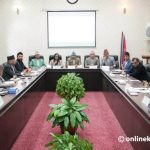
The two prime ministers held both delegation-level and one-on-one talks before addressing the media. Modi praised the popularity Shah secured through Nepal’s recent elections. At a time when Nepal-India relations have experienced fluctuations in recent years and high-level visits have not been consistently maintained, Monday’s talks and agreements appeared to inject renewed momentum into political and diplomatic ties.
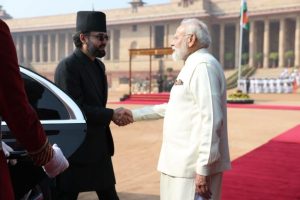
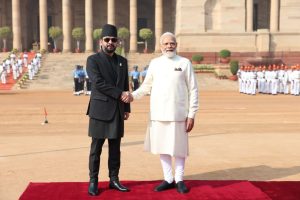
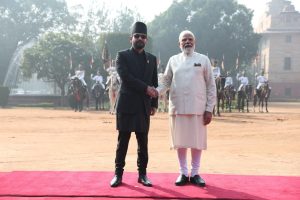
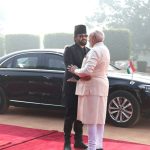
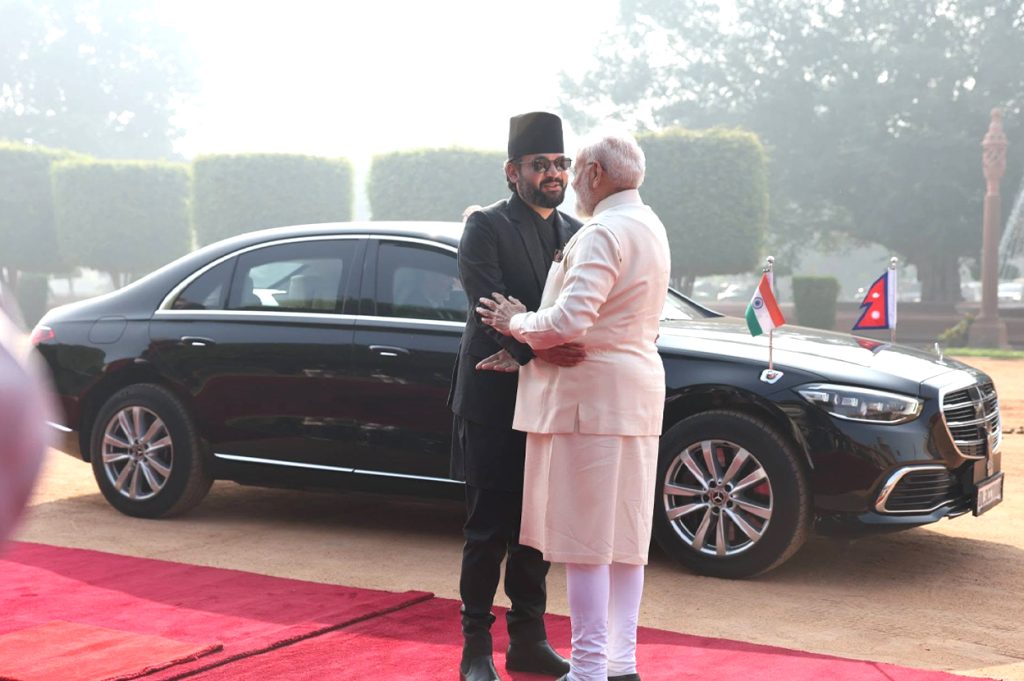
The two leaders embraced warmly before beginning their meeting. However, they appeared more serious as they sat down for the joint press conference. Modi initially appeared particularly serious, while Shah seemed to be making an effort to remain composed and natural.
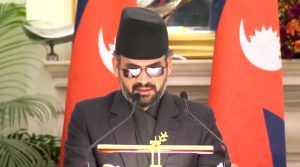
In a notable moment, Shah, who had not addressed the media in Nepal since becoming prime minister, held his first press conference alongside Modi in New Delhi.
Modi announced development assistance worth Rs 240 billion to Nepal, although it remains unclear how much of the amount will be provided as concessional loans and how much as grants.
During his visit to Nepal in 2014, Modi had announced nearly Rs 100 billion in concessional loans for infrastructure and energy development in Nepal. Similarly, in 2018, India announced assistance worth nearly Rs 1 billion focused on Janakpur.
This time, India has announced a substantially larger assistance package, apparently signalling the high level of political understanding between the two countries.
Despite these efforts, the two prime ministers were unable to reach an agreement on air entry routes for Bhairahawa, Mahendranagar and Janakpur, an agenda that had emerged as a significant issue during the visit.
According to high-level government sources, India had proposed opening certain entry points through Nepal to facilitate access to Bagdogra, which it considers strategically important. The Indian side reportedly proposed addressing the air-route issue through a package deal.
By the time Prime Minister Shah and his team arrived in Delhi, Nepal had already anticipated potential challenges associated with India’s proposal.
The proposal became contentious amid concerns that the requested entry points were intended to serve military bases in India and Bangladesh, that their proximity to the strategically sensitive Chicken’s Neck corridor raised security concerns, and that the geographical terrain posed additional challenges.
Citing these concerns, the Indian side reportedly did not entertain Nepal’s longstanding proposal to open additional air entry points beyond Simara.
Officials accompanying the prime minister said informally that discussions on the issue could continue after Shah’s visit. One senior official said the matter had been deferred for now and could potentially be resolved at the level of the tourism and civil aviation ministers if the two sides reached an understanding.
The official also cautioned against judging the visit as either a success or failure solely on the basis of the unresolved air-route issue.
Efforts to establish direct air connectivity between medium-sized cities of the two countries also did not materialise during the visit. However, the Indian side reportedly claimed in media outlets including Navbharat Times that Nepal had not formally proposed the air-route issue, making the absence of discussions unsurprising.
A joint statement was expected to be issued by the end of the visit, with the possibility of incorporating additional issues. This assessment is based on the discussions held so far and the agreements, understandings and commitments made public during the visit.
The border dispute remains one of the most significant issues between Nepal and India. Shah himself had previously raised the matter forcefully on social media. However, there appears to have been no mention of the dispute in the discussions with Modi or in the broader proceedings of the visit.
During an earlier visit to India, former prime minister Pushpa Kamal Dahal had secured a written reference indicating that both countries were willing to seek a diplomatic resolution to the border dispute. The reference does not appear to have been included in the current discussions. The Eminent Persons Group (EPG) report also appears to have been left out.
Similarly, the Pancheshwar Multipurpose Project, a longstanding issue since the Mahakali Treaty, did not appear to receive significant attention from the two prime ministers. The project had been raised prominently in discussions ahead of the visit. While the foundation stone for the 669MW Lower Arun Hydropower Project was laid, the Pancheshwar project remained largely overlooked, even three decades after the Mahakali Treaty.
Diplomats have nevertheless viewed Shah’s arrival in New Delhi as an achievement, particularly amid uncertainty over whether the visit would take place at all. Shah also invited Modi to visit Nepal.
As political relations between the two countries appear to be returning to a more normal footing, questions are emerging over whether Nepal was able to secure the broader outcomes it had hoped for from the visit.
Expectations had included progress on a range of issues involving economic assistance, trade, transit and other bilateral exchanges. Among the key anticipated agendas were strategic steps towards resolving the border dispute and securing additional air-route permissions. Both remain unresolved.
Although the visit was expected to focus on energy, infrastructure, connectivity and broader bilateral cooperation, the issues that had been prominently discussed ahead of the visit appear to have received comparatively less attention, based on the information available so far.