
Kathmandu, September 20
Six of the 13 hydropower projects damaged by the floods of August 26 are owned by companies listed on the secondary share market, meaning thousands of public investors are exposed to the losses caused by the disaster.
The affected listed companies are Rasuwagadhi Hydropower Company, which operates a 111 MW project; Chilime Hydropower Company (22 MW); Trishuli Jal Vidhyut Company (37 MW); Mailung Khola Hydropower Company (5 MW); Upper Mailung Khola Hydropower Company (14.8 MW); and Sanjen Hydropower Company, which operates the 42.5 MW Sanjen and 14.8 MW Upper Sanjen projects.
The companies have been among the hardest hit in the stock market since the floods, with the share prices of some falling by more than 30 percent.
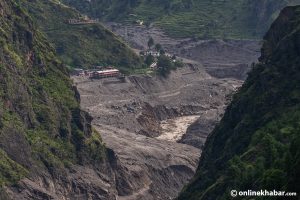
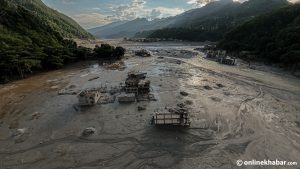
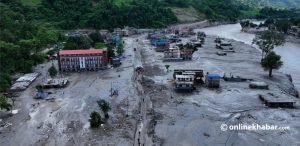
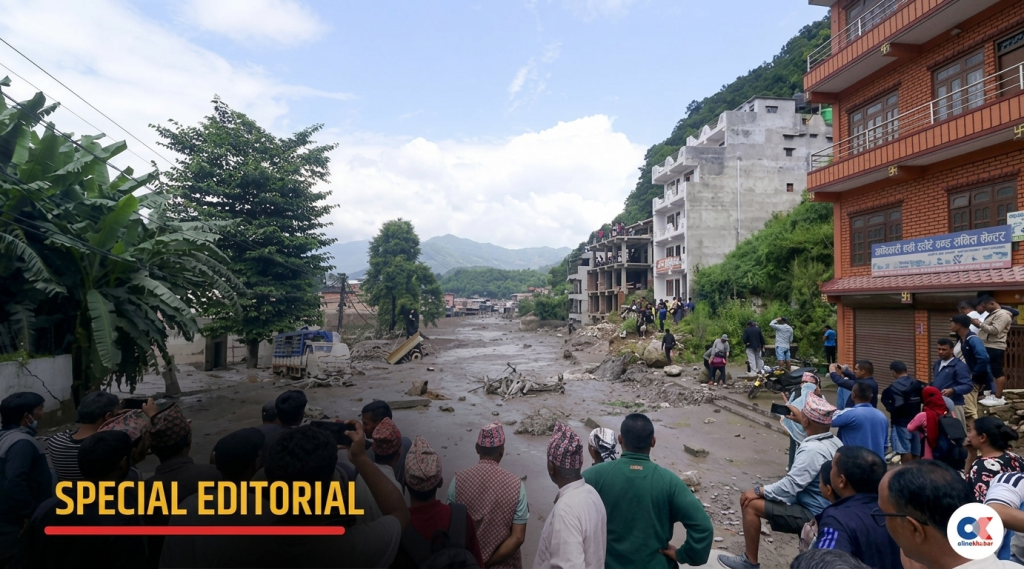
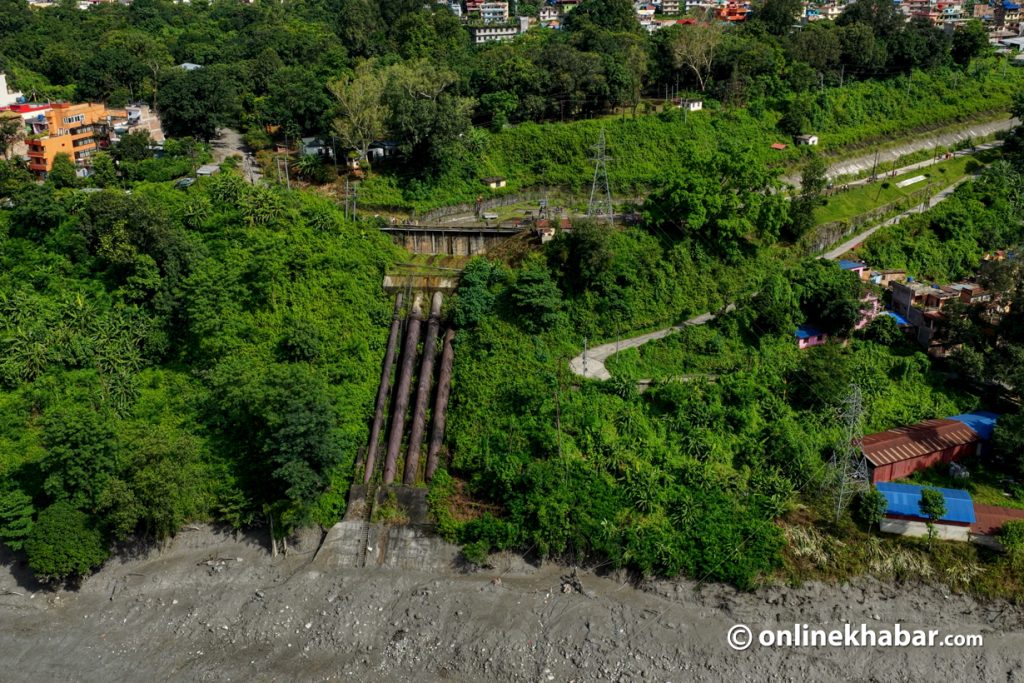
Rasuwagadhi, Chilime and Trishuli Hydropower have suffered particularly extensive damage. Initial reports indicate that dams, tunnels, powerhouses, machinery and transmission infrastructure have been severely damaged or destroyed.
As a result, share prices of the six companies have fallen by between 4.25 percent and 30.48 percent since August 26.
| Company | Price on Aug. 25 | Current price | Decline |
| Rasuwagadhi Hydropower | Rs 241.40 | Rs 176 | 27.09% |
| Chilime Hydropower | Rs 475.10 | Rs 369.70 | 22.18% |
| Trishuli Jal Vidhyut | Rs 448.80 | Rs 312 | 30.48% |
| Mailung Khola Hydropower | Rs 414.40 | Rs 320 | 22.78% |
| Upper Mailung Khola | Rs 424 | Rs 364.50 | 14.03% |
| Sanjen Hydropower | Rs 261.10 | Rs 250 | 4.25% |
Source: NEPSE
Debt remains even as projects are destroyed
The damage has created a difficult financial situation for the companies. While investors have already suffered losses from falling share prices, the bigger challenge is how the projects can be rebuilt.
Many of the affected companies still have billions of rupees in outstanding bank loans. With projects either severely damaged or destroyed, they may have to borrow additional money to rebuild while continuing to service existing debt.
This could leave companies paying interest on previous loans for years while taking on new debt for reconstruction. At the same time, electricity generation and associated revenues could remain at zero for several years.
The cost of rebuilding is also expected to be higher than the original project cost.
“Some of the equipment may no longer be usable, and equipment has become more expensive now. Therefore, rebuilding the project could cost more than it did originally,” said Narnath Neupane, company secretary of Rasuwagadhi Hydropower Company.
The companies also face a separate problem: their electricity production has been disrupted while the remaining period of their generation licences continues to run down.
The average cost of developing a hydropower project is currently around Rs 200 million per megawatt and has been rising, according to energy-sector officials. Some of the losses at insured projects will, however, be covered by insurance.
Insurance assessment could take time
The extent of the insurance payouts will depend on detailed damage assessments.
Mohan Dangi, president of the Independent Power Producers’ Association, Nepal (IPPAN), said insurance companies would first send surveyors to assess the damage.
“Only after the surveyors complete their assessment will we have a detailed picture of the losses. In some projects, surveyors have not even been able to reach the site yet,” Dangi said.
Once the damage has been assessed, the insurance claim process will move forward.
Typically, once a project is completed, annual depreciation is calculated by dividing the project cost by the number of years remaining on its licence. Insurance compensation is generally calculated after deducting depreciation.
Dangi said the government should introduce a package of measures for the affected projects, including customs exemptions on replacement equipment, access to low-interest loans and extensions to electricity generation licences.
He said government and insurance-sector support would help give project developers the confidence to rebuild. The government could also consider using various financial instruments to help manage the reconstruction, he said.
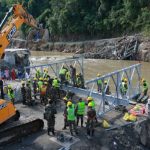
Access itself remains a challenge at some projects, with flood damage destroying or disrupting roads leading to project sites.

Rasuwagadhi faces the biggest challenge
The 111 MW Rasuwagadhi Hydropower Project appears to have suffered the most extensive damage among the listed projects.
The project had already been damaged by last year’s floods, and reconstruction had not yet been completed. The company had taken on additional debt to complete the rehabilitation when this year’s floods caused extensive new damage.
“The powerhouse has been buried, the tunnel is filled with mud and debris, and none of the external structures remain,” Neupane said.
The company is currently focused primarily on managing the human impact of the disaster rather than its financial situation, he said.
According to the company’s financial statement for the last fiscal year, Rasuwagadhi had long-term debt of Rs 14.78 billion as of the end of the fiscal year.
Trishuli project damaged before generating revenue
The 37 MW Upper Trishuli-3B project, operated by Trishuli Jal Vidhyut Company, also faces a difficult future.
The project suffered major damage while it was still under construction and had not yet begun generating revenue.
The company has outstanding debt of around Rs 3.75 billion. Servicing that debt while finding the financing required to rebuild the project will be a major challenge.
A company linked to the project will also have to deal with the fact that revenue generation had not yet begun before the disaster.
Chilime hit directly and through its investments
Chilime Hydropower’s 22 MW project was directly affected by the floods, with preliminary assessments indicating significant damage around the powerhouse.
The impact on Chilime extends beyond its own project. The company has invested in Rasuwagadhi Hydropower, whose project has been severely damaged, as well as Sanjen Hydropower.
Damage to transmission infrastructure at Sanjen has also affected electricity evacuation.
As a result, Chilime’s shareholders face exposure not only to damage at Chilime’s own project but also to losses and delays at projects in which the company has invested.
Damage at Mailung Khola comparatively limited
The 5 MW Mailung Khola Hydropower Project has suffered damage to its powerhouse, penstock and switchyard, according to preliminary assessments.
The damage is considered relatively limited compared with some of the other affected projects. Initial estimates put the damage at around Rs 50 million.
The company has informed the Nepal Stock Exchange (NEPSE) that the project was damaged by the floods and that electricity generation has been affected.
Upper Mailung Khola hit mainly in transmission infrastructure
The 14.8 MW Upper Mailung Khola Hydropower Project has mainly suffered damage to its switchyard and transmission line.
A preliminary assessment has estimated the damage at around Rs 28.6 million.
Sanjen projects largely intact, but unable to evacuate power
Sanjen Hydropower Company’s 14.8 MW Upper Sanjen and 42.5 MW Sanjen projects have also been affected by the floods.
According to IPPAN’s preliminary assessment, the projects themselves have not suffered major physical damage. However, electricity evacuation has been disrupted because of extensive damage to the 220 kV substation and transmission structures at the Trishuli-3B hub.
With no clear timeline for the reconstruction of the damaged grid and transmission infrastructure, the company is facing continued uncertainty despite its generation facilities remaining largely intact.
For investors, the damage therefore extends beyond the immediate physical destruction of hydropower infrastructure. Companies must now contend with reconstruction costs, existing debt obligations, potentially higher equipment prices, lost generation revenue and uncertainty over how quickly damaged transmission networks can be restored.