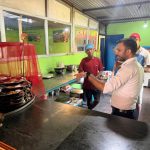


When Dr Dharma Padhyaya first arrived in the United States, he did not begin with a prestigious job in data engineering. Like many Nepalis, he began behind the counter of a 7-Eleven.
The store in Boston sold vegetables, tea, coffee and everyday groceries. For five months, Padhyaya worked there, learning how American workplaces functioned and trying to find his footing in a country where almost everything was unfamiliar.
It was a modest beginning for someone who would go on to work with some of the largest healthcare organisations in the United States.
Today, Padhyaya is a data engineer and analytics specialist whose career has taken him through cancer research and treatment, hospital systems, health insurance and public health. He has worked in senior data roles and, at one point, secured a position with the US Department of Health and Human Services after competing against around 5,000 applicants.
But the path to that position began much earlier, in a remote corner of Nepal.
From Bajhang to Boston
Dharma Padhyaya was born on November 23, 1985, in Sutiya, in what is now Jayaprithvi Municipality-7 of Bajhang district in far-western Nepal.
His formal education began in his village.
After studying up to Grade 8 at Sunipapal Secondary School, he moved to Dhangadhi, where he completed Grades 9 and 10 at Sharada Secondary School. He then studied at Kailali Multiple Campus before completing a master’s degree in science at Siddhanath Science Campus in Kanchanpur.
He had been drawn to teaching from an early age.
After completing his SLC, he began teaching and went on to work at Stepping English Boarding School and Stone Bridge in Dhangadhi, as well as Gyanodaya English School in Dadeldhura.
For roughly a decade, teaching was his profession. America, however, was becoming his ambition.
Every year, he applied for the US Diversity Visa programme. In 2013, while he was still pursuing his postgraduate studies, his name was selected.
In September that year, he left Nepal for the United States with his wife.
The dream had finally acquired a destination. The reality, he soon discovered, would require considerably more work.
Starting again
Dharma Padhyaya had studied science in Nepal, and he knew that working in a convenience store could support him but was unlikely to take him where he wanted to go.
So while working at 7-Eleven, he began studying information technology.
He completed a three-month course in data engineering. That led to his first opportunity in the field, with CoGent Data Solutions, a communications-related company.
He worked on data collection and business reporting and, in 2014, spent six months working for two companies at the same time.
By the end of that year, another opportunity took him to California.
At City of Hope National Medical Center, a cancer treatment and research centre, he joined as a senior data engineer.
It was a significant shift.
His work was no longer simply about managing information. He was working with data related to patient treatment, service effectiveness and patient satisfaction, using that information to help improve healthcare delivery.
He stayed there for around five years.
During the same period, he continued building his academic qualifications.
He completed a Master of Project Management from the American Academy of Project Management, a Master of Science from the University of Phoenix and a Master of Science in Information Technology from the same university.
His career was moving in parallel with his education.
When data became a healthcare tool
After five years at City of Hope, Dharma Padhyaya moved to Hackensack Meridian Health in New Jersey, a healthcare system operating more than 25 hospitals across the state.
He joined as director of data management and analytics.
The scale of the job was considerably larger.
His responsibility was to bring together data from hospitals across the network and use it to analyse treatment systems, identify problems, help doctors act proactively and assess how effectively hospital services were being delivered.
“At least 25 hospitals were under my direct responsibility for monitoring and analysing data and implementing plans based on that analysis,” Padhyaya says.
He worked there until 2021, continuing to build both his professional and academic credentials.
Over two and a half years, he completed a PhD in Information Technology Systems as well as a postgraduate degree in Business Administration. He received a full scholarship for his MBA.
Then another offer arrived.
Padhyaya joined UnitedHealth Group in Minnetonka, Minnesota, a company involved in health insurance and healthcare services and one of the world’s largest companies.
Again, his work centred on data.
But the role was broad. Alongside data analysis, he worked across data science, data engineering, reporting, writing and business analytics. His work also included cardiovascular analytics and neurological studies.
The thread running through all of it was the same — using large amounts of information to understand healthcare systems and make them work more effectively.
A race against 5,000 applicants
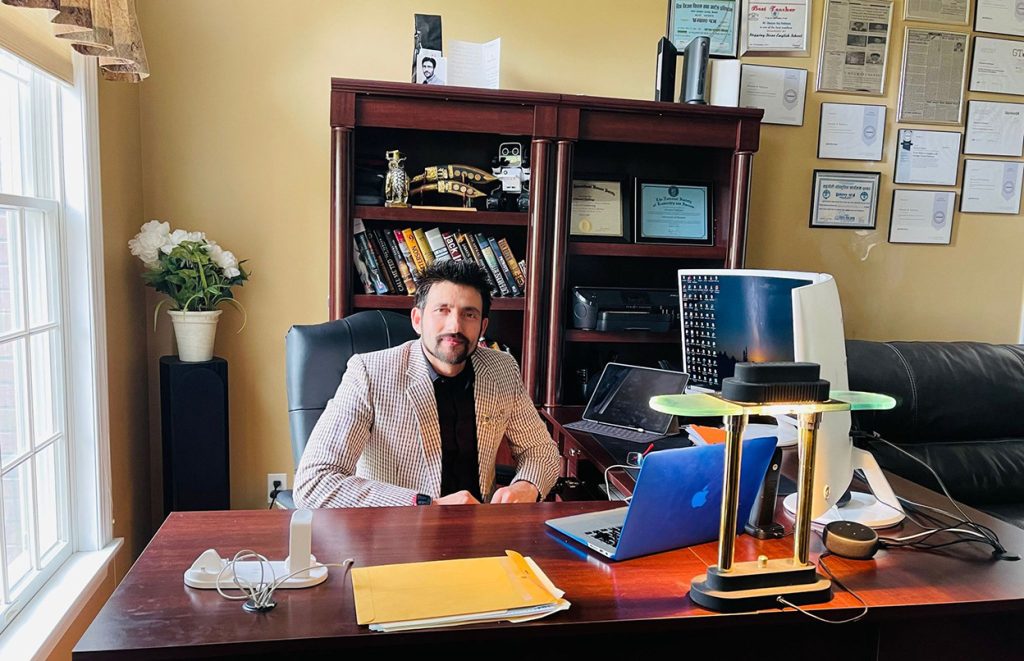
One of the most significant stages of Padhyaya’s career came with the US Department of Health and Human Services.
He secured a position as an IT specialist and head of data architecture management and analytics after an open competition involving around 5,000 people.
The job brought together the two fields that had shaped his American career — technology and healthcare.
His responsibilities included managing data and analysing information, as well as work related to evaluating the quality of medicines and approving pharmaceutical products. He was also involved in reviewing and approving biological products and medicines and in improving the efficiency of services.
Dharma Padhyaya says his work helped the organisation reduce unnecessary expenditure and save around $20 million.
His experience in data analysis, he says, was central to that work.
But even after reaching a position that many immigrants spend years trying to attain, Padhyaya did not stop moving.
After completing his PhD last year, he left the organisation and joined another healthcare-related institution working in the field of eating recovery, mood and anxiety.
Based in Denver, Colorado, the organisation provides AI-based behavioural health services and has expanded to 40 US states.
Padhyaya took on the role of head of data science and advanced analytics.
His work there involved analysing data related to eating disorders and human behaviour and using evidence and information to develop programmes related to mental healthcare.
Building something of his own
Dharma Padhyaya’s career in the US has not been confined to large institutions.
He also owns Lamanya Group, through which he works in data engineering. He serves as an adviser to various organisations in the United States.
Over the years, his work has increasingly centred on the intersection of data and healthcare — from electronic medical records to patient safety and treatment systems.
For him, data is not simply a technical resource.
Used properly, it can help identify problems in healthcare systems, measure whether services are working and guide decisions that affect patients.
His experience has also given him a more complicated view of the American dream.
The United States, he says, offers opportunities, but those opportunities come with intense competition.
“It is a land of opportunity,” he says. “But in such a competitive environment, opportunities can only be secured through competition. Anyone coming here from anywhere in the world has to change not only their surroundings but also their mindset.”
For Nepalis, he says, adapting is particularly important.
“People have to leave behind their natural way of doing things. You have to keep playing on a field of constant struggle. My struggle is still continuing.”
Looking back towards Nepal
More than a decade after arriving in America, Padhyaya’s ambitions have begun to point in the opposite direction.
He wants to use what he has learned in the United States to contribute to Nepal.
His particular interest is healthcare.
Years of working with American hospitals and healthcare organisations have given him experience in using data to develop plans, analyse services and improve healthcare systems. He believes some of those lessons could be useful in Nepal.
“I have worked in the American healthcare system through data for many years,” he says. “I feel I have played a significant role in improving the health system through different plans and strategies.”
Now he wants to see whether that experience can travel home.
“I would like to work on improving Nepal’s healthcare sector based on what I have learned here. If circumstances allow, I believe it will certainly be possible one day.”
The boy who began his education in a remote village of Bajhang, the teacher who spent years in Nepali classrooms, and the immigrant who once worked at a 7-Eleven have travelled a long way.
His next destination, he hopes, may be home.