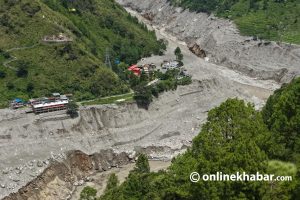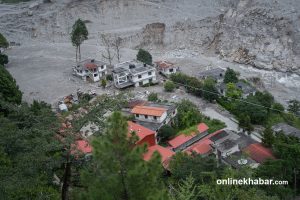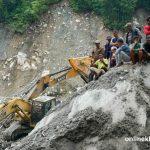


More than 6,000 people remain missing following the devastating flood on the Bhotekoshi River in Rasuwa. Most of the bodies recovered so far cannot be identified.
According to the latest figures, 1,403 bodies have been found. Of these, only 103 have been identified and handed over to relatives. The remaining 1,300 unidentified bodies have been buried underground.
Some families of the missing have already given up hope of finding their loved ones alive and have performed final rites using effigies (kush bodies).
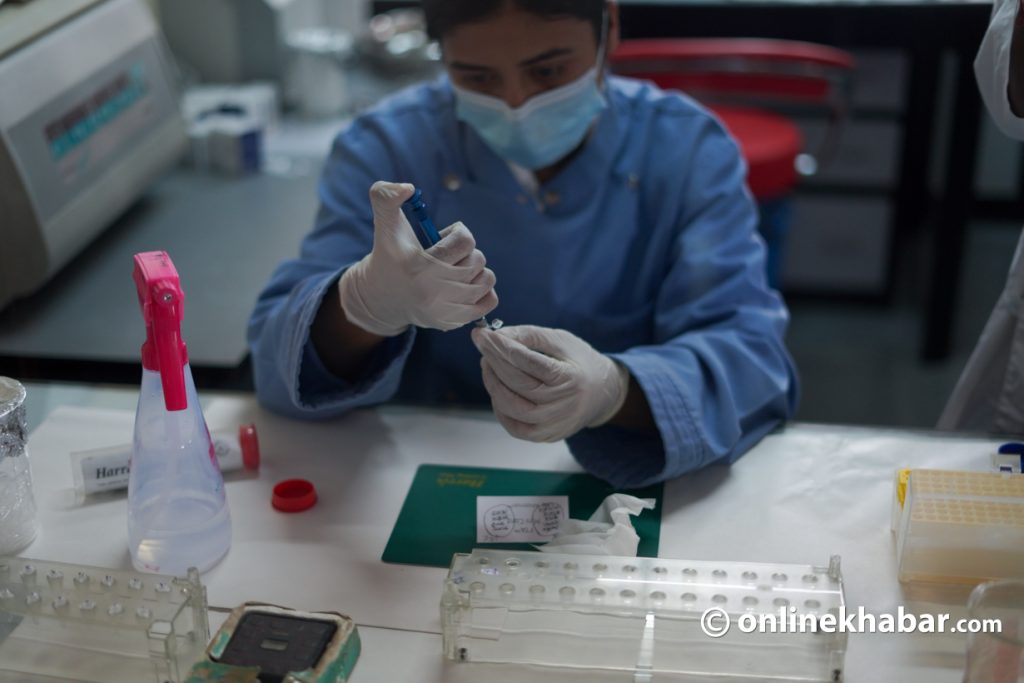
DNA testing has now become the main basis for establishing links between unidentified bodies and missing persons. Samples collected from the bodies are being tested at the National Forensic Science Laboratory in Khumaltar and the Police Forensic Science Laboratory in Samakhushi.
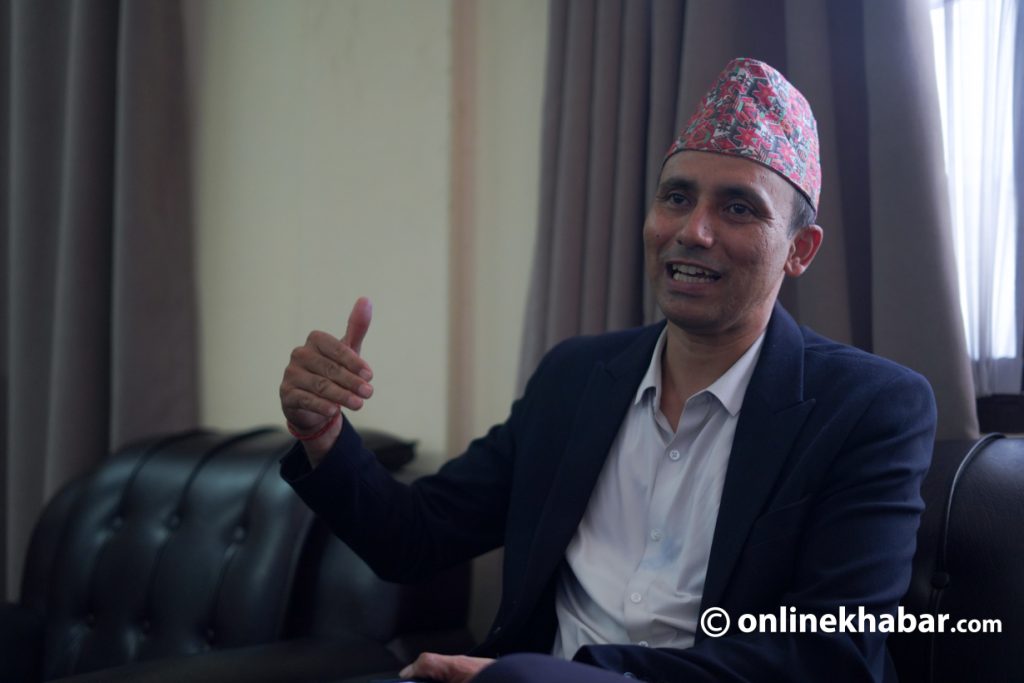
Nirajan Thapa, head of the DNA branch at the National Forensic Science Laboratory, told OnlineKhabar that if work continues at its current pace, completing the identification process, testing samples from both bodies and relatives, could take around two and a half months.
The National Forensic Science Laboratory alone has received 1,660 samples so far: 837 collected from bodies (mainly teeth and bone) and 823 from blood samples given by relatives of missing persons, collected from various districts. Collection of relatives’ blood samples is still ongoing.
Of the 823 relative blood samples received, DNA profiles have already been prepared for 551. Since extracting DNA from blood is comparatively straightforward, Thapa said the remaining samples could be completed within one to one and a half weeks.
Testing bone and teeth samples from bodies, however, is more complex and time-consuming. Of the 837 body samples received, results have so far been obtained for only about 195.
An additional roughly 200 samples are being tested by a Chinese team at NAST’s laboratory, and the rest are being processed at the Police Forensic Science Laboratory as well.
According to Thapa, extracting DNA from bone and teeth, building a profile, and matching it against relatives’ samples is a lengthy process.
“The DNA extracted from a body has to be compared against the DNA extracted from a relative’s blood. Only then can a biological relationship be established,” he said. “It won’t be an exact match. But DNA passes genetically from one generation to the next, and traits are passed from parents to children accordingly. Relationships are identified on that basis.”
Profiling first, then matching
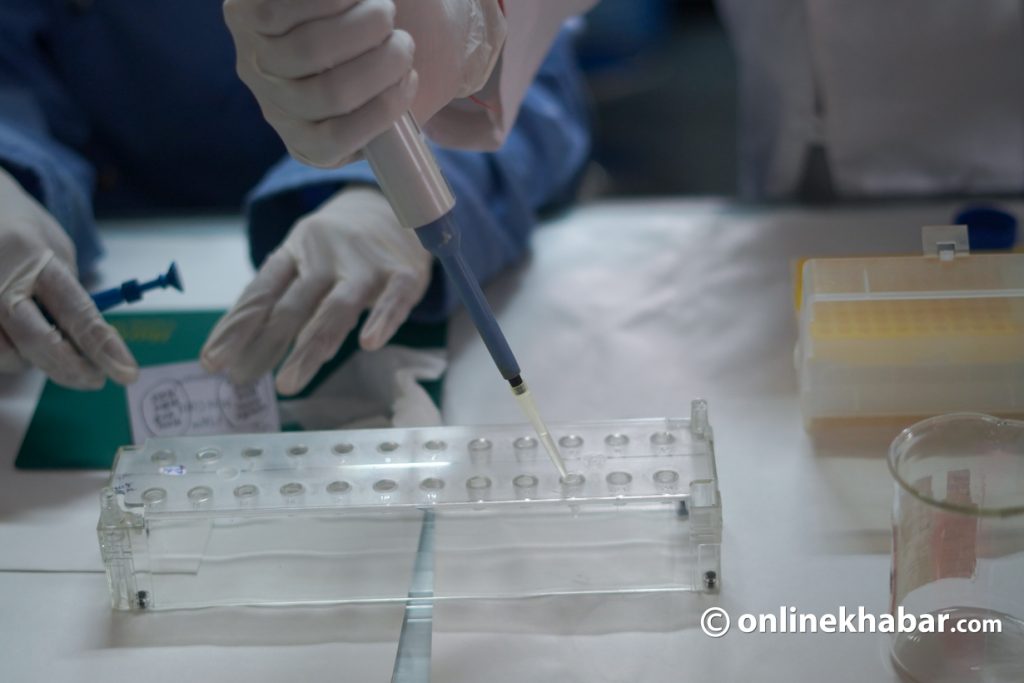
Thapa said DNA profiling of bodies recovered from the flood is proceeding rapidly, alongside blood sample collection and DNA work for relatives of the missing. Since so many people are missing, DNA profiles are being built for both the bodies and the relatives. First, the unknown DNA from bodies is compared with known DNA from relatives to check for a biological link. Matching happens only after that.
One body’s DNA profile is matched simultaneously with a large number of samples submitted by families of the missing.
“In an ordinary case, comparing one unknown sample against one likely candidate is enough. Here, the bodies can’t be identified visually,” Thapa says. “So a single body’s DNA has to be checked with every sample collected from relatives of missing persons.”
Software will be used for this to generate a ranked list of which relatives’ samples are most likely related to a given unknown DNA sample. Experts then finalise identification through statistical analysis of relationships such as parent-child and sibling ties.
“If we test and match 20 samples now and test the remaining hundreds two months later, the identification process becomes more complicated,” Thapa says. “So we wait until a large number of DNA profiles are ready, then run the matching through software.”
Profiles will be built from DNA extracted from relatives’ blood and from bone and teeth recovered from bodies, a process Thapa estimated could take one to one and a half months.
Bodies found in the flood are fragmented, with some individuals possibly represented by three or four separate remains. 524 of the total recovered are partial remains, making profiling from bone or teeth comparatively more complex, experts say.
Fingerprint matching also underway
Alongside DNA testing, police are also trying to identify the dead by matching fingerprints. The work is being carried out at the Police Forensic Science Laboratory.
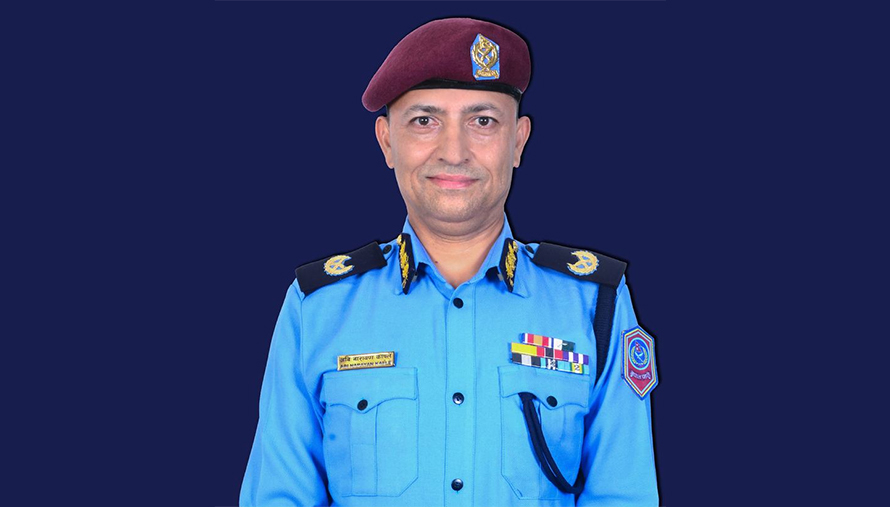
Nepal Police spokesperson Abinarayan Kafle said fingerprints collected from bodies are being compared against fingerprints individuals previously submitted for various purposes.
“We’ve been able to lift fingerprints from more than 290 bodies. We’re trying to match them against records in government databases, including the national ID system,” Kafle told OnlineKhabar. “We’re coordinating with the Ministry of Home Affairs on this. Bodies that get matched this way can be handed over to relatives more quickly.”
He said Singapore has provided equipment for fingerprint identification, and a team from Singapore is helping with the work, alongside equipment already available with Nepal Police.
Facial detection technology is also being used. A police team is exploring whether AI-based comparison of photographs of missing persons against the faces of bodies could aid identification.
“Some DNA matches will need to be re-tested. Sample collection is ongoing and the numbers could still rise. We’re working to deliver results as quickly as possible,” Kafle says.
US software used for DNA testing
Advanced software is being used to analyse DNA data. Separate databases have been maintained, one for DNA samples from relatives of missing persons, another for DNA samples from bodies. The software calculates the most likely matches between the two databases to help identify probable family relationships.
According to Thapa, the matching software used is CODIS (Combined DNA Index System), a system used by the US FBI for criminal investigations, personal identification, and familial searching. The Police Forensic Science Laboratory is now using it to help identify missing persons.
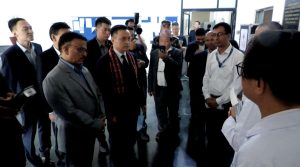
China, India, South Korea, and Singapore have sent equipment and personnel to Nepal to assist with body identification.
Kafle said that using only Nepal’s own machines and staff, testing such a large number of samples would take a long time, but with the help of foreign experts and additional machines and manpower, the pace of testing has increased.
The National Forensic Science Laboratory has five DNA experts and three support staff. Eight forensic DNA experts have come from India, and 15 from China. The Chinese team is working out of NAST. Teams from South Korea and Singapore are working at the Police Forensic Science Laboratory.
Establishing ties when an entire family is missing
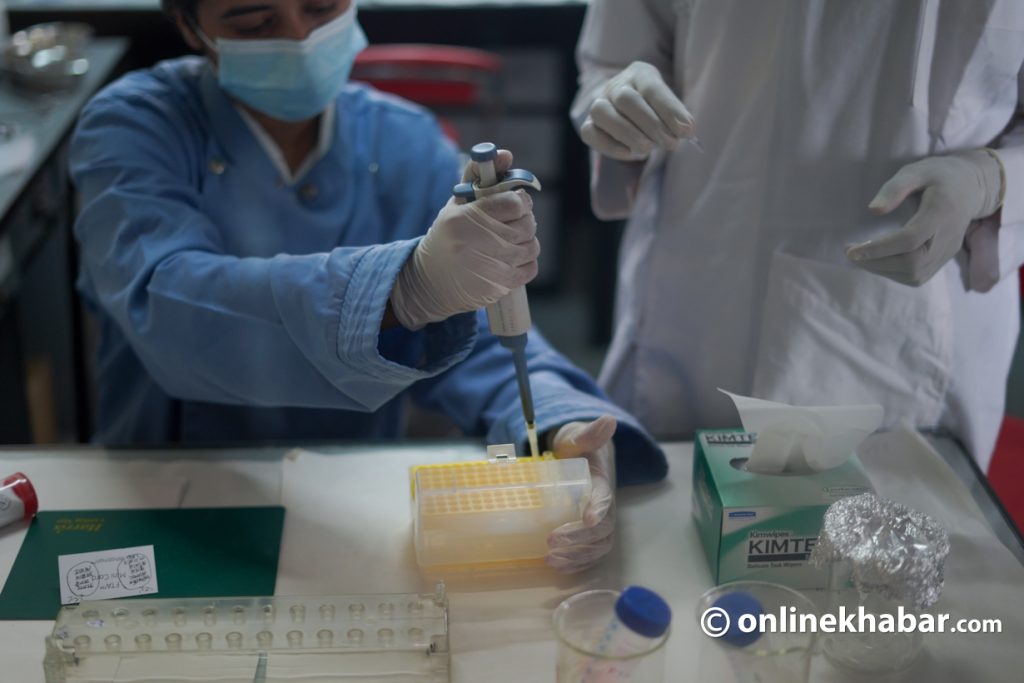
In some cases, entire families are missing. On how identification is possible in such cases, Thapa said unknown samples (from bodies) can also be compared against each other to determine whether a biological relationship exists between them.
For example, once a grandfather is identified from a family, that same sample can be used to test relationships with subsequent generations. Once a child’s identity is confirmed, that sample can then serve as the basis for testing relationships with grandchildren and other family members.
Comparing unknown samples against each other allows preliminary conclusions about which individuals may belong to the same family or share a biological relationship. But Thapa noted that final confirmation still requires a known sample from at least one family member, a grandparent or one or two relatives, as a reference point for tracing relationships with others.
The most straightforward and reliable samples for DNA testing are those of a parent or child, since roughly 50% of genetic material passes from each parent to a child, allowing biological relationships to be confirmed with up to 99.99% certainty, Thapa said.
If a parent’s or child’s sample isn’t available, full siblings’ samples can be used instead, or half-siblings’ samples if that too is unavailable.
The more distant the relationship, the weaker DNA’s ability to confirm it. Between a grandparent and grandchild, genetic similarity is only around 25%.
“Parents and children share roughly half their genetic traits, which makes confirming the relationship easier,” Thapa says. “But moving toward grandparents, uncles, aunts, or more distant relatives, that identifying power decreases. So we need samples from as many family members as possible.”
Extracting DNA from bone is itself a challenge
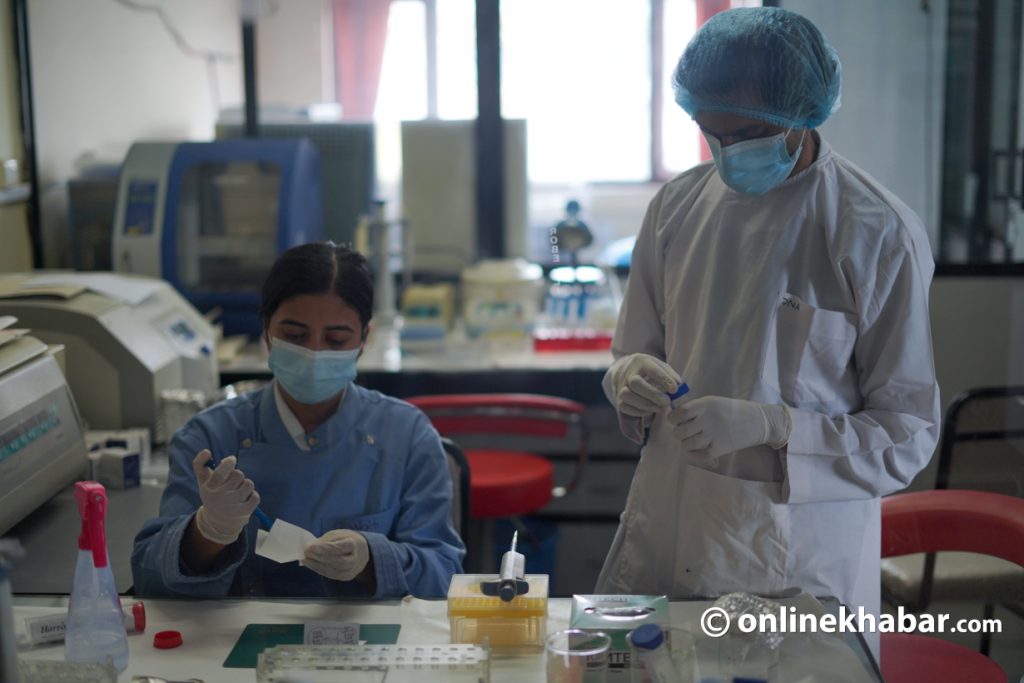
Not every sample yields a complete DNA profile, Thapa says; some produce only a partial profile.
Generally, 70–80% of bone samples yield a usable profile; for the remaining roughly 20%, DNA of sufficient quality may not be obtained, resulting in “no profile” or “partial profile” outcomes.
Some samples with unclear DNA results need to be re-tested using a different method, adding further time.
Thapa estimated that completing all testing could take two to two and a half months at current projections. The actual timeline also depends on how much additional equipment becomes available and how much it speeds up testing.
“The real challenge right now is extracting a DNA profile from the body itself. With teeth and bone, one attempt doesn’t guarantee a result; bone contains less DNA,” Thapa says. “Out of 100 samples, we might get results for around 40 in the first round. The rest have to be tried again using another method. Repeating the process takes time.”
Blood samples, by contrast, tend to yield results in a single attempt and in less time.
Thapa said there isn’t a major technology gap between Nepali and foreign expert teams currently working on this. The methods used by Indian and Chinese experts who came to Nepal after the disaster are largely similar to those already in use here.
Dr Kamal Chauhan, assistant director at the Central Forensic Science Laboratory in Delhi, said Nepal’s DNA-testing technology and setup are comparable to India’s.
“The equipment here is similar to what’s used in India,” Chauhan says. “The challenge here is operational capacity. With fewer machines, fewer samples can be tested at a time.”
According to Thapa, the main challenge right now isn’t technology but managing the large volume of incoming samples in an organised way.