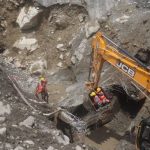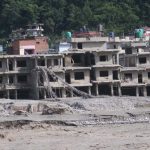


Nepal’s experience with the 2015 earthquake reconstruction, the Earthquake Housing Reconstruction Program (EHRP) Management Information System (MIS), and the disaster information systems developed by the National Disaster Risk Reduction and Management Authority (NDRRMA) has given the country something far more valuable than technology: institutional learning. These experiences have helped Nepal build the knowledge, systems and institutional capacity needed to inform how it prepares for and responds to future disasters.
The question now is not whether Nepal can build another MIS. We already know it can. The more important question is what the next generation of disaster information systems should look like.
The answer should not be another standalone portal built around a single project or disaster-management function. Nepal now needs to move from project-based MIS platforms to a national, interoperable resilience information ecosystem.
Historically, reconstruction MIS platforms were designed to answer basic administrative questions: Who are the beneficiaries? Where are their houses? What stage of inspection has been completed? Is a grant payment authorised? Which grievances remain unresolved?
EHRP expanded on this foundation, while NDRRMA’s systems demonstrated the broader potential of digital platforms for disaster information, rapid assessment, response and decision-making. Yet these systems have largely evolved around individual programmes or specific functions, often in isolation from one another.
The crucial next step is to connect them.
Nepal should be able to follow the same household, settlement, infrastructure and community across the entire disaster-management cycle—from risk and preparedness, through disaster, assessment and response, to recovery, reconstruction and, ultimately, resilience.
This requires transforming the traditional MIS into a true Resilience Information System.
A future system should not merely report what has happened. It should help the government understand what is at risk, what has been damaged, who is affected, what assistance has been provided, whether reconstruction is safe, and whether a household or community has actually recovered.
To achieve this, the primary unit of information can no longer be limited to a project or an individual beneficiary. The system must instead centre on people, households, communities, infrastructure and place.
Connect what already exists
Achieving this vision does not require building another large, standalone portal. Nepal instead needs an interoperability layer—a National DRR/DRM Interoperability Hub—that allows existing government systems to communicate with one another.
Government databases covering disaster management, social protection, civil registration, health, education, land and local governance already contain enormous value. The problem is that these systems remain institutionally and technically fragmented.
Rather than replacing existing databases, an Interoperability Hub would allow them to exchange trusted information through common standards, application programming interfaces (APIs), shared identifiers and agreed governance arrangements.
In simple terms: do not build another database. Connect the databases we already have.
At the centre of this architecture, the household becomes a longitudinal resilience record.
Building on the lessons of the reconstruction MIS, a household affected by any hazard—whether an earthquake, flood, landslide or fire—could be tracked continuously through its risk exposure, disaster impacts, assistance received, reconstruction progress and remaining vulnerabilities.
Over time, and with strict privacy and security safeguards, this record could also integrate with broader social protection and local government systems.
That would shift a fundamental measure of governance. Instead of asking, “How much money did we spend?”, the system should help us ask, “What changed for this household and community because of that investment?”
That is a much more meaningful measure of recovery and resilience.
From dashboards to decision intelligence
The transition should also move Nepal beyond static dashboards towards dynamic decision intelligence.
A conventional dashboard tells us what is happening now. A modern resilience information system should help decision-makers understand what is likely to happen next.
By combining geographic information systems (GIS), remote sensing, artificial intelligence, climate data and predictive analytics, such a system could identify settlements exposed to multiple hazards, vulnerable infrastructure and concentrations of at-risk populations. This would allow limited mitigation and preparedness resources to be directed to the places where they are most needed.
The objective is not technology for its own sake. It is better decision-making.
Ultimately, disaster data should become a shared basis for action, giving federal, provincial and local authorities, as well as security and humanitarian actors, a single, trusted operational picture during a crisis.
A National Disaster Risk and Resilience Information Architecture
The proposed National Disaster Risk and Resilience Information Architecture (NDRRIA) can provide the framework for this transition.
At its core, the architecture would focus on improving disaster-risk intelligence, governance, coordination and resilience monitoring. It would connect information from national, sectoral, local and external systems, including those covering disaster management, health, infrastructure, weather and development.
A central data-exchange layer would allow different agencies and systems to share standardised information through common protocols and identifiers. This would make it possible to use the same underlying information to support risk assessment, early warning, preparedness, response, recovery, reconstruction and long-term resilience planning.
The architecture would also establish the governance arrangements needed for federal, provincial and local authorities to work from common standards and institutional mechanisms. This would need to be supported by stronger institutional capacity, appropriate legal and policy frameworks, public-private partnerships and meaningful community engagement.
Taken together, these elements would create a national information-sharing and governance architecture designed to turn disaster-related data into coordinated decisions that reduce risk and build resilience.
Six transitions for Nepal
Nepal’s path forward requires six fundamental transitions.
First, it must move from standalone MIS platforms to interoperable systems that can communicate across agencies and programmes. Data should no longer remain trapped within the boundaries of individual projects or institutions.
Second, it should move from project records to household resilience histories, allowing the experiences of people and communities to be followed across successive disasters and recovery efforts.
Third, it must move from construction monitoring to long-term outcome monitoring. Completing a house, road or infrastructure project is an output. Whether that investment has actually reduced vulnerability and improved people’s lives is an outcome.
Fourth, Nepal should move from historical reporting to predictive intelligence. Knowing what happened is important, but knowing where risks are emerging and what could happen next is far more useful for prevention.
Fifth, it should move from simple dashboards to decision-support systems that help authorities interpret information and determine where intervention is most urgently required.
Finally, Nepal must move from temporary, project-specific disaster MIS platforms to permanent national resilience infrastructure.
These transitions are not simply technological. They represent a shift in how the state understands and manages disaster risk.
The ultimate legacy of the 2015 reconstruction should therefore be more than the systems created to manage a single national crisis. It should be the institutional knowledge that Nepal can use digital information and coordinated systems to manage complex risks over the long term.
The country now has an opportunity to connect those foundations into a unified National Disaster Risk and Resilience Information Architecture.
When the next disaster strikes, the government should not have to ask, “Where is the data?” It should be able to ask the more important question: “What is the data telling us to do next?”