

Kathmandu, September 10
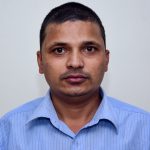
Newly appointed Industry, Commerce and Supplies Minister Deepak Kumar Sah has taken a winding political route to the Cabinet, moving from a key role in the formation of the Janamat Party to becoming a lawmaker and minister from the Rastriya Swatantra Party (RSP).
Sah, an engineer by profession, was appointed minister on Thursday after Gauri Kumari Yadav resigned from the post amid the government’s failure to resolve the shortage of cooking gas.
Elected to the House of Representatives from Sunsari-4, Sah entered Parliament for the first time in the 2026 election, defeating Nepali Congress leader Gyanendra Bahadur Karki by a wide margin. Sah secured 42,771 votes, while Karki received 16,587.
But Sah’s political career predates his entry into Parliament.
He was among the key figures involved in the formation of the Janamat Party and was initially a close associate of party chair CK Raut. The two had known each other for around three decades and were also connected by their engineering backgrounds.
Sah provided significant support to Raut during the early days of Janamat and later held two senior positions in the party—as vice-chair and chair of its Disciplinary Commission.
The relationship was close enough that, in Janamat’s early days, the party’s central office operated from Sah’s home in Suryabinayak-3, Bhaktapur.
Deepak Kumar Sah had also financially supported Raut when he was seeking admission to Pulchowk Engineering Campus, an episode Raut later mentioned in his book.
The close relationship, however, eventually broke down.
According to Janamat leaders in Madhesh familiar with the two, financial issues contributed to the growing differences between Raut and Sah. Their relationship also became strained over the party’s decision to remove Goma Labh from the House of Representatives.
Sah, who was then heading the party’s Disciplinary Commission, had urged the leadership to reconsider the decision. Raut, meanwhile, repeatedly wrote to then-Speaker Devraj Ghimire seeking Labh’s removal from Parliament. Ghimire did not act on the request.
The differences between Raut and Sah subsequently widened. Janamat sought clarification from Sah before suspending him and eventually expelling him from the party in August.
The party accused Sah of failing to fulfil his responsibilities as vice-chair, acting against Raut, violating the party statute and holding factional meetings aimed at splitting the party. Janamat also accused him of continuing to use the party’s name, flag and official stamp after his suspension.
Deepak Kumar Sah then sought to establish a political base of his own.
He formed the Janaswaraj Party and registered it with the Election Commission. However, the party faced a legal challenge from Raut, who opposed the recognition of a new party formed largely by former Janamat members.
The court ultimately did not recognise the Janaswaraj Party under Sah’s leadership.
Sah then registered another party, Sarvodaya, with the Election Commission. The party was given the corn cob as its election symbol, while many of its members were former Janamat leaders and cadres.
That political venture was also short-lived.
Shortly before the 2026 election, Sah joined the RSP, while Sarvodaya merged with the party. The move opened the way for him to contest the Sunsari-4 constituency on an RSP ticket.
The election marked Sah’s first electoral contest. He had not contested the 2022 election from Janamat.
His victory over Karki gave him his first parliamentary mandate and, within months, a place in the Cabinet.
Sah’s political journey has not been without controversy within the RSP either.
He came under scrutiny over a report he independently prepared concerning an incident in Kaptanganj, Sunsari, on July 25. The dispute, involving two communities, later spread to parts of Madhesh. Three people were killed in Sunsari and one in Siraha as tensions escalated.
Sah has said he prepared a separate report on the Sunsari incident following verbal instructions from Home Minister Sudhan Gurung.
Questions were nevertheless raised within the RSP over whether the report had been prepared without a formal party decision. He also faced criticism over the report’s contents, which allegedly implicated RSP lawmakers in the incident.
From helping establish Janamat and serving as one of its senior leaders to being expelled from the party, forming two political outfits and eventually joining the RSP, Sah’s political journey has taken several turns.
He now finds himself in the Cabinet, tasked with leading the ministry responsible for industry, commerce and supplies at a time when the government is under pressure to address the country’s cooking gas shortage.