Kathmandu, September 3
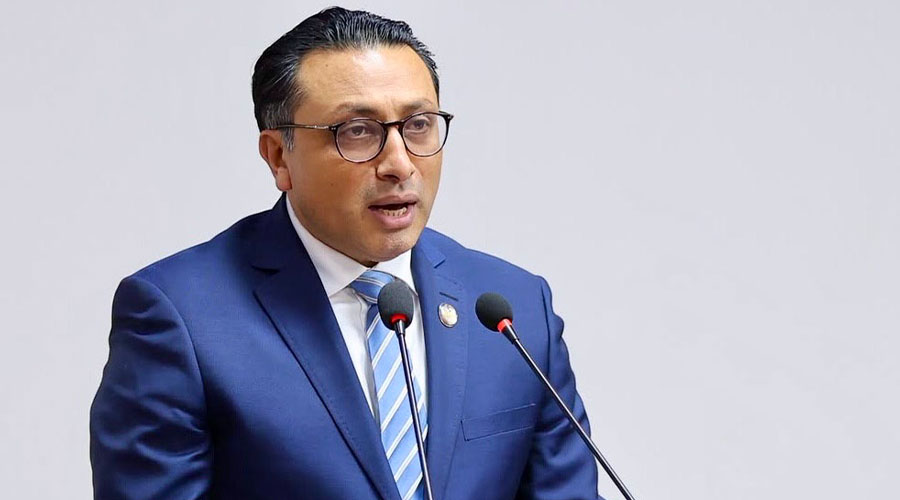
Nepal is moving to open its payment market to foreign companies, with Finance Minister Dr Swarnim Wagle introducing a bill proposing a licensing framework for international payment institutions.
The Payment and Settlement Bill, introduced in the House of Representatives on Thursday, proposes allowing institutions established abroad and already conducting payment-related transactions internationally to apply for permission to operate in Nepal.
The existing Payment and Settlement Act, 2018 does not have a separate provision governing foreign payment institutions. The proposed amendment would, for the first time, create a legal basis for such institutions to apply for a licence to conduct payment transactions in Nepal.
Under Section 7 of the existing Act, anyone seeking to operate as a payment system operator or payment service provider must apply to Nepal Rastra Bank for a letter of intent, along with the required documents and prescribed fee, before establishing a company.
Section 8 requires an institution registered as a company under Section 7 to apply for a licence to operate a payment system or provide payment services within six months of receiving the letter of intent.
The existing law also states that no action will be taken on a letter of intent if the institution does not apply for a licence within the prescribed period.
The proposed bill seeks to add a separate provision for foreign institutions.
Section 6 of the bill states that an institution established abroad, conducting payment-related transactions internationally and meeting the eligibility criteria set by Nepal Rastra Bank may apply to the central bank for permission to conduct payment-related transactions in Nepal by submitting the prescribed documents and fee.
The application process would be carried out in line with Nepal Rastra Bank’s policy on licensing payment services and payment systems.
In effect, the bill seeks to create a separate legal route for foreign payment institutions to enter Nepal — something that is not provided for under the current law.
Foreign institutions to get continuing permission
The bill also proposes a separate provision concerning the duration of licences for foreign institutions.
Section 10 states that, when a licence is issued to a bank or financial institution under the Act, no specific validity period will be prescribed. The licence will be considered to remain valid continuously unless the institution is barred from conducting payment-related transactions or otherwise dealt with under prevailing law.
The proposed provision would make the process of maintaining permission to operate in Nepal more straightforward for foreign payment service providers.
The explanatory note accompanying the bill says one of its objectives is to allow foreign institutions to conduct transactions in Nepal and to organise the process for granting them permission.
According to the Ministry of Finance, the bill has been introduced with the broader objective of developing, expanding, promoting, monitoring and regulating the country’s payment, clearing and settlement system.
It also seeks to address practical difficulties that have emerged during implementation of the existing Act and clarify the definitions of certain terms used in the legislation.
The bill proposes allowing banks, financial institutions and payment service providers to appoint agents as well.
The entry of foreign payment companies into Nepal is also explicitly included among the reasons for amending the law.
Finance Minister Wagle said in the bill that the amendment was necessary to make the legislation more relevant to current needs, including organising the licence-renewal process for foreign institutions authorised to conduct transactions in Nepal and allowing Nepal Rastra Bank to provide loans to banks and financial institutions at specified interest rates.