
A glacier broke. A valley flooded. Two countries are burying their dead together. This is the truth of Langtang Lirung. Everything else — every rumor, every unverified claim, every attempt to turn grief into a geopolitical weapon — is noise the dead and the missing cannot afford.
Rescue teams are still digging. The final toll is not known. Families in Nepal and China wait by the same rivers for the same news. This is not the moment for blame. It is the moment for facts, for science, for solidarity. Nothing else serves the people still buried in the debris.
The facts
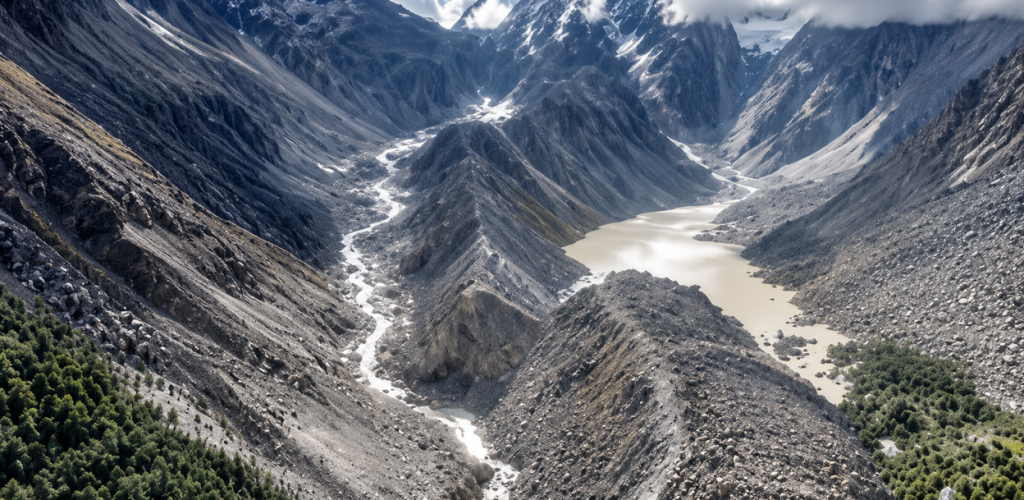
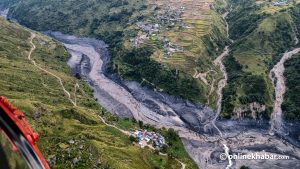
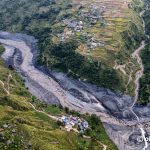
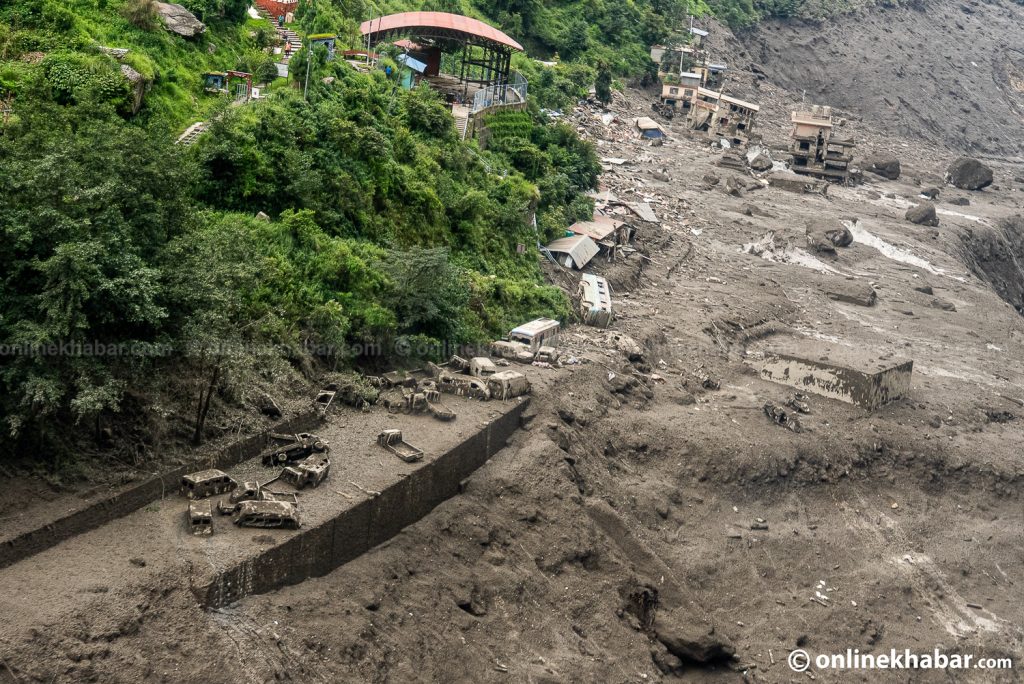
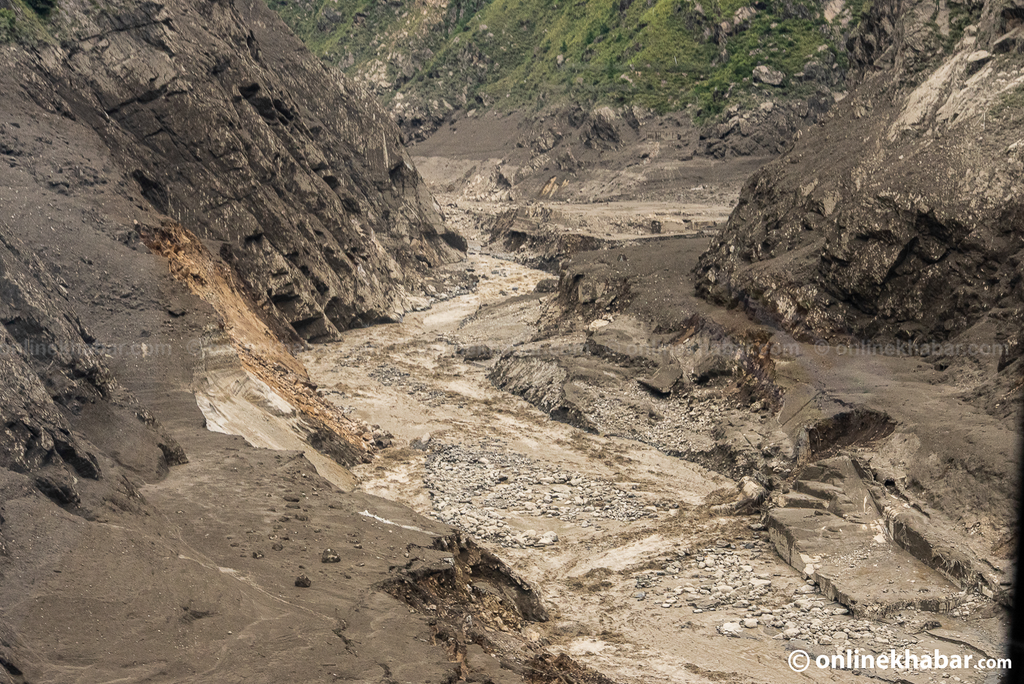
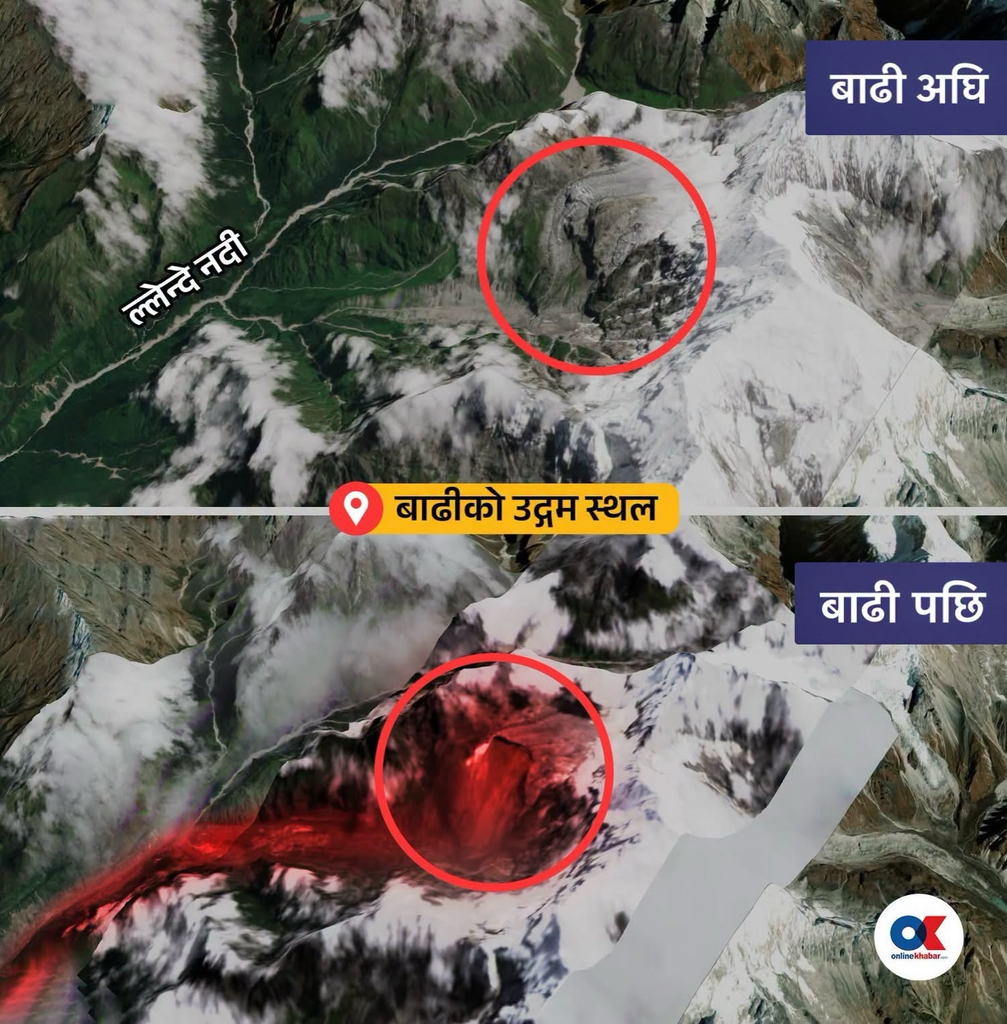
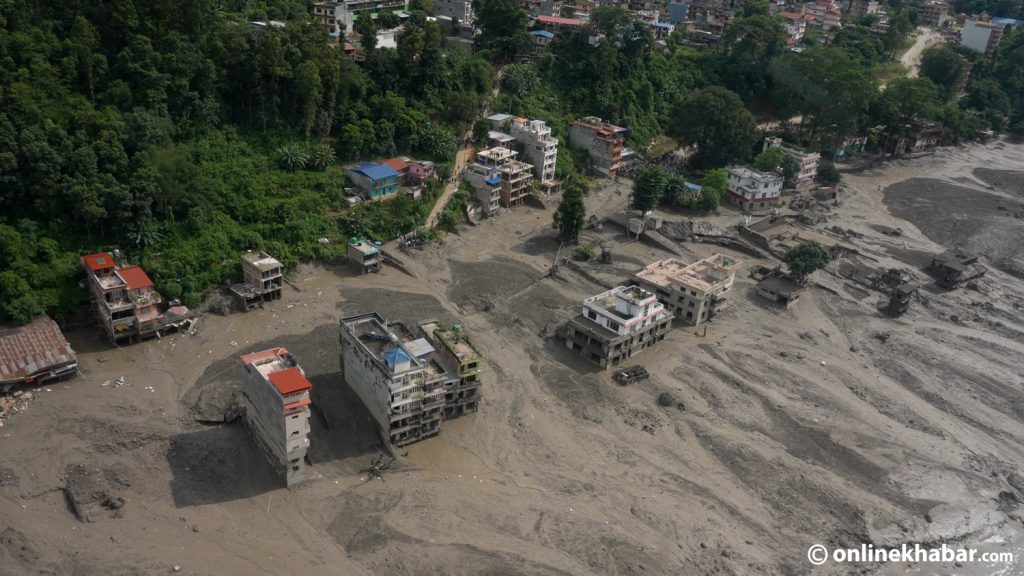
On August 26, a mass of ice and rock broke free near the summit of Langtang Lirung. It fell 5,200 meters into the Lhende Khola, a headwater stream on the Nepal-China border. The debris dammed the valley. The dam broke. A wall of mud and water tore down the Bhote Koshi and the Trishuli, and slammed into the Rasuwagadhi-Gyirong crossing twenty kilometers below.
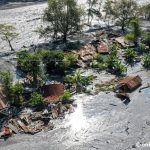
This is the deadliest transboundary disaster the Himalaya has seen in years. By the afternoon of August 29, Nepal counted 616 dead, up from 390 a day before. China counted five dead. More than 2,000 people are still missing on both sides. A new lake had formed above the wreckage, at the meeting of the Chhochen Khola and the Purepu Tsangpo. It held 2 million cubic meters of water. Three million more will arrive within three days. China’s Ministry of Water Resources has warned it could breach. A second flood may follow the first. However, the dam has broken, and the flow was less than expected. Both Nepal and China are monitoring the flow.
These are not political facts. They are physical facts. A natural disaster struck two nations at once. Neither chose it. Neither controls it. Both are burying their people because of it.
The lie

Within hours, a claim spread online. A “geological disaster dam,” it said, had collapsed on the Chinese side and sent the flood into Nepal. China’s embassy in Kathmandu called it what it was: fake news. “An earthquake or earthquake-like glacier collapse occurred on the Nepali side of the border,” the embassy said, “triggering huge mudslides.” Then it added the only sentence that matters here: “Accusation helps nothing. Cooperation saves lives.”
The science backs this without qualification. USGS first logged a magnitude-4.4 seismic signal and mistook it for an earthquake. It corrected itself. The signal was a magnitude-5.2 landslide — the shockwave of ice and rock hitting rock, not tectonic plates shifting. Satellite images confirm the scar on Langtang Lirung’s Nepali flank. The flood ran downhill, from Nepal into China, not the other way. Water does not run uphill. Debris does not cross a border against gravity to blame the victim on the other side. This is not a matter of opinion. It is a matter of physics.
Let this be stated without hedging: spreading an unverified, geographically impossible claim about a neighbor’s infrastructure, in the middle of an active rescue operation, is not journalism. It is not analysis. It is a lie, and lies do not save lives. Whoever profits from that lie — in clicks, in outrage, in strategic advantage — profits off bodies still being pulled from mud. That should disqualify the claim from serious conversation, full stop.
Nepal and China have built roads and trade links across this same mountain range for years. Those links save lives when disaster strikes, because they move relief supplies and rescue teams across a border in hours, not weeks. Anyone spreading disinformation to poison that cooperation is not defending Nepal. They are undermining it. The Nepali people deserve solidarity and support in this dire hour, not a flood of falsehoods designed to serve someone else’s rivalry with China.
The real question
Not every question is a lie. Some are fair, and fairness requires saying so plainly.
Some Nepali journalists have asked, by name, whether China’s satellite capacity could have caught the danger sooner. That is a legitimate question. It deserves a real answer, not a dismissal.
Here is the honest answer. Nepal’s hydrology department and China’s meteorological agency had already agreed to share information more closely before this disaster hit. The failure was not a total absence of cooperation. It was scope. It was speed. No system yet exists built to catch a fast-moving ice avalanche, far upstream, hours before it reaches a village. The gap was not warning capacity. It was timing.
That is a solvable problem. Solve it, and this becomes the last disaster of its kind that catches both countries unprepared. Wave it away as propaganda, and it becomes the next one too.
China showed up
On August 28, President Xi Jinping sent a message of condolence to Nepal’s President, Ram Chandra Poudel. “On behalf of the Chinese government and the Chinese people,” Xi wrote, he offered deep condolences to the victims and sympathy to the bereaved, the injured, and the affected. China was doing everything in its power, he said, to search for the missing, resettle the displaced, treat the wounded, and prevent further disaster — a direct reference to the swelling lake above the valley. “China and Nepal are connected by mountains and rivers,” Xi wrote, “and share a common destiny.” China would help “within its capacity.” The two peoples, he said, would “join hands to overcome the disaster and rebuild their homes.”
The same day, Premier Li Qiang sent his own message to Nepal’s Prime Minister, Balendra Shah — 36 years old, a former Kathmandu mayor, now facing the defining test of his young premiership.
These were not just words. Vice Premier Zhang Guoqing went to Gyirong to see the damage himself. Li Qiang followed him there, in person, to direct relief work and meet the people who lost everything. China’s embassy in Kathmandu opened emergency channels and sent supplies and funds to Nepal — while its own people were still searching for their missing. India sent aircraft, heavy equipment, and medicine. The United States offered help. The World Bank pledged roughly 25 billion Nepali rupees. None of this required a villain. A flood born of a melting glacier does not check passports. Ambassador Zhang Maoming said it plainly on August 27: mountains and rivers connect us. That is not a slogan. It is a description of geography, and geography does not lie.
Turn grief into cooperation
Every disaster is also a choice. Nepal and China can let this one become another round of blame that fades in a week. Or they can let it become the moment the region finally builds what it should have built years ago.
Ambassador Zhang has already named the path. First, real cross-border monitoring of glaciers, weather, and geology, so a warning moves as fast as the danger does. Second, a standing joint emergency-response mechanism, with open channels ready before disaster strikes, not negotiated while it unfolds. Third, shared training and shared technology, so the knowledge held in Beijing and Kathmandu reaches the district officer standing closest to the next collapsing glacier.
None of this is new in theory. It has been discussed for years across the Hindu Kush Himalaya. What is new is the cost of not doing it — measured now in hundreds of lives, and in a lake still filling above the Bhote Koshi as this is written. Let Langtang Lirung be the disaster that finally forces the decision. Let it be the catalyst, not the casus belli. The people who live in these mountains — Nepali and Chinese and Indian alike — share the same glaciers, the same rivers, and the same warming climate. They deserve leaders and neighbors who treat this as one shared emergency, not a contest to be won. That is the only response equal to what has been lost, and the only one that will do any good the next time a mountain falls.