

Kathmandu, September 3
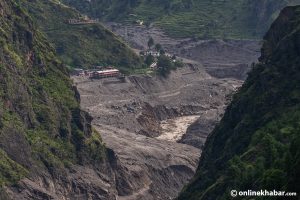
Experts have disputed Prime Minister Balen Shah’s claim that no country in the world has the expertise or technology needed to rescue people trapped inside tunnels filled with mud and debris following the Bhotekoshi flood.
Speaking in the House of Representatives on Thursday, Shah said the situation in Rasuwa was unlike previous tunnel disasters because the tunnels had been completely filled with floodwater, mud and silt.
Experts, however, say that while rescuing people from tunnels blocked by mud can be slow and technically difficult, it is incorrect to say that other countries lack the expertise or technology to undertake such operations.
They point to previous complex tunnel rescues in countries including India, China, Peru and Chile, where specialised equipment and techniques have been used to reach people trapped underground.
What did the prime minister say?
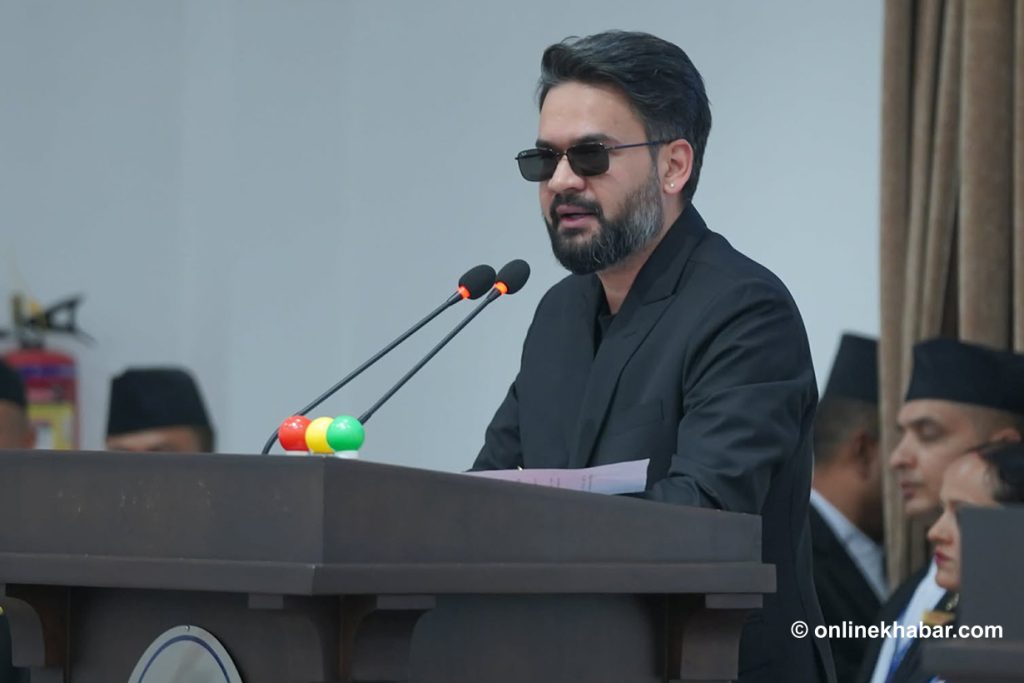
Shah described the Rasuwa disaster as an unusual type of tunnel emergency.
“Experts available around the world are capable of clearing landslides from tunnels and carrying out rescues. That expertise exists worldwide. But this is different because these are not tunnels blocked by landslides. Floodwater entered the tunnels and completely filled them with mud and silt. No country has extensive expertise in dealing with this kind of situation. We do not have it either. There is no technology available anywhere that can be used immediately,” he said.
Shah also suggested that rescue operations would only be possible once conditions inside the tunnels became suitable for people and equipment to enter.
He rejected criticism that more excavators should have been deployed simultaneously, saying the physical constraints of tunnel operations limited how many machines could work at once.
“You cannot operate four, five or 20 excavators in a single tunnel at the same time. Only one or two excavators can work inside a tunnel at a time. There is a limit,” Shah said.
What do the experts say?

Subash Chandra Sunuwar, an engineering geologist who has worked in Nepal’s hydropower sector for years, agrees that removing mud and debris from the tunnels will take time. But he disputes the prime minister’s claim that other countries do not have more advanced technology and expertise.
“Looking particularly at the tunnels of the Chilime and Upper Trishuli 3A projects, there is mud inside and it has to be removed gradually. That will take time. Rocks have also blocked the way, so you cannot simply go through at once,” Sunuwar said.
“But there are other technologies that have been developed around the world and have been used in rescues.”
He cited a 2012 incident in Peru, where nine workers became trapped about 200 metres underground after a tunnel collapsed. When it was found that opening the tunnel directly would not be possible, rescuers drilled from above using a small boring machine to reach them.
“Yes, Nepal doesn’t have these machines, but China and other countries do have them,” he said.
Sunuwar also pointed to tunnel rescues in India. At the Tapovan hydropower project, 12 of 20 people who went missing after a flood caused by a glacial lake outburst in 2021 were rescued. At the Silkyara tunnel in 2023, 41 workers trapped underground were successfully rescued.
In the Silkyara operation, rescuers were unable to reach the workers through the access tunnel because of rocks and mud. They used vertical drilling, horizontal pipe jacking and, eventually, manual “rat-hole” mining to reach and rescue the trapped workers.
Experts say China also has advanced equipment that can be used in such operations, including mobile dewatering pumps and micro-tunnel boring machines.
Sunuwar said the government should have considered bringing in private developers and specialists immediately if the initial rescue effort was proving inadequate.
“Once the government realised it could not carry out the operation, it should have immediately called in private developers and experts and moved to a Plan B. Different strategies could have been developed for each project,” he said.
“People are understandably angry when, after eight days without a rescue, such explanations are being given only now.”
He said private hydropower developers were given access to assist only after seven days.
“Too much time was lost. Once a tunnel is buried, it becomes completely dark. Even if people trapped in the mud are still alive, they cannot survive for many days. The rescue plan should have been prepared as quickly as possible, but that did not happen,” he said.
‘The technology exists’
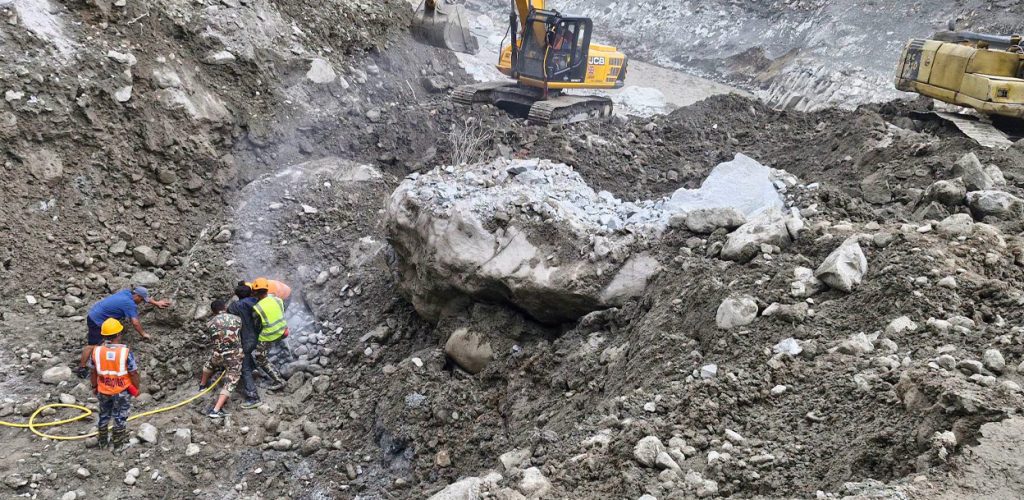
Udayaraj Neupane, a geotechnical engineer currently working in the field on the rescue operation at the Upper Trishuli 3A project, also said the prime minister’s statement was incorrect.
He agreed that the scale and nature of the disaster may be unprecedented, but said this did not mean that the world lacked technology for tunnel rescue.
“It is true that this particular kind of destruction has not occurred in other countries. But saying that rescue can only be carried out after the mud dries, and that there is no rescue technology or expertise anywhere in the world, is wrong,” Neupane said.
He said the world has advanced technologies for tunnel rescue and that failing to explore ways of bringing such technology to Nepal was unfortunate.
“The rescue process is essentially the same here and elsewhere, but the technology and expertise make a major difference,” he said. “Some use equipment made manually, while others use machines. It is the same principle here. Modern equipment makes the process faster, while older methods take longer.”
Neupane said Nepal was currently relying heavily on improvised methods.
“The prime minister was completely wrong. What is different is how the tunnels became filled with mud. The process of rescuing people from a mud-filled tunnel is the same around the world, and both the expertise and technology exist,” he said.
He also disputed the argument that deploying more excavators would not have helped.
“Excavators cannot be taken inside the tunnel to carry out the work. But to reach the mouth of the tunnel, it would have been better to use as much equipment as possible,” he said.
‘A wrong and irresponsible statement’

Subash Chandra Baral, president of the Nepal Engineers’ Association, said engineering solutions exist for even highly complex situations.
“The prime minister’s statement that there is no such expertise anywhere in the world and that rescue can only be carried out when conditions become favourable is completely wrong and irresponsible,” Baral said.
He accused the government of delaying rescue efforts under various pretexts.
“They did not know how to carry out the rescue, they failed to prepare, they made mistakes and now they are shifting the blame to others,” he said.
Baral said engineers had sought from the day of the flood to bring in expertise and equipment available both in Nepal and abroad, but claimed the government did not listen.
“There seems to be a mindset that what they have done is right and that there is no need to seek help from others. It is deeply unfortunate that they are being irresponsible in an attempt to cover up their mistakes,” he said.
At the same time, Baral said those involved in the ongoing rescue effort, including security personnel, should be encouraged rather than blamed for the slow progress.
“Instead of saying this was not done or that was not done, all our institutions should focus on encouraging those who are working in the rescue effort,” he said.
‘The technology is there’
Bijayman Bhattarai, a promoter of the Langtang Hydropower Project, said it was particularly troubling for a young prime minister to make such a claim in a country with extensive hydropower development.
“It is fine to say that we do not have it, that it is new for us and that we have learned from it. But saying that such technology does not exist anywhere in the world is completely wrong. The technology is available in sufficient measure around the world,” he said.
Bhattarai said his technical team, working with the Nepal Army, had managed to cut through a penstock pipe in seven to eight hours to create access towards the area where workers are believed to be trapped.
Around 25 workers are estimated to be trapped inside the tunnel at the project.
“Now the Nepal Army can enter and find out what condition those people are in. We may know the situation by tomorrow afternoon,” he said.