Bharatpur, September 3
For three days, Anil Yadav of Bhairahawa has barely let go of his phone.
On its screen is a photograph of a dead body. He looks at it repeatedly, showing it to people around him and telling them: “This is my person.”
Anil says he identified the body as that of his brother from the photograph on August 29. But he did not immediately tell the rest of his family, fearing it would cause them further pain.
He travelled to Chitwan with relatives to understand the process of taking his brother’s body home. Three days later, he is still waiting.
Anil says he is certain of the identification from the face. Police, however, have been handing over bodies to relatives only after DNA testing.
He repeatedly approaches police officers at the identification centre.
“I have been telling you since that day that this is my relative,” he says.
Other members of his family have also looked at the photograph and identified the body as his brother’s.
“My family is waiting at home to perform the last rites. I am here waiting for the DNA report,” Anil says.
For the family, the certainty that they have found their missing relative has not brought closure. Instead, the wait to take the body home has prolonged their grief.
‘Look at the face, the chin’
Man Bahadur Lama of Gorkha is facing a similar wait.
After learning that his son, who went missing from Timure in Rasuwa, had been found in Chitwan, he travelled to the body identification centre with his granddaughter.
Showing the photograph on his phone, Lama says the face is unmistakably his son’s.
“Look at the face, look at the chin. His lips are exactly the same,” he says.
But he has not been allowed to take the body home.
Confused about why, he has been trying to understand the procedure from police officers and volunteers working at the identification centre.
“Look at my son’s photograph. It matches exactly,” he said on Wednesday.
Families have been identifying bodies based on photographs, clothing, jewellery and other physical characteristics. But these forms of identification are not considered sufficient for the formal handover of the bodies.
Police say they are being particularly cautious because of the sensitivity of the situation. DNA testing has been made the final basis for identification to prevent a body from being handed over to the wrong family.
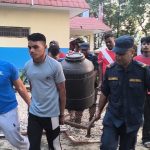
Police Sub-Inspector Hari Dhakal, who is working at the body identification centre, has been explaining the process to relatives such as Anil and Man Bahadur.
“Although a body may be identified initially, DNA testing is necessary for its formal handover,” Dhakal says.
He says the bodies cannot be handed over until the DNA reports are received.
The situation has created a painful gap between what families believe they already know and the scientific and legal process authorities say they must follow.
Hundreds of bodies, hundreds still missing
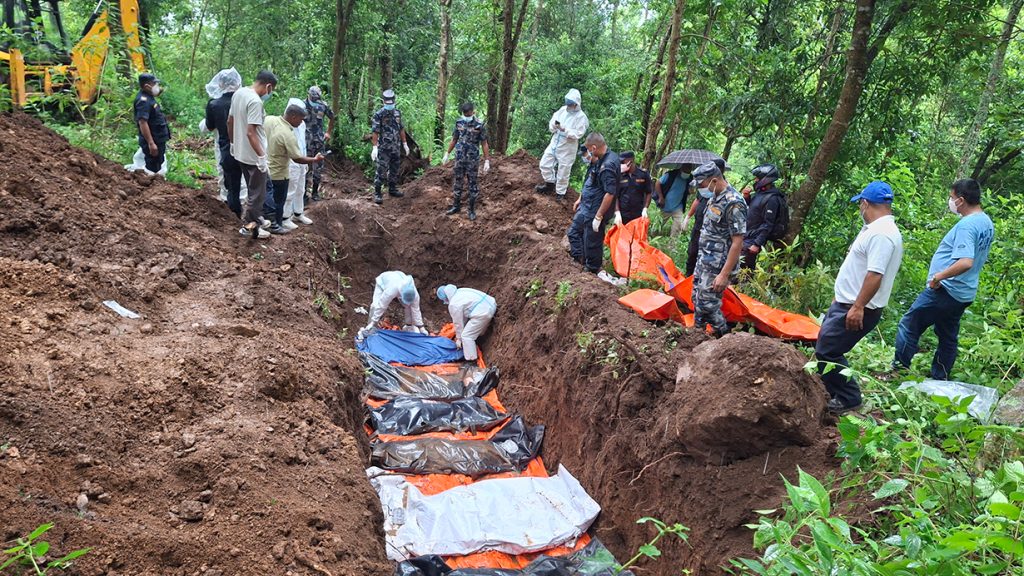
Of the 355 bodies recovered in Chitwan, only 12 have so far been formally identified.
Police say the number of families claiming to have recognised their missing relatives from photographs is also increasing.
So far, 836 people have registered with police in Chitwan as missing relatives.
As the number of affected families grows, authorities are facing increasing pressure to identify bodies, collect samples and manage the remains.
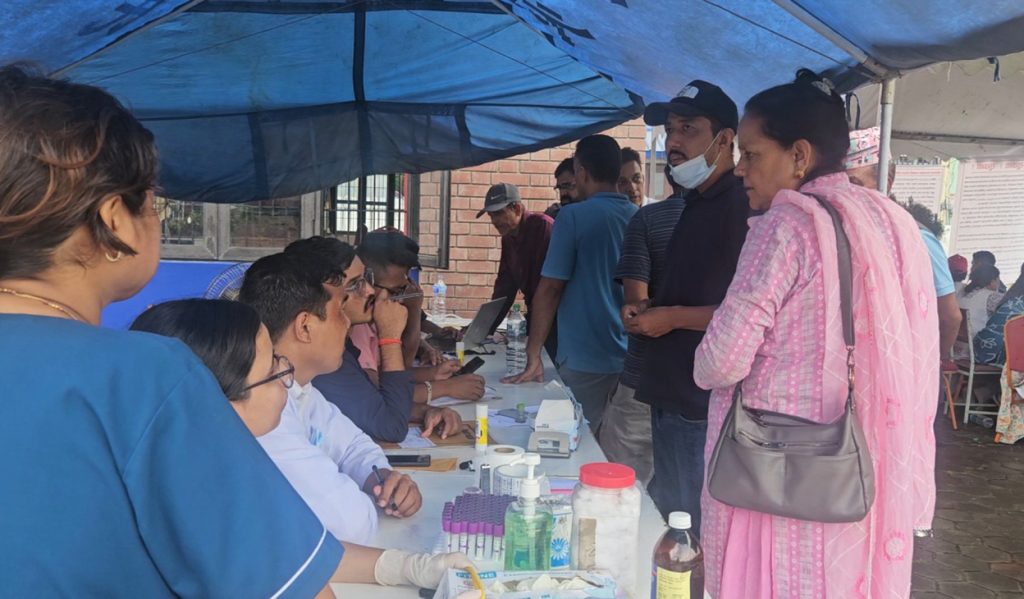
DNA sample collection began in Chitwan on August 31. The process is being carried out in coordination with the Bagmati Province Public Health Laboratory’s Bhaktapur unit office in Bharatpur, the District Public Health Office and Bharatpur Government Hospital.
According to Chitwan District Police Office information officer DSP Chandrabhushan Yadav, DNA samples from 25 people were collected over two days.
The samples will be sent to Kathmandu for testing, and the results will be returned after the testing process is completed there.
Yadav says the need to send samples to Kathmandu means the process may take some time.
For the families waiting to take their loved ones home, however, that “some time” can feel much longer.
Yadav says the reports could take two to three months to arrive.
Until then, families such as Anil’s and Man Bahadur’s remain caught between recognition and confirmation — convinced they have found their loved ones, but unable to bring them home for the final rites.