Kathmandu, September 1
The rescue of a 6-year-old girl who had been buried under mud on Friday in Timure, Gosaikunda Rural Municipality-2, Rasuwa, drew widespread attention.
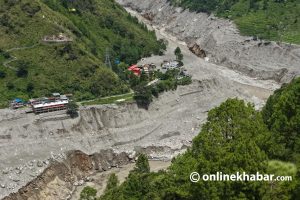
Sixty-two hours after the flood struck Bhotekoshi, many had already begun to lose hope. It was at that moment that an Armed Police team on rescue duty heard a small voice from beneath the mud: “Mommy, mommy.”
That voice created a moment worth remembering in Nepal’s history of emergency rescue operations.
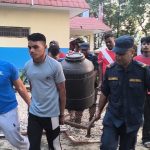
Inspector Sanju Khatri of the Armed Police Force’s 20th Battalion (Disaster Rescue Battalion), Sinamangal, Kathmandu, who led the rescue team, described his experience:
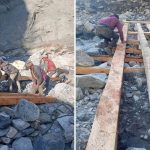
As soon as the incident happened, we were on standby within five minutes. We reached Dhunche in Rasuwa by helicopter from Kathmandu in about an hour, and from there we set out for Timure. Around 50 of us reached the site, including 9 personnel trained in special disaster rescue, and we were deployed for search and rescue work in Timure.
Our priority was to get out those who were still alive. In that process, we rescued about 350 people trapped there by helicopter and sent them to Dhunche. Among them were many people we brought to safety, ranging from Indian pilgrims headed to Mansarovar to Chinese nationals.
About 62 hours after the incident, while continuing the search, we heard a girl’s voice. As soon as our team heard the voice saying ‘Mommy, mommy,’ we immediately started searching in that direction. At that time, the area was buried under mud and wood, with nothing visible on the surface.
We searched using only the voice as our guide, and eventually we managed to bring the roughly 6-year-old girl out safely.
We immediately tried to inform our unit stationed at Dhunche, but since there was no communication signal there, we climbed up for about half an hour and sent the information by radio set. But because the weather was bad, the girl could not be taken out by helicopter that day.
We kept her safe and slowly began taking care of her. We assigned two members to look after her through the night. Gradually she became more alert and started talking back and forth, but she was very frightened.
Our biggest challenge was how to get her to a hospital safely. The weather remained bad the next morning as well. The helicopter was only able to fly around 1:30 in the afternoon, after which we brought the girl safely to a hospital in Kathmandu.
After we got the girl out, our entire team was overjoyed. Despite so many difficulties, we succeeded in saving her life.