Kathmandu, August 29
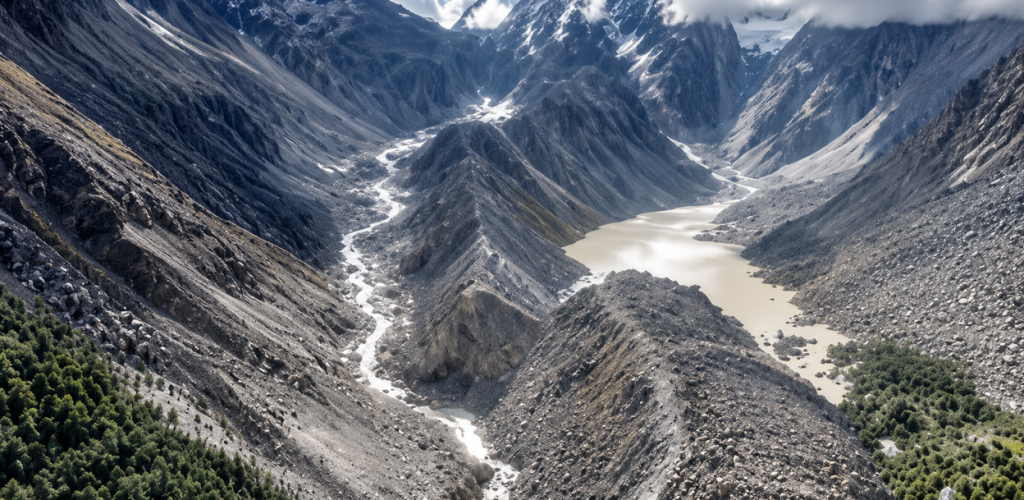
The immediate risk of a lake burst from a water body formed after an ice-rock avalanche in Rasuwa has decreased, according to technical experts.
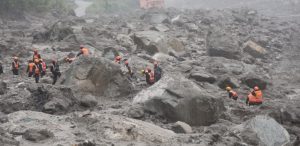
The Department of Hydrology and Meteorology said the possibility of the lake suddenly bursting has reduced after water began flowing out naturally. Experts have also warned that rumours of an imminent lake burst have affected ongoing search and rescue operations in downstream areas.
Binod Parajuli, chief of the Flood Forecasting Division at the department, said the risk of a sudden breach has declined as the newly formed lake has already started overflowing.
“Normally, unstable lakes burst soon after filling up. This lake has filled and started releasing water, and more than 24 hours have passed without a breach,” Parajuli said. “Once water begins flowing out, the possibility of the lake bursting decreases.”
Geologist Shri Kamal Dwivedi, who works at the Secretariat of the Water and Energy Commission, said the water body formed in a depression created after an ice-rock fall should not necessarily be considered a lake at risk of bursting.
“Water filling a depression and flowing out is different from a lake bursting,” Dwivedi said, adding that unnecessary rumours about a possible flood had affected rescue and search operations downstream.
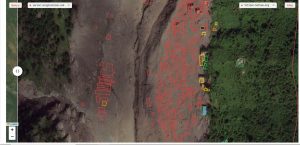
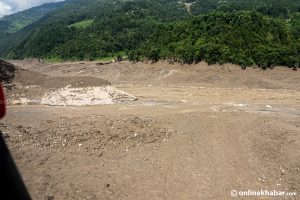
After Wednesday’s devastating flood, a drone survey conducted by China in the northern region of Langtang Lirung identified two water bodies — one at around 4,000 metres above sea level and another in the upper section of Lhende Khola.
At the time, both water bodies were considered potentially risky as water levels were rising. However, recent images and data show that one outlet has opened and water is gradually draining, according to officials.
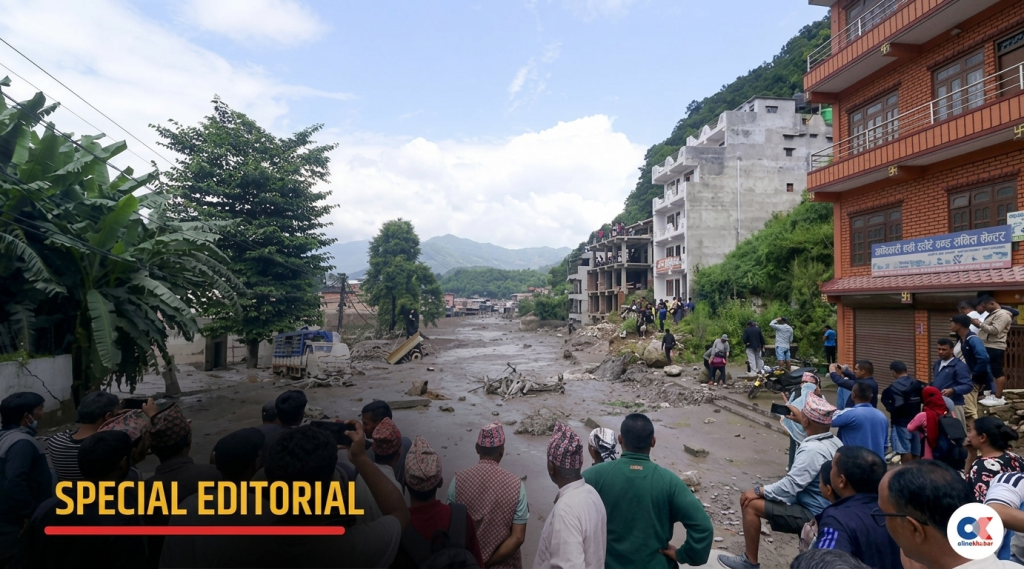
Experts estimate the two water bodies hold around 50,000 cubic metres of water. They said even in the worst-case scenario, a possible breach would not produce a flood as destructive as the one seen last Wednesday, when an estimated 20 million cubic metres of water and debris swept downstream.
Parajuli said the current concern is that fresh landslides could fall into the water bodies and trigger renewed flooding.
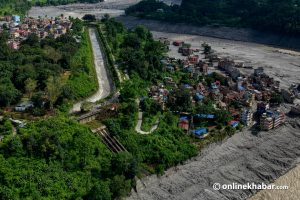
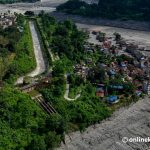
“The flood debris from Wednesday has already raised the riverbed. If another flood occurs, there could be risks along the riverbanks,” he said.
Experts said further monitoring of the water bodies, including their depth and volume, is ongoing through satellite images and drone data. While the immediate threat has decreased, authorities have advised continued vigilance.