Kathmandu, August 26
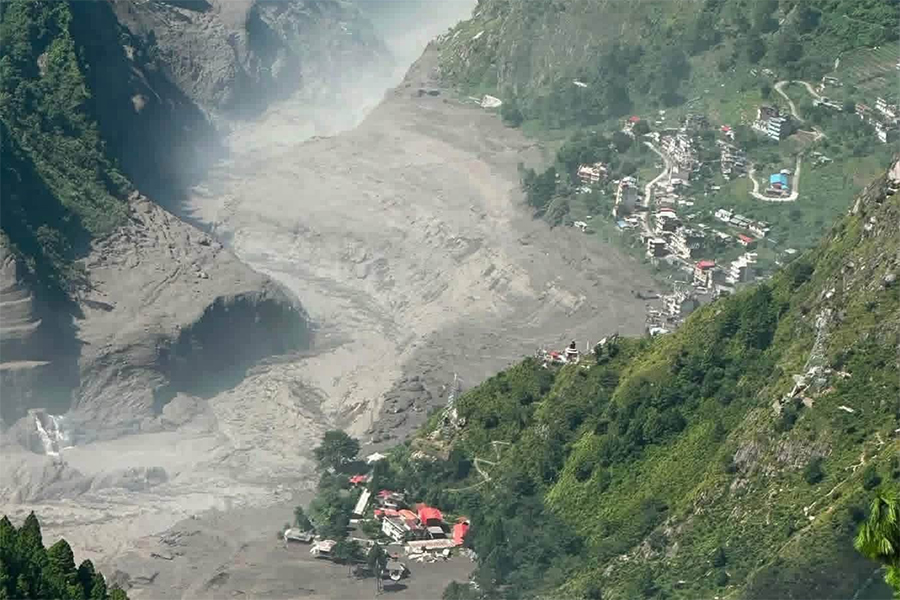
The cause of the devastating flood in Rasuwa’s Bhote Koshi River remains unclear, with experts suggesting that a glacial lake outburst, avalanche or failure of a natural river blockage may have triggered the sudden surge.
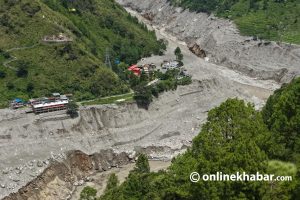
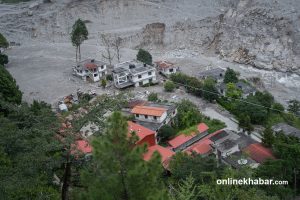
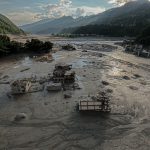
The flood struck at around 9am on Wednesday, causing extensive damage in areas including Rasuwagadhi Customs Office, Syaphrubesi, Betrawati, Trishuli and Timure.
Authorities have yet to establish the exact cause of the Rasuwa flood, while no official information has been received from the Chinese side.
Geography professor Narendra Raj Khanal, who has studied floods and landslides, said an avalanche in Tibet could have triggered the flood.
“Only an initial assessment can be made at this point. We have not yet received official information from the Chinese side,” Khanal said. “The flood may have been caused by a slow avalanche.”
Information officer at the Department of Hydrology and Meteorology Dinkar Kayastha said a glacial lake outburst is among the preliminary possibilities being considered.
“The exact cause has not yet been established. Our preliminary assessment is that a glacial lake may have burst. We will issue a statement once the actual cause is established,” Kayastha said.
He also warned that the flood could reach Devghat in Chitwan within one to two hours, urging people in areas including Muglin and Narayangadh to remain on high alert.
Geologist Ranjan Kumar Dahal said the volume of water suggested that the Rasuwa flood was unlikely to have been caused by the blockage of a small stream.
“Looking at the flood, it appears that a lake has burst. But it is not possible to say which lake. It appears that an avalanche occurred and a lake also burst,” Dahal said.
Researcher and author Madhukar Upadhyay, who has studied the relationship between water and landslides, also said a glacial lake could be responsible.
“This is unimaginable destruction. This may have been caused by a glacial lake,” Upadhyay said.
Geologist Shrikamal Dwivedi suggested another possibility: melting permafrost in the Himalayan region.
He said prolonged light rainfall, even without heavy precipitation, could cause ice-bound soil and rocks on steep Himalayan slopes to melt and flow downhill.
“Even if there has not been heavy rainfall, continuous light rain could melt the soil and rocks held together by ice in the Himalayan slopes, known as permafrost, potentially triggering a glacial flood,” Dwivedi said.
The actual cause of the sudden Rasuwa flood, however, remains to be confirmed.