Kathmandu, July 23
The bird flu outbreak that spread across several parts of Nepal and severely affected poultry farmers has now come under control, according to the Department of Livestock Services.
The department said no new cases of bird flu have been detected anywhere in the country since Shrawan 1 (July 17). Director General Dr Umesh Dahal stated that the disease is now fully under control.
The most recent case was confirmed in Sundarijal, Gokarneshwor-1, Kathmandu. Since then, no additional infections have been reported. To minimise any remaining risk, the department has intensified laboratory testing by collecting samples from areas surrounding previously affected sites.
The latest outbreak was first confirmed on March 17, 2026 (Chaitra 4, 2082) in Urlabari-8 and Sundarharaicha-4 of Morang district before spreading to 11 districts across the country.
According to the department, the disease has now been completely contained in all seven affected districts outside the Kathmandu Valley. Within the valley and neighbouring Kavrepalanchok district, infections had been detected at a total of 119 locations—32 in Kathmandu, 15 in Lalitpur (including the Central Zoo), 45 in Bhaktapur, and 27 in Kavrepalanchok.
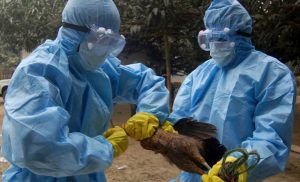
As part of the containment effort, the government culled 835,563 birds nationwide. Senior Veterinary Officer Dr Mukul Upadhyay said authorities also safely destroyed 1,165,663 eggs and 245,035 kilograms of poultry feed.
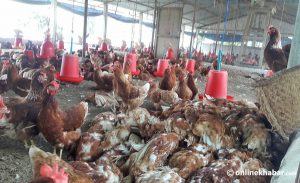
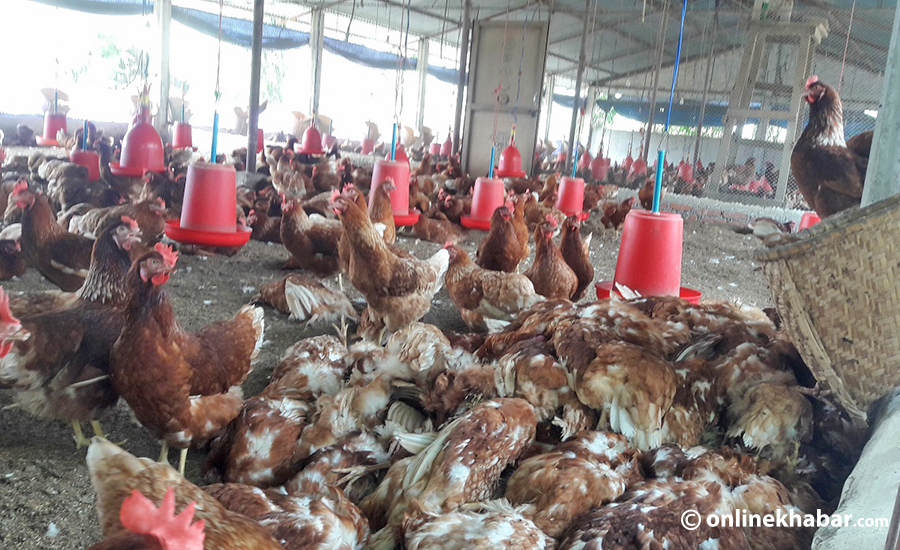
In the Kathmandu Valley and Kavrepalanchok alone, 367,835 birds were culled. Commercial layer chickens were the hardest hit, while broilers, local chickens, ducks, turkeys, and pheasants also suffered losses.
To support affected farmers, the government allocated Rs. 520 million in compensation. According to Dr Dahal, about Rs. 507.1 million has already been distributed to 104 farmers and poultry farms whose birds were destroyed.
Dr Upadhyay attributed the successful containment of the outbreak to the government’s prompt response, expanded laboratory testing, and the full cooperation of poultry farmers. He said the likelihood of further transmission is now very low.
With the outbreak under control, consumption of chicken meat and eggs has begun to recover. The department said poultry farmers, who had suffered heavy losses due to falling prices and unsold chicks during the outbreak, are now starting to receive fair market prices as demand returns.