
Nepal’s highland rangelands, locally known as Khark, are among the country’s most valuable yet underappreciated natural assets. Stretching across the Himalayas, mid-hills, and parts of the Chure region, these vast landscapes support traditional livestock production, conserve biodiversity, protect watersheds, and sustain the livelihoods of thousands of mountain households.
Far beyond being open grazing areas, rangelands are complex ecological systems that connect livestock, communities, culture, and the environment. They represent the foundation of Nepal’s mountain economy and play a critical role in maintaining ecological balance in some of the world’s most fragile landscapes. Technically, rangelands include natural grasslands, community grazing areas, shrublands, and open vegetation systems, mainly distributed across high-altitude and mountainous regions. For centuries, these ecosystems have provided nutritious forage, medicinal plants, and essential resources for indigenous livestock production systems.
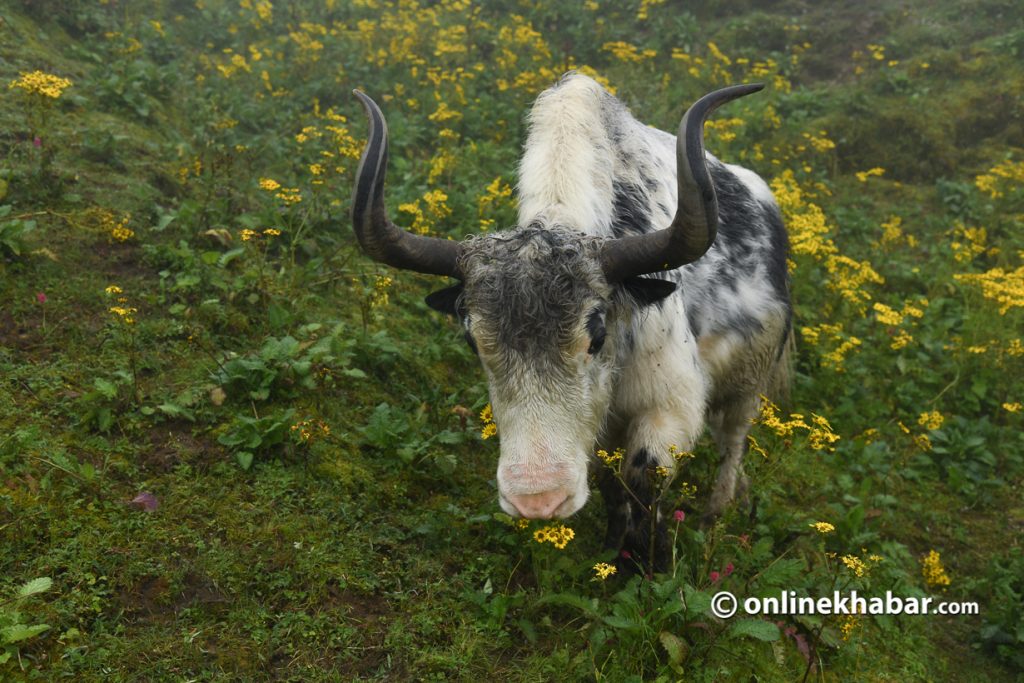
Yak, chauri, sheep, goats, cattle, and other livestock depend heavily on these grazing resources, making rangelands indispensable for pastoral communities. The importance of rangelands extends well beyond livestock production. They support value chains for premium mountain products such as Chhurpi (hard Himalayan cheese), wool, pashmina, organic dairy products, and high-quality mountain meat. When managed scientifically, these ecosystems can improve livestock productivity, reduce dependence on imported feed, create rural employment, and contribute significantly to national food and nutrition security.
National and ecological importance
Recognising their strategic importance, the Government of Nepal introduced the Rangeland Policy, 2068 (2011), which defines rangelands as natural grazing ecosystems consisting of grasslands, shrubs, and open vegetation. Approximately 22.6 per cent of Nepal’s total land area, covering nearly 3.3 million hectares, is classified as rangeland.
The majority lies in the high Himalayan region, although significant areas are also found in the mid-hills and Chure landscapes. Rangelands provide numerous ecosystem services essential for environmental sustainability. They function as important carbon sinks, helping mitigate climate change impacts. Their vegetation and soil improve water infiltration, recharge groundwater, and maintain the flow of springs and rivers that support downstream communities.
Healthy rangelands also reduce soil erosion, stabilise fragile mountain slopes, and provide habitats for diverse plant and animal species, including many rare and endangered species. Therefore, conserving and restoring rangelands represents a nature-based solution that balances environmental protection with sustainable agricultural development.
Growing challenges facing Nepal’s rangelands
Despite their ecological and economic significance, Nepal’s rangelands are facing increasing pressures from environmental change and human activities. One of the major challenges is overgrazing. In many areas, livestock numbers exceed the carrying capacity of available pasture resources. Continuous and uncontrolled grazing reduces the regeneration capacity of desirable forage species, accelerates land degradation, and gradually decreases pasture productivity. Climate change has further intensified these challenges. Rising temperatures, changing rainfall patterns, prolonged droughts, and increasing wildfire frequency are altering mountain ecosystems.
Many nutritious native grasses are declining, while invasive shrubs and less palatable plant species are expanding into productive grazing areas. Institutional fragmentation is another major concern. Rangeland management responsibilities are distributed among multiple agencies, including forestry authorities, protected area administrations, local governments, and livestock development institutions. Limited coordination among these stakeholders often results in fragmented planning and weak implementation.
The decline of traditional transhumance systems is also affecting rangeland sustainability. For generations, pastoral communities practised seasonal livestock migration between lower valleys and high-altitude summer pastures. This system allowed grazing areas to recover naturally and maintained ecological balance. However, labour shortages, youth migration, and changing livelihood aspirations have weakened these traditional management practices.
Rangelands and Himalayan economy
The economy of Nepal’s Himalayan region is closely linked with the productivity and health of its rangelands. Mountain districts such as Mustang, Manang, Dolpa, Humla, Mugu, Jumla, Solukhumbu, and Taplejung rely heavily on livestock-based livelihoods supported by extensive grazing systems. Yak, chauri, sheep, and mountain goats provide income, nutrition, employment, and cultural identity to local communities.
These animals also contribute to unique mountain products, including fine pashmina, premium wool, Chhurpi, yak cheese, butter, and naturally raised mountain meat. With improved processing, branding, certification, and market access, these products have significant potential to replace imports and increase Nepal’s agricultural exports. Rangelands, therefore, should not be viewed only as grazing areas but as productive landscapes capable of supporting high-value agricultural enterprises.
The Government’s Rangeland Policy emphasises community-based management by encouraging local participation in conservation and sustainable utilisation. Such approaches can simultaneously improve biodiversity conservation, enhance pasture productivity, promote eco-tourism, and strengthen rural livelihoods. A practical strategy for improving rangeland-based livestock production is the establishment of fodder banks. Scientific production and storage of nutritious forage, hay, silage, and mineral supplements can help overcome seasonal feed shortages during winter, droughts, and other emergencies.
Similarly, the concept of Farm to Fashion offers promising opportunities for value addition. Instead of exporting raw wool and pashmina, Nepal can invest in local processing and manufacturing of high-value textile products. This can generate rural employment, increase farmer income, and improve competitiveness in international markets. Scientific livestock nutrition must also become an essential component of rangeland management. Regular assessment of pasture nutritive value, feed quality evaluation, and livestock nutrition audits can help determine appropriate grazing strategies and dietary requirements for different livestock groups. Evidence-based nutrition management can improve productivity while reducing pressure on fragile ecosystems.
Learning from international experiences
Several countries with pastoral traditions have demonstrated that sustainable rangeland management is achievable through a combination of indigenous knowledge, scientific innovation, community participation, and supportive policies. Jordan provides an important example through the revitalisation of its traditional Hima system, which integrates local knowledge with modern rangeland science. The approach promotes rotational grazing, allowing pasturelands to recover naturally while preventing degradation.
Community participation, supported by technologies such as Geographic Information Systems (GIS), remote sensing, and ecological monitoring, has improved forage productivity, biodiversity conservation, and soil protection. Nepal can also learn valuable lessons from Bhutan, where community-based rangeland management has been successfully combined with scientific planning and equitable resource governance. Seasonal livestock migration, regulated grazing systems, and community participation help maintain grazing pressure within ecological limits.
Bhutan’s rotational block grazing system ensures fair access to pasture resources while preventing excessive use of productive grazing areas. Livestock numbers are determined according to pasture productivity and forage availability, encouraging farmers to improve animal performance rather than simply increasing herd size. Environmental conservation is integrated into grazing management through the protection of sensitive habitats and the establishment of restricted grazing areas for ecological recovery.
These efforts support biodiversity conservation and enhance opportunities for nature-based tourism. Bhutan has also developed community-based mechanisms for resolving conflicts related to grazing rights and water resources. Such systems strengthen local ownership, reduce administrative burdens, and improve cooperation among resource users. These international experiences demonstrate that rangelands are strategic natural assets requiring scientific, inclusive, and adaptive management. Their sustainability depends on maintaining a balance between livestock production, biodiversity conservation, climate resilience, and community participation.
The way forward
The future of Nepal’s rangelands depends on a coordinated national strategy that integrates scientific research, policy reform, community stewardship, and private-sector investment. Priority actions should include:
- Restoration of degraded pastures
- Promotion of rotational grazing systems
- Establishment of fodder banks and pasture seed production programs
- Regular livestock nutrition audits and feed quality assessment
- Development of climate-resilient forage species
- Digital monitoring of rangeland resources using modern technologies
- Strengthening value chains for wool, pashmina, dairy, and organic livestock products
Investment in pasture improvement and community-based management institutions will enhance both livestock productivity and ecosystem resilience. Strong collaboration among research organisations, government agencies, local governments, conservation organisations, and pastoral communities is essential for evidence-based rangeland governance.
Nepal’s rangelands are far more than grazing lands. They are multifunctional ecosystems that sustain biodiversity, protect watersheds, preserve cultural heritage, and support the livelihoods of mountain communities. Their contribution extends from livestock production and food security to environmental conservation and economic development. With scientific management, community participation, and effective policy implementation, Nepal’s rangelands can become powerful engines of sustainable rural growth.
The knowledge required for this transformation already exists in the traditional wisdom of pastoral communities and in successful international practices. The challenge is to integrate this knowledge with modern science, innovative technologies, and strong institutions. If Nepal acts strategically, its rangelands can become a foundation of a resilient Himalayan economy, ensuring ecological sustainability, improved livelihoods, and prosperity for generations to come.