File
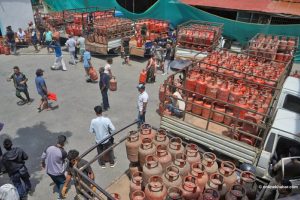
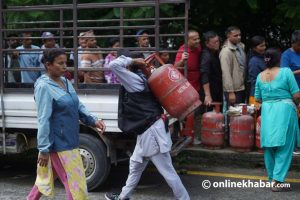
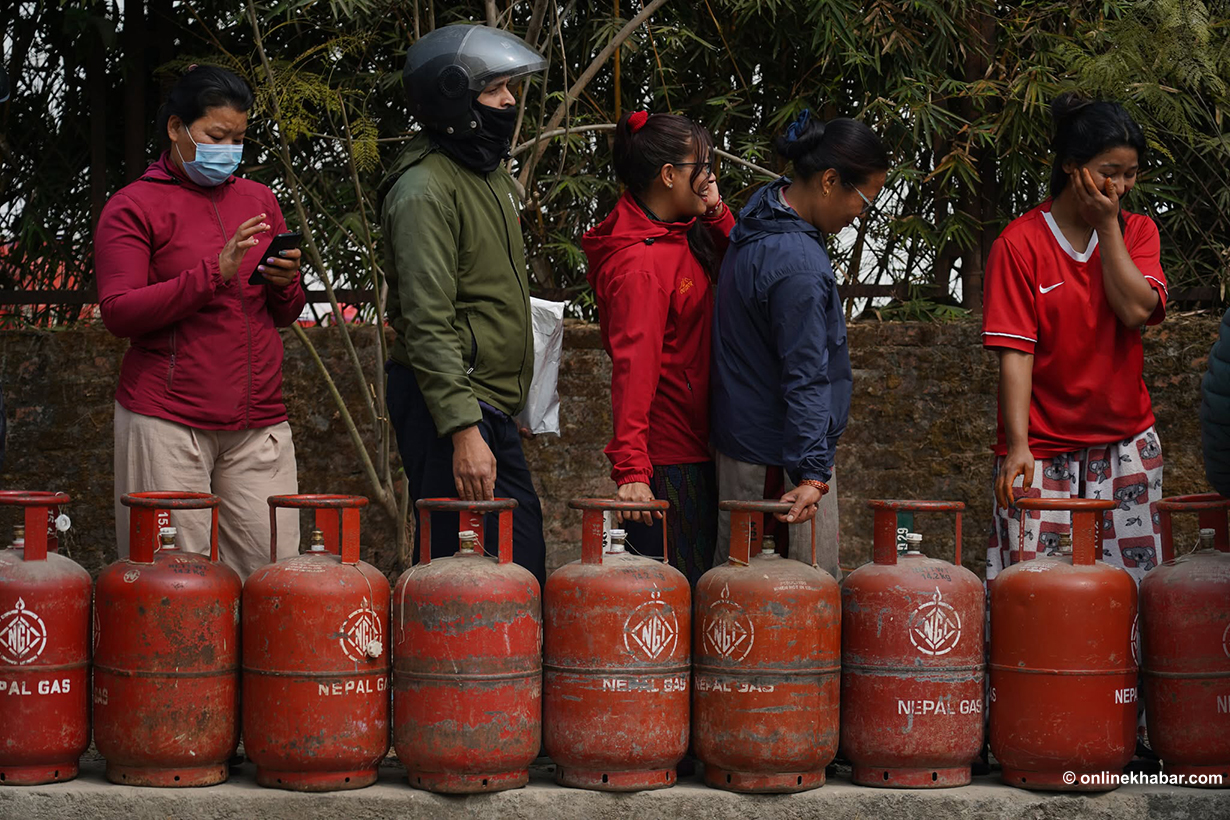
The government has acknowledged challenges in managing the supply of cooking gas due to the Nepal Oil Corporation’s (NOC) lack of storage facilities and the limited storage capacity of private gas industries.
Speaking at a meeting of the Industry, Commerce, Labour and Consumer Welfare Committee on Wednesday, Ministry Secretary Krishna Bahadur Raut said the shortage of storage infrastructure has made it difficult to ensure a stable supply of liquefied petroleum (LP) gas.
According to Raut, there are currently 58 LPG bottling plants operating across the country. Together, they have the capacity to fill 162,000 cylinders per day, while the average daily sale stands at around 110,000 cylinders.
He said the combined storage capacity of all gas industries is only 10,166 metric tonnes, while the Nepal Oil Corporation has no dedicated LPG storage facility of its own, creating significant challenges in supply management.
Raut also pointed to the limited number of LPG bullet tankers as another major constraint. At present, around 700 LPG bullet tankers are either in transit or on standby, disrupting the loading process in India.
He clarified that LPG supplied for industrial use is sold at cost price, meaning the Nepal Oil Corporation does not incur any losses on those sales. He added that the ministry is working to strengthen supply management in anticipation of increased demand during the upcoming festive season and winter months, while also addressing the disruptions caused by the large number of LPG bullet tankers tied up in transit and standby operations.