Photos: Gavin Paul McCormack
Late at night, after days of travel through landslides, collapsed bridges, jungle roads and freezing mountain passes, a small convoy finally reached the Jumla Valley in western Nepal. There were no streetlights, no paved roads, and no sense of urgency from those waiting. Time, here, moves differently. Local municipality leaders had been waiting for several days. The exact arrival time did not matter. What mattered was that the journey had been made.
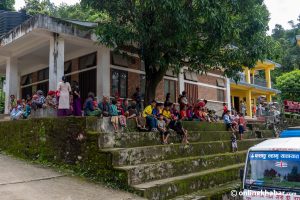
Guided by moonlight, the visitors began the final ascent on foot, climbing the steep mountain path to a government school that sits far above the river below. Scarves were placed gently around their necks. Tika was pressed onto foreheads. Hot water was offered without hesitation. Exhaustion dissolved into quiet gratitude. For many in the village, this was the first time outsiders had ever come so far, not to observe, but to work.
A journey that began long before the road
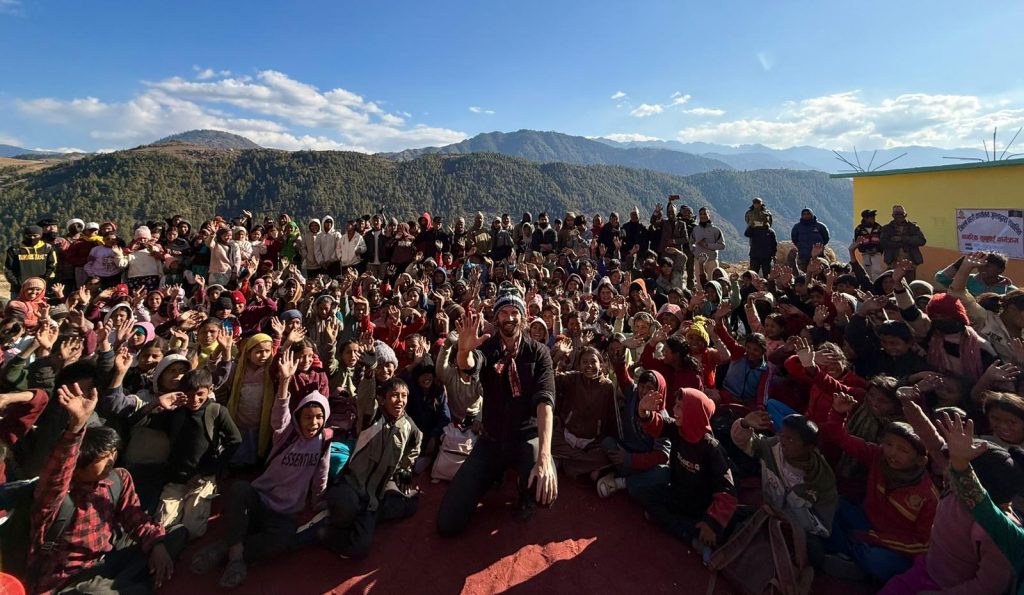
The project was led by Gavin Paul McCormack, an international educator who has worked in Nepal for more than a decade, building schools, libraries, and teacher training centres. Mana Rishi Dhital, Anand Devkota, Ram Chbadra Bhattarai, and Bidhan Dhital joined him.
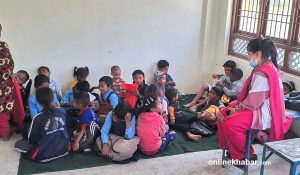
The work in Jumla did not begin with construction. It began months earlier with a photograph—a group of orphaned children sitting on a thin blanket laid over a concrete floor. No desks. No books. No learning materials. Only a small whiteboard leaning against a damp wall. For McCormack, once those children were known, they could not be unknown.
Over the following months, books were collected one by one. Funds were quietly raised. Supplies were sourced. Relationships were activated. Nearly seven thousand books slowly filled a garage thousands of kilometres away, waiting for a school most people had never heard of.
Kathmandu to Karnali
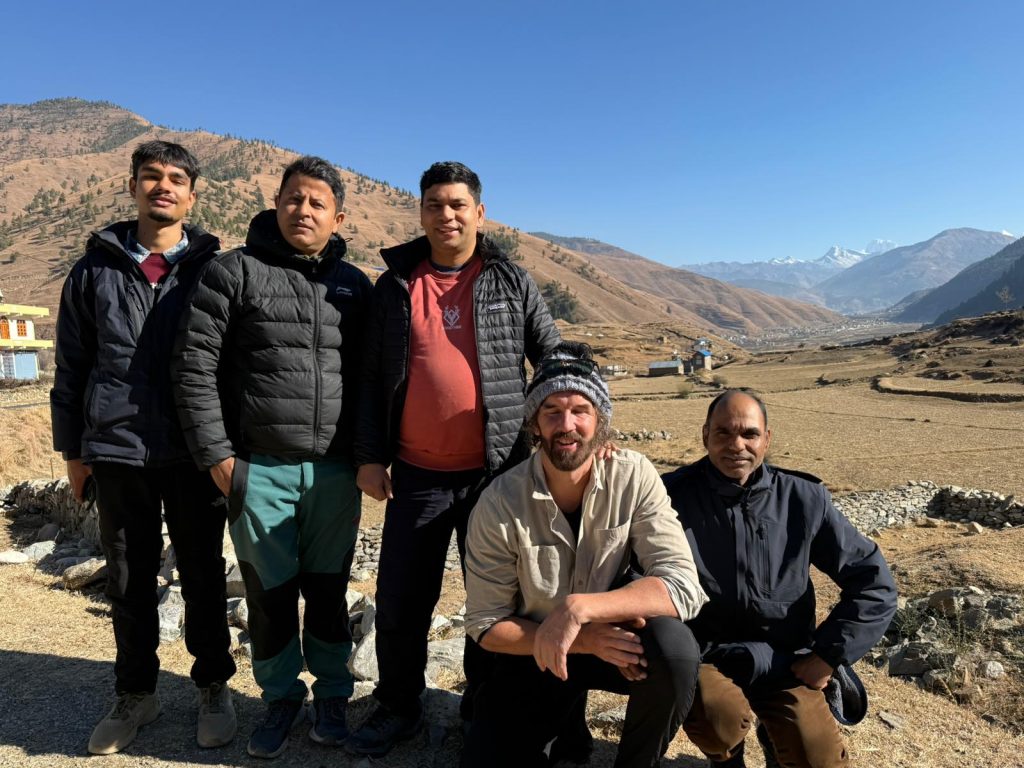
The team arrived in Nepal on day one, welcomed at the airport by people McCormack describes not as colleagues or contacts, but as family. “Nepal is no longer a place I visit,” he said. “It is a place I belong.”
Day two was spent in the back streets of Kathmandu purchasing materials. Paint, timber, carpets, tables, chairs, heaters, nails, pencils. In a small warehouse, a woman who has supported similar projects for years quietly reduced her prices when she learned the materials were going to children in Jumla. She was not asked. She simply believed in the purpose.
Later that day, the books were loaded onto a jeep, ready for the long journey into the Himalayas.
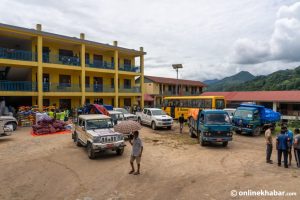
The drive began on day three. What was planned as a twelve-hour journey quickly became something else entirely. On day four, the team was stopped by police under suspicion of a fatal road accident involving a vehicle identical to theirs. Hours later, a collapsed bridge erased the road altogether, forcing a long detour through jungle tracks. As darkness fell, the team slept upright inside the vehicle, cold and uncertain, but together.
New Year’s Eve passed without celebration, fireworks, or comfort. Instead, it passed with quiet resolve. On day five, after three days on the road, the team arrived in Jumla late at night.
A school above the Valley
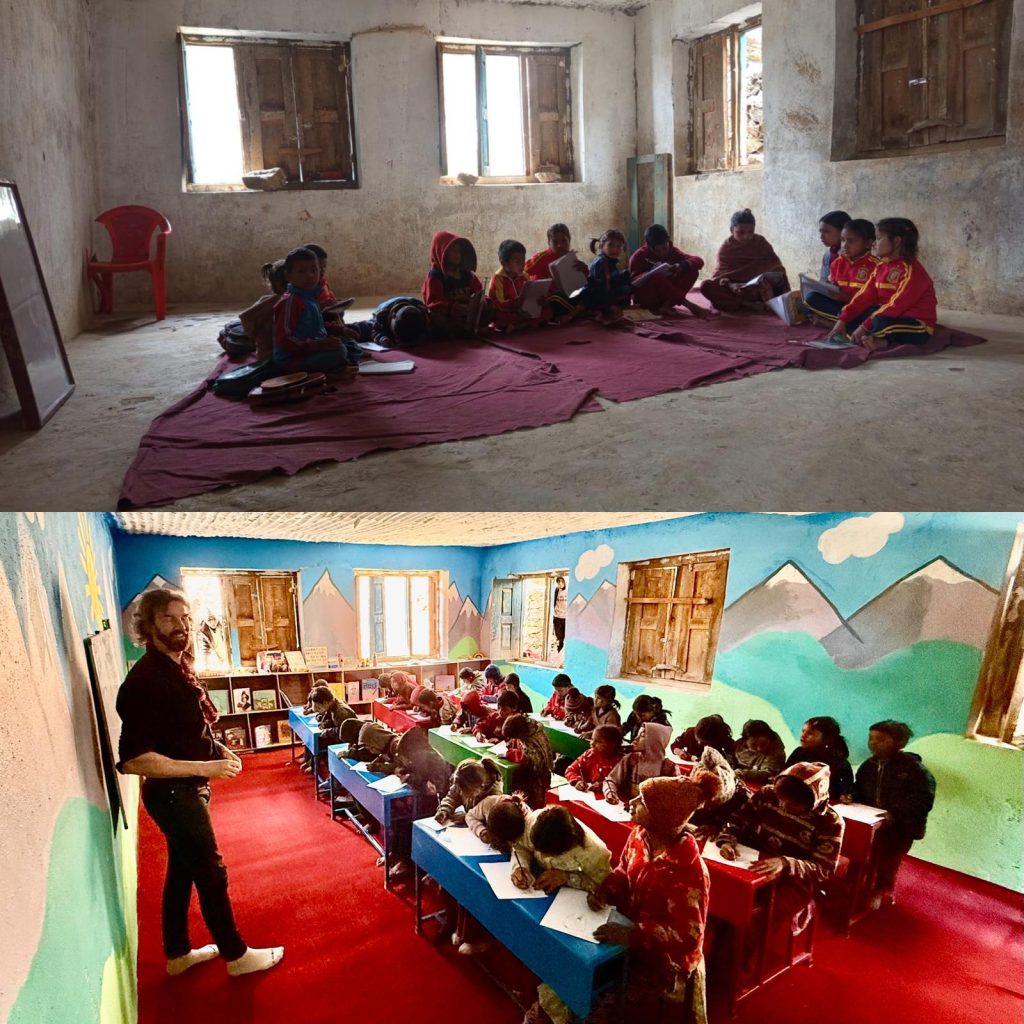
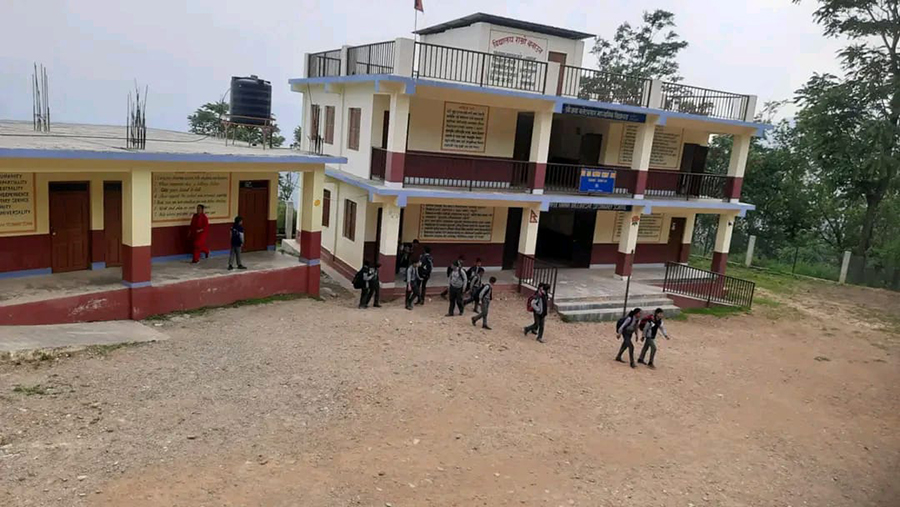
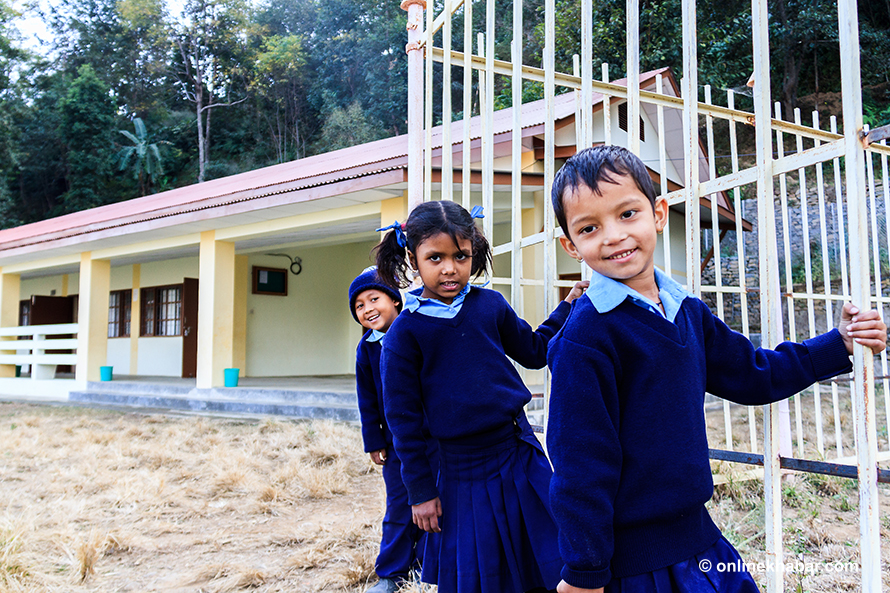
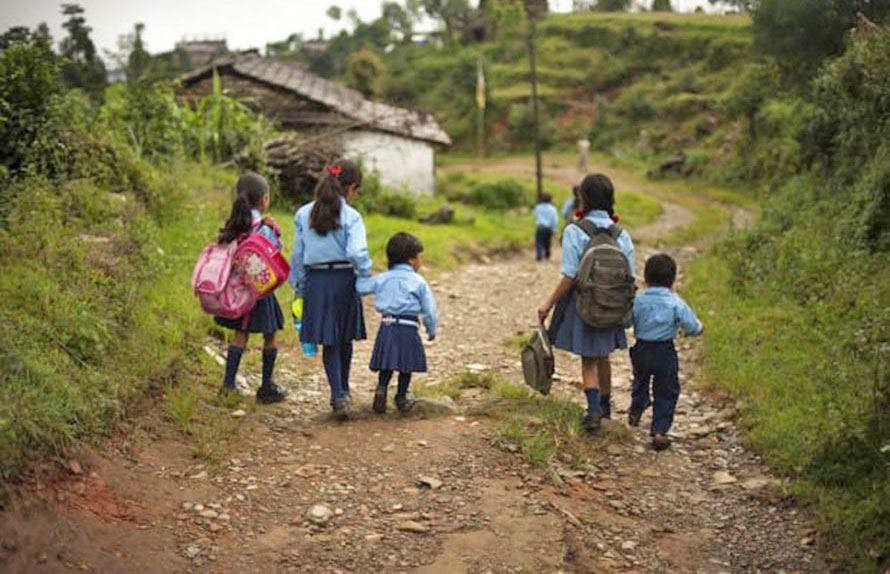
The school sits high above the river, accessible only on foot. Just reaching it requires an hour-long climb. Every nail, every book, every piece of timber must be carried by hand. On day six, the team met with the municipal mayor and discussed the long-term importance of the project. Commitments were made to install security and protect the resources. Volunteers were organised. Materials sourced locally.
A tractor was used to carry supplies part of the way. When it became too dangerous, people stepped in. Men, women, elders, and children carried loads up the mountain, inch by inch. “This is why remote schools are forgotten,” McCormack said. “Not because they are less important, but because helping them demands more effort than most systems are willing to give.”
When a community shows up
By day seven, the work had become something much larger than a renovation project. When news spread that the school was being rebuilt, the entire community arrived. Painters. Carpenters. Elders. Parents. Children. Even the president of the municipality worked alongside the group.
There were no titles, no instructions, no hierarchy. People simply chose a task and began. Roofs were repaired. Windows fixed. Brickwork restored. Floors swept. Walls painted. Children watched closely. Then joined in. They carried buckets of paint weighing nearly as much as they did. They insisted on helping carry tables and carpets. They painted rockets, forests, planets, and mountains onto classroom walls. For many, it was the first time they had ever held a paintbrush.
Dignity on the floor
On days eight and nine, carpets were carried up the mountain on children’s shoulders. Thick foam underlay was installed beneath them to retain warmth in temperatures that regularly fall well below zero. An accidental over-order of carpet became a quiet blessing. Many of the children sleep in a nearby hostel on mud floors with wooden benches for beds. The extra carpet was used to give them something softer to sleep on.
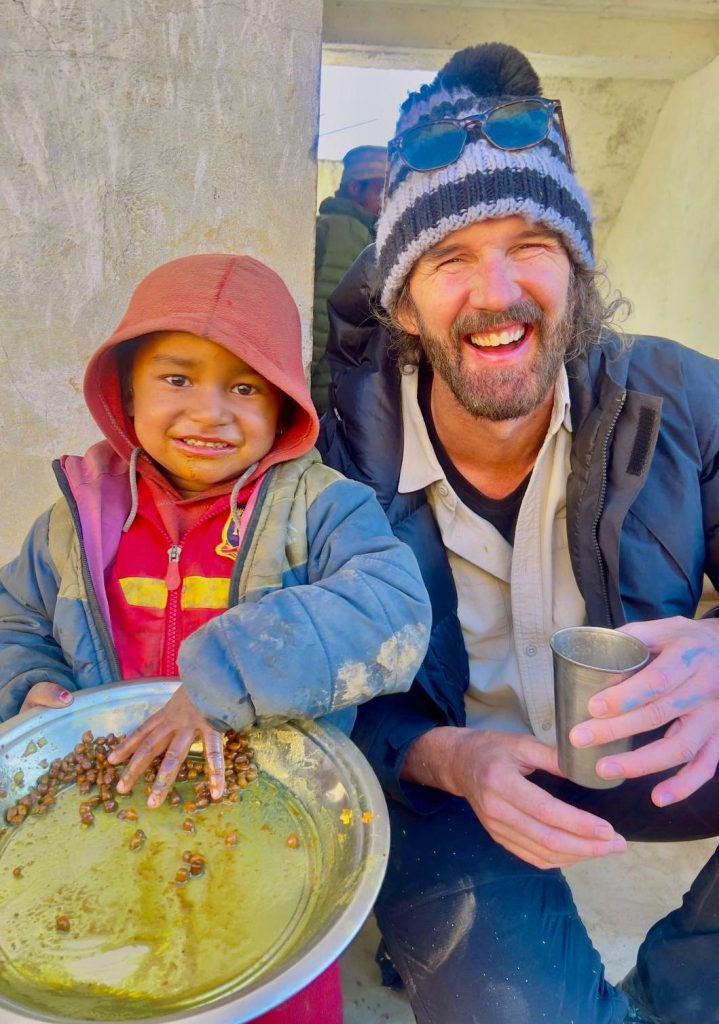
“Their reaction said everything,” McCormack said. “They could not stop smiling. Sometimes dignity arrives quietly.” Meanwhile, carpenters worked through the night to finish shelves for the library. By morning, children from neighbouring villages were walking for hours across valleys simply to see if the rumours were true. A library. Here. Faces pressed gently against windows as the books were arranged.
First lessons
On day ten, the classrooms were opened. Children poured in, sitting cross-legged on soft carpet, touching pencils, turning pages slowly and carefully. For many, it was the first time they had ever sat at a desk or held a book of their own.
A simple lesson followed: drawing a lion. Naming body parts. Making sounds. Laughing together. Pedagogically simple. Emotionally profound. As the school was formally handed back to local authorities, commitments were made that it would never be forgotten again.
Standing above the school, looking down at children exploring their new learning spaces, McCormack described a feeling that was both full and heavy. “This was never just about building a school,” he said. “It was about reminding children that they are seen, valued, and loved.”
For the children of Jumla, the renovated school now stands as more than a building. It stands as proof that even in the most remote corners of the Himalayas, education, community, and hope can still find a way to the top of the mountain.